Christmas in Germany: Best Cities, Markets, Traditions & More
Christmas in Germany is celebrated with Advent markets, decorated old towns, gingerbread, Stollen, and family traditions such as Advent wreaths and Christmas Eve gifts. Visit Nuremberg, Dresden, Munich, or Cologne before December 24, when many markets close. Expect cold weather and closures.

A German Christmas is worth experiencing for its historic markets, decorated old towns, traditional crafts, and seasonal food. Nuremberg, Dresden, Munich, Cologne, and Rothenburg offer especially memorable Advent celebrations.
Visit between late November and December 20 for the widest choice of markets: many close before Christmas Day, while December 25 and 26 are public holidays.

Is Germany Worth Visiting at Christmas?
Yes. Few destinations combine historic squares, regional crafts, Advent music, and seasonal food as well as Germany. The atmosphere especially appeals to families, couples, and visitors interested in European festive culture.
Many markets are free to enter, so browsing is inexpensive even when hotels and special activities are not.
The trade-offs are cold, sometimes wet weather, weekend crowds, and limited opening hours on December 24–26.
If you're visiting Germany during Christmas rather than earlier in Advent, choose your city carefully: some markets remain open after December 24, but most of the famous traditional markets do not.
Read more: If you’re choosing where to spend the school holidays, compare Germany with the destinations in 15 Best Christmas Family Vacations: Where to Go With Kids.
Best Things to Do in Germany at Christmas
The best Things to Do in Germany for Christmas go beyond market hopping. Other worthwhile Things to Do in Germany for Christmas include concerts, seasonal crafts, and winter activities.
#1. Browse traditional Christmas markets
Explore wooden stalls selling ornaments, candles, crafts, and snacks. Nuremberg's Hauptmarkt, Dresden's Altmarkt, and Cologne's cathedral square are excellent starting points.
Entry is generally free; purchases cost extra. Arrive on a weekday afternoon before the evening crowds.
#2. Admire lights and handmade decorations
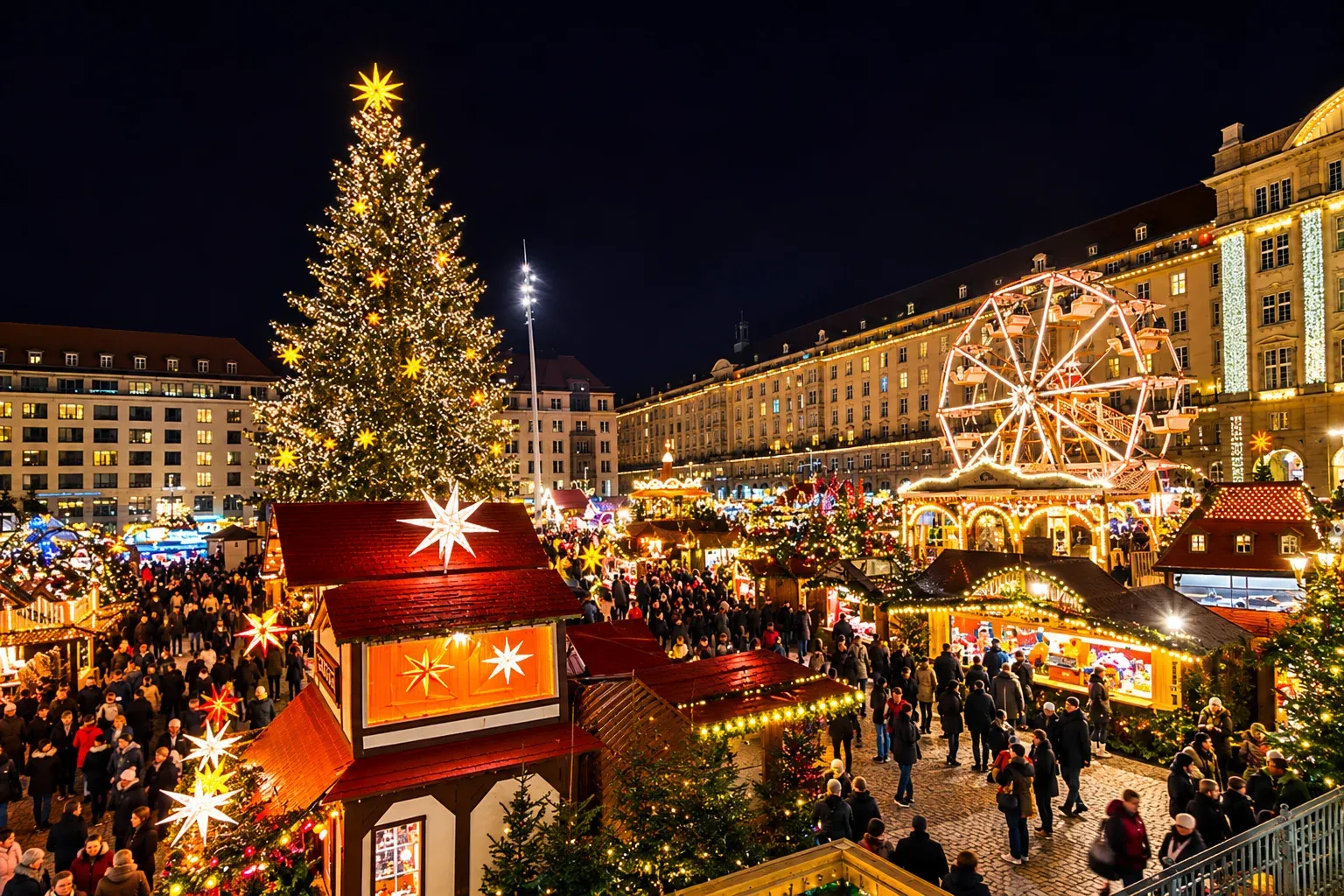
Historic squares glow with Christmas trees, illuminated stars, and shop windows. Christmas decorations in Germany often include wooden candle arches and rotating Christmas pyramids from Saxony's Ore Mountains (Erzgebirge).
Rothenburg's old town is especially photogenic after dark. You can enjoy Christmas decorations in Germany without paying for an attraction ticket.
#3. Hear Advent music and see nativity displays
Look for seasonal choir concerts, church services, and nativity scenes (Krippen). Munich has a tradition of displaying nativity scenes around the city center. Check church calendars for performance dates and whether services welcome sightseeing visitors.
#4. Try winter activities and local crafts
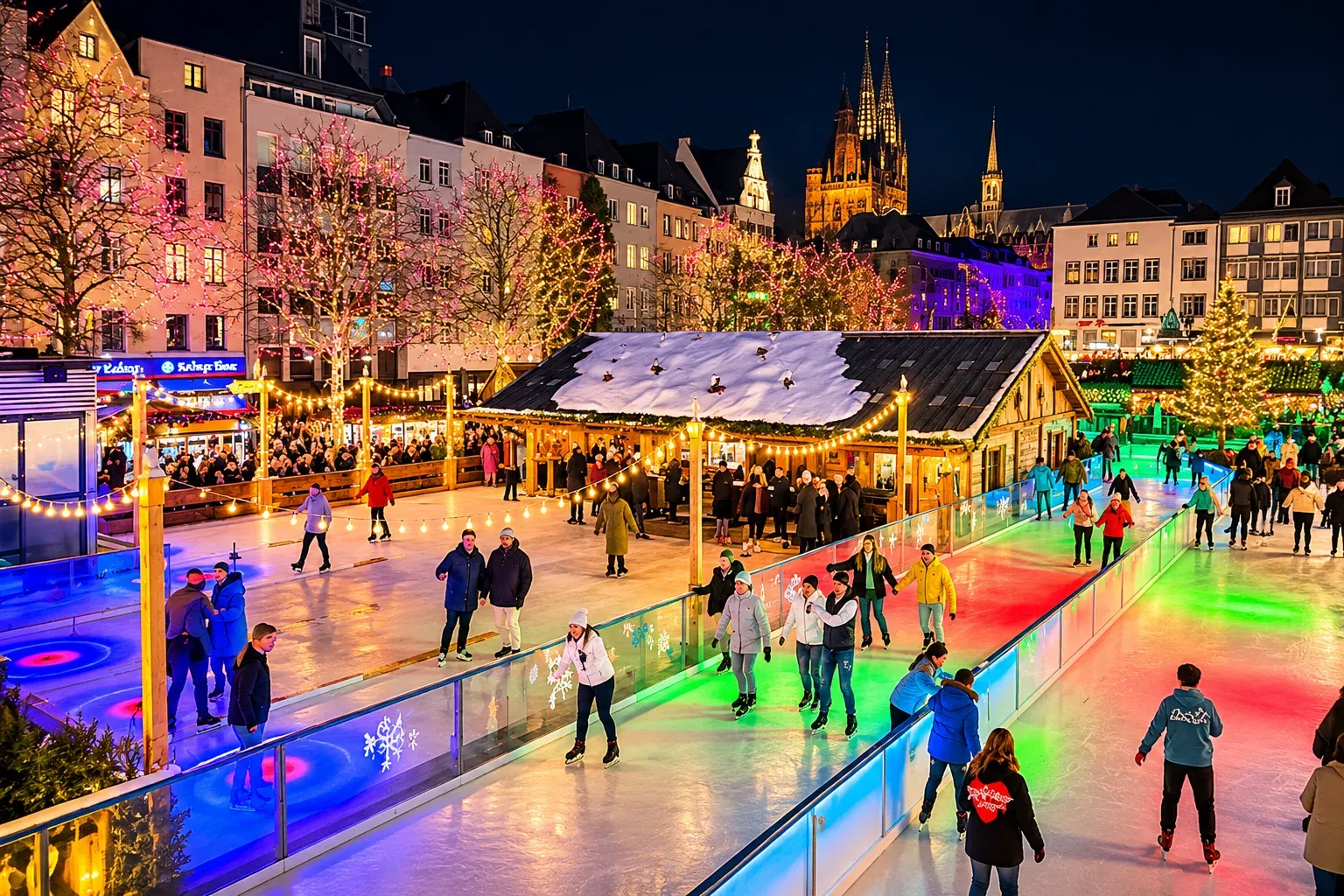
Join an ornament-making demonstration where available, visit a traditional craft shop, or go ice skating at a seasonal rink. Berlin's winter market near the Red Town Hall includes an ice rink, while Cologne's Heumarkt has a winter skating area.
Availability and admission depend on the venue.
#5. Taste regional Christmas specialties
Try gingerbread in Nuremberg, Stollen in Dresden, and cinnamon cookies or roasted almonds almost anywhere. Order warm nonalcoholic Kinderpunsch if you don't want mulled wine. Some stalls charge a refundable deposit for mugs.
Best Places to Experience Christmas in Germany
The following seven destinations balance famous Christmas cities with smaller historic towns. Choose one region for a short trip rather than trying to see them all.
#1. Nuremberg: Best for a Classic Christmas Market
Nuremberg's Christkindlesmarkt fills Hauptmarkt with red-and-white stalls, gingerbread, ornaments, and Franconian sausages. Dates: November 27 to December 24, 2026. The opening ceremony begins November 27 at 5:30 p.m.
Tip: Stay near the historic center and visit on a weekday if possible.
#2. Dresden: Best for Stollen and Saxon Craftsmanship
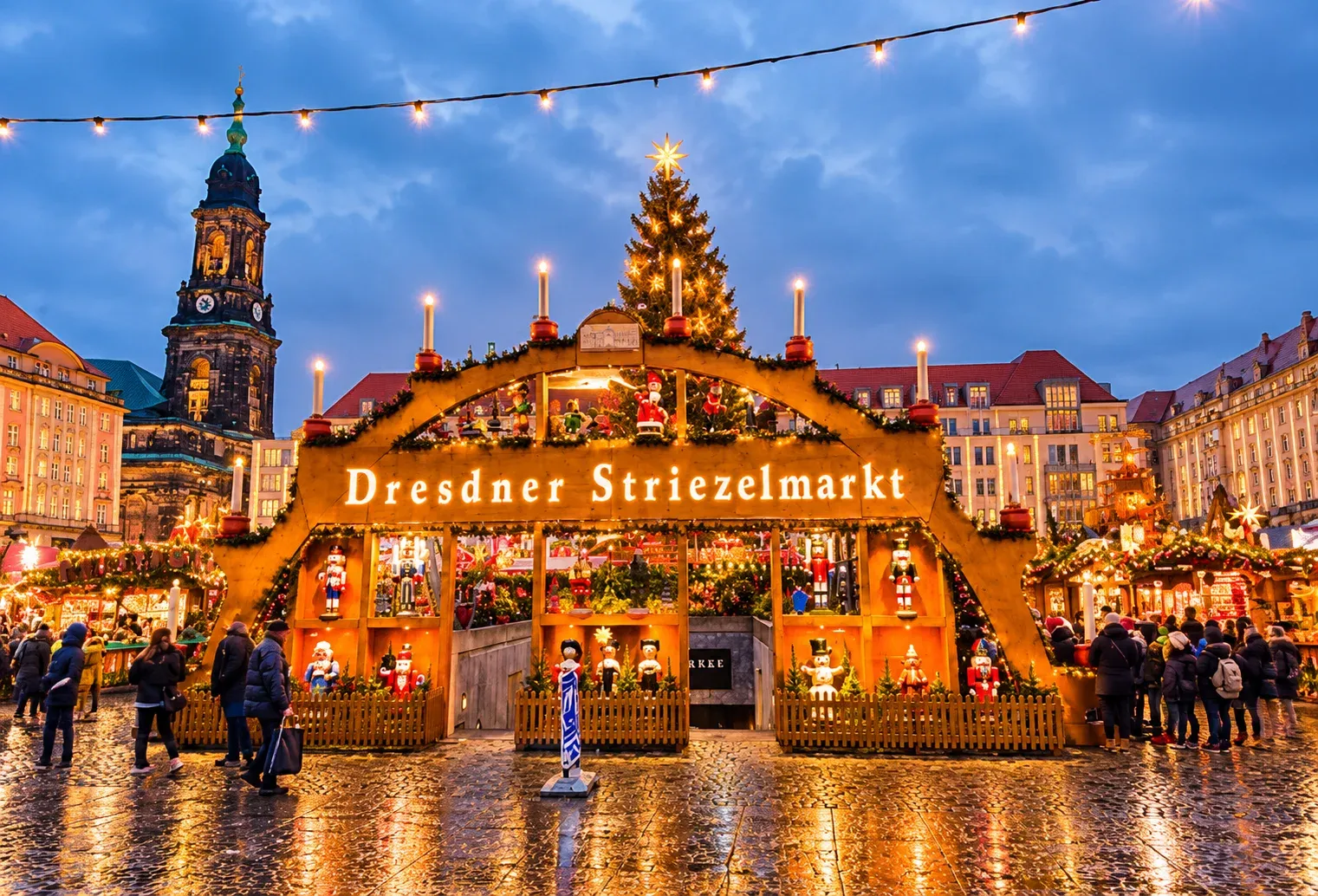
Dresden's Striezelmarkt is associated with festive bread, wooden pyramids, and Saxon artisan traditions. Dates: November 25 to December 24, 2026. The Stollen Festival is scheduled for December 5.
Tip: Combine the Altmarkt with a walk through the historic center rather than visiting multiple markets back-to-back.
#3. Cologne: Best for Market Hopping
The Christmas market beneath Cologne Cathedral has an impressive setting, while other local markets offer different themes. Cathedral market dates: November 16 to December 23, 2026; closed November 22.
Tip: If you arrive after Christmas, the Heumarkt section of Heinzels Wintermärchen continues until January 10, 2027, with its own holiday closures.
#4. Munich: Best for Bavarian Atmosphere
The Christkindlmarkt at Marienplatz combines traditional stalls with the illuminated New Town Hall, choirs, and Bavarian food. Dates: November 20 to December 24, 2026; closed November 22.
Tip: On December 24, it closes at 2 p.m., so visit earlier in the trip.
#5. Rothenburg ob der Tauber: Best for a Medieval Setting
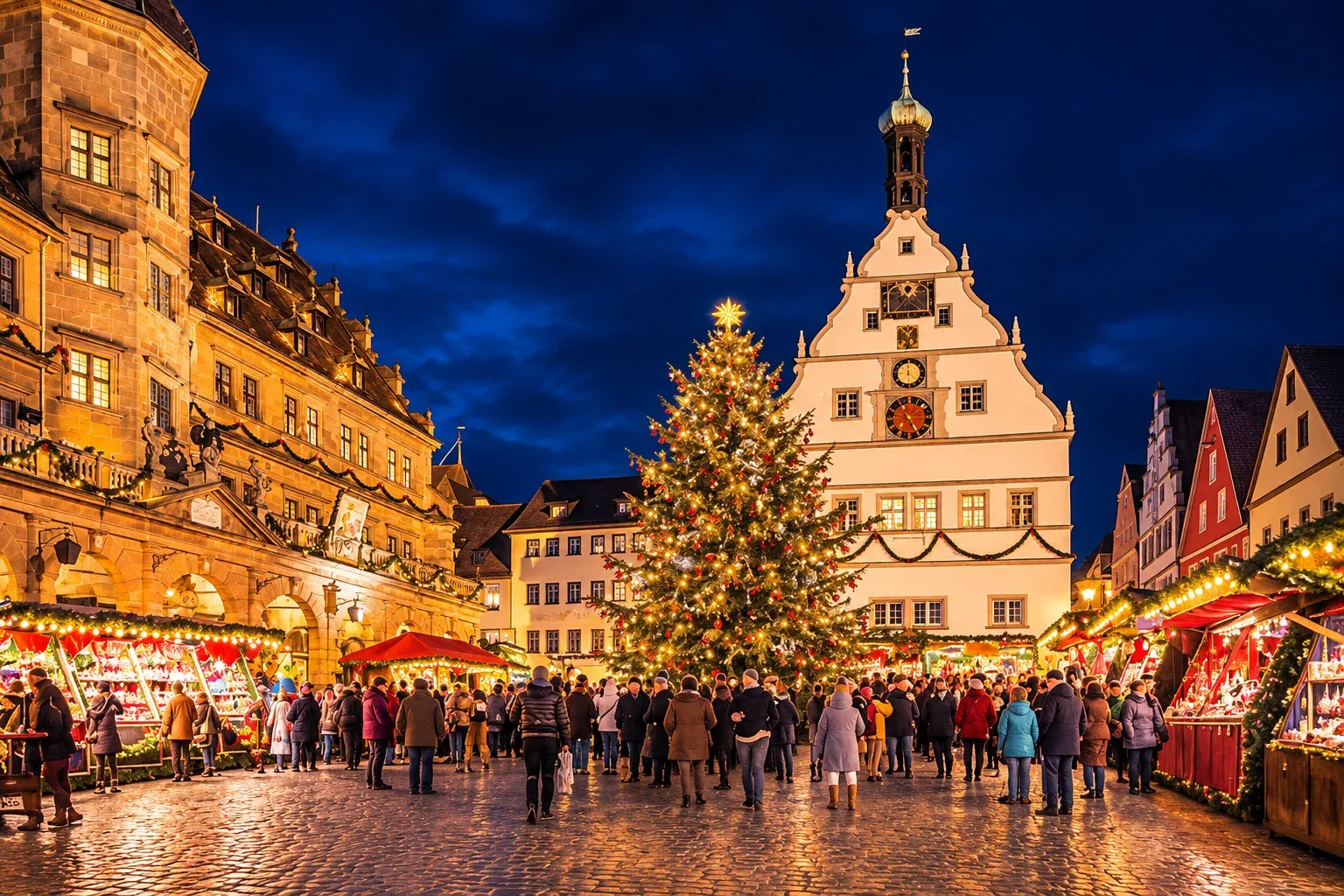
Rothenburg's Reiterlesmarkt is set among preserved medieval streets and decorated half-timbered buildings. Dates: November 20 to December 23, 2026; closed November 22.
Tip: Overnight visitors can enjoy the old town after day-trip crowds leave.
Read more: If Rothenburg’s half-timbered streets make you curious about Germany beyond the markets, start with 15 Fun Facts About Germany You Didn't Know.
#6. Berlin: Best for Variety and Late-December Visits
Berlin offers markets, cultural shows, and festive neighborhoods rather than a single central celebration. WeihnachtsZauber at Gendarmenmarkt features crafts, performances, and heated food tents. Dates: November 23 to December 31, 2026.
Tip: Admission is usually €2; free weekday lunchtime entry excludes certain holiday dates.
#7. Esslingen am Neckar: Best for a Medieval-Themed Experience
Near Stuttgart, Esslingen's medieval and Christmas market blends artisan demonstrations, historic streets, and themed entertainment. Published dates: November 24 to December 22, 2026.
Tip: It works well as a regional day trip from Stuttgart; confirm performances and operating hours directly with the organizer.
For broader sightseeing beyond Advent, our Best Places to Visit in Germany and Things to Do in Germany guides offer more choices.
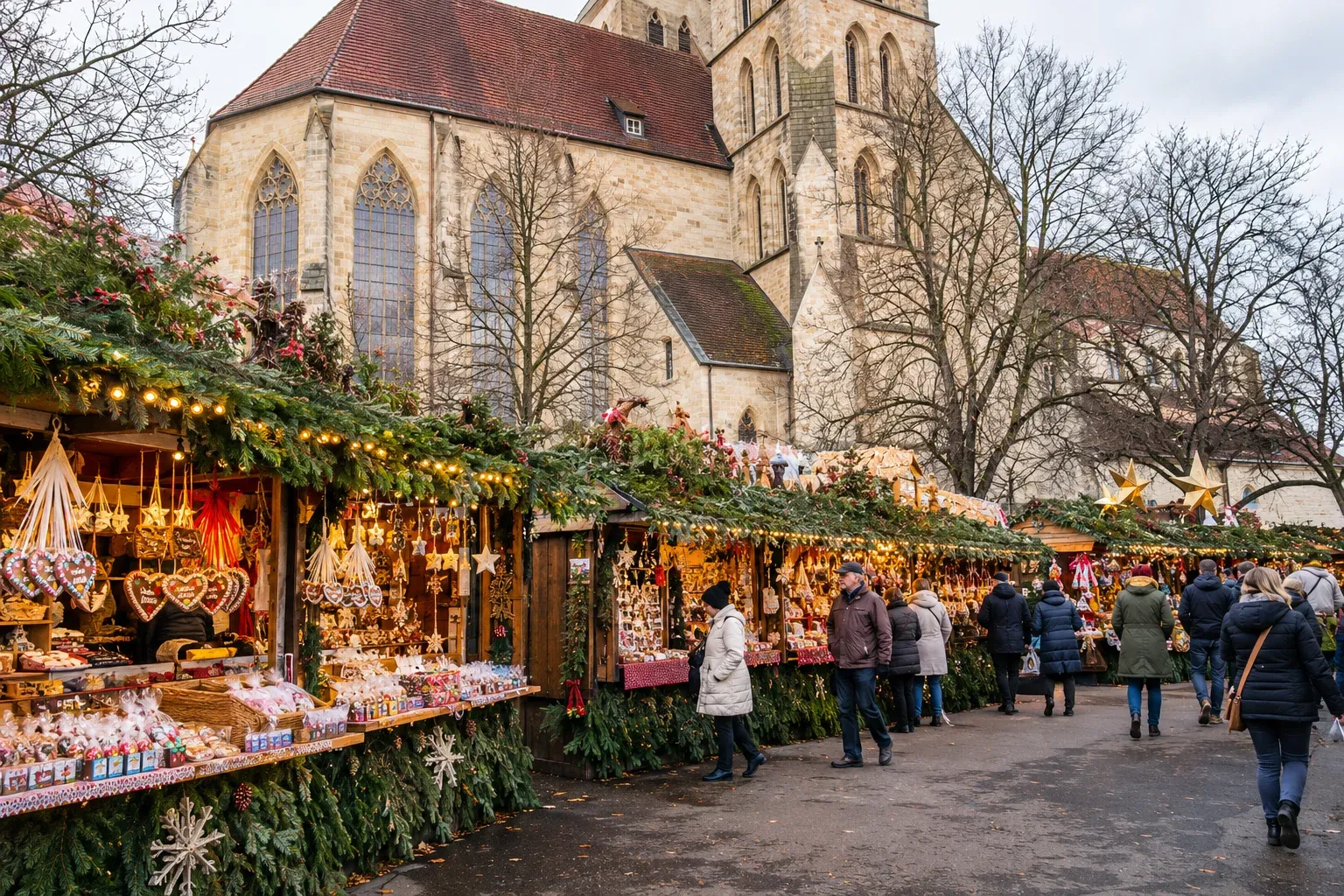
Christmas Traditions in Germany
Germany's Christmas traditions vary by region and family, but Advent, gift-giving, and Christmas Eve feature prominently.
Advent calendars and wreaths
During the four Sundays before Christmas, many households light candles on an Advent wreath. Children may open an Adventskalender window or treat each day from December 1 through 24.
These are common examples of German Christmas customs and traditions, reflecting Germany's Christmas traditions across many households.
Saint Nicholas Day
On December 6, children in many families find small treats in shoes they set out the previous evening. This is separate from Christmas gift-giving.
Christkind and Weihnachtsmann
In some regions, gifts are associated with the Christkind (Christ Child); in others, with the Weihnachtsmann (Father Christmas). Neither figure is universal. These gift-giving customs vary by household and region.
Christmas Eve, December 24
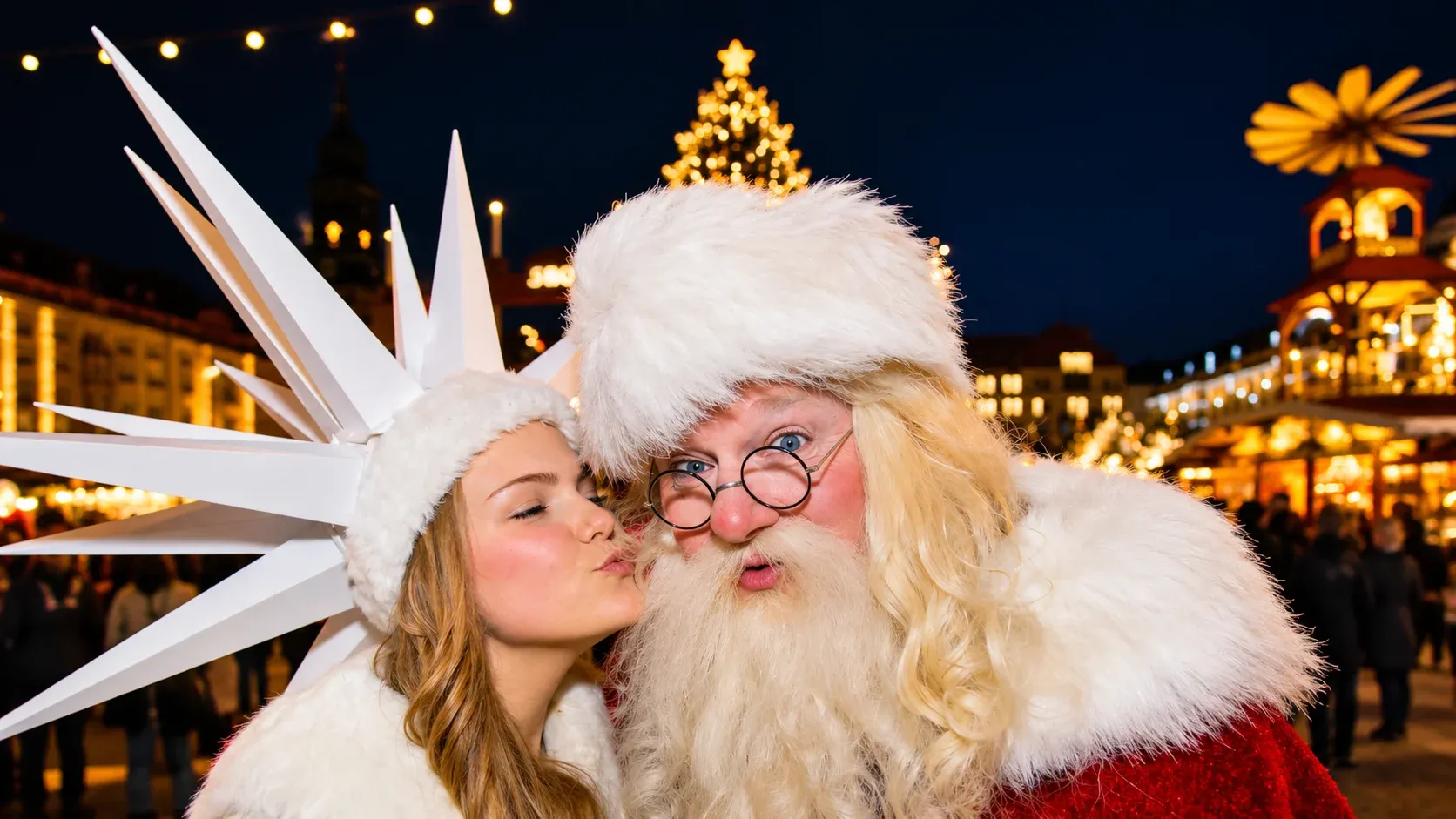
Visitors sometimes ask, "how does Germany celebrate Christmas"? In many households, Christmas Eve (Heiligabend) is the main occasion for decorating the tree, sharing a meal, attending services, and exchanging gifts.
December 25 and 26 are public holidays, often reserved for family visits or meals.
Read more: Germany’s Christmas Eve gift exchange is one example of how holiday customs vary, and you’ll find more in 35 Fun Facts About Christmas That Will Surprise You.
Fun facts and regional differences
Two fun facts about Christmas in Germany: Dresden's Striezelmarkt traces its origins to 1434, and Nuremberg's Christkind ceremonially opens its famous market.
Saxony is closely associated with wooden candle arches and nutcrackers, while Bavarian towns often highlight nativity displays. These Germany Christmas traditions are best understood as varied practices, not nationwide rules.
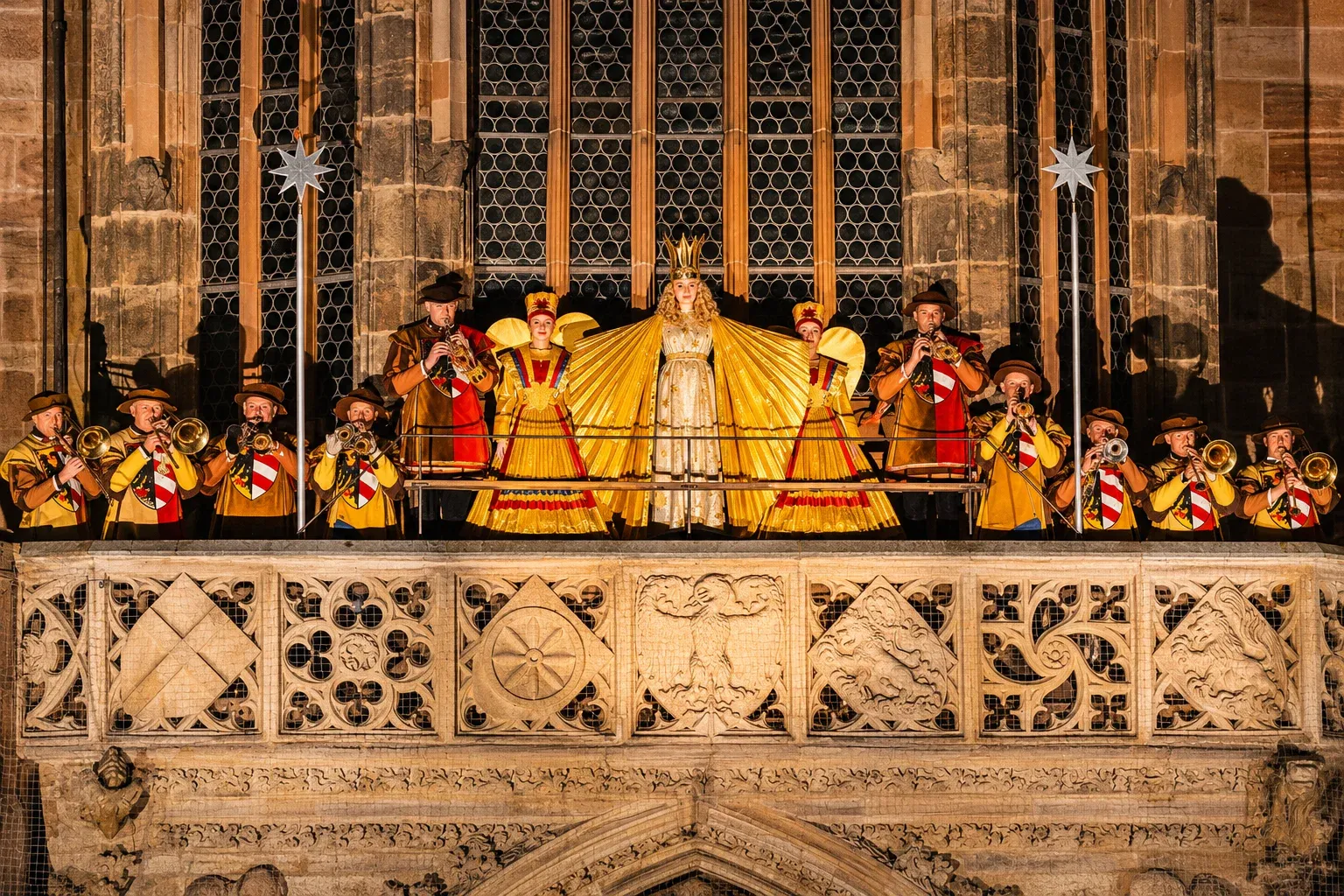
The question "how does Germany celebrate Christmas" has no single answer because customs differ among families. For more fun facts about Christmas in Germany, explore local market histories and tourism museums.
Our Christmas Traditions guide compares celebrations in other countries.
Christmas Food and Drinks to Try in Germany
Traditional food for Christmas in Germany includes sweets eaten throughout Advent and family dishes associated with Christmas Eve or Christmas Day.
German Christmas Market Treats & Specialties
| Specialty | What to expect | Where to look |
|---|---|---|
| Lebkuchen | Spiced gingerbread | Nuremberg and bakeries nationwide |
| Dresdner Stollen | Fruit-rich bread dusted with sugar | Dresden bakeries |
| Bratwurst | Grilled sausage in a roll | Market food stands |
| Glühwein / Kinderpunsch | Spiced wine / nonalcoholic warm punch | Seasonal markets |
| Zimtsterne and Vanillekipferl | Cinnamon stars and vanilla crescent cookies | Bakeries |
| Roasted almonds | Warm sugared nuts | Market stalls |
Traditional food for Christmas in Germany varies by household. On Christmas Eve, some families eat potato salad with sausages; others prepare more elaborate meals.
Roast goose or duck with red cabbage and dumplings is associated with festive family dinners, but traditions vary.
If you'd like traditional food for Christmas in Germany at a restaurant on December 24–26, reserve ahead and verify that a holiday menu is available.

Christmas Events and Markets in Germany 2026
Germany's Christmas markets have different dates and special-day schedules. The table below highlights confirmed flagship events, with hours summarized rather than listing every exception.
Germany Christmas Markets 2026 Schedule
| Event | Location | 2026 dates | Regular hours / notable exceptions | Entry |
|---|---|---|---|---|
| Christkindlesmarkt | Nuremberg, Hauptmarkt | Nov 27–Dec 24 | Usually 10 a.m.–9 p.m.; Dec 24 until 2 p.m. | Free |
| Striezelmarkt | Dresden, Altmarkt | Nov 25–Dec 24 | Nov 25 4–9 p.m.; Nov 27–Dec 23 10 a.m.–9 p.m.; Dec 24 to 2 p.m. | Free |
| Cathedral Christmas Market | Cologne, Roncalliplatz | Nov 16–Dec 23 | Sun–Wed 11 a.m.–9 p.m.; Thu–Fri 11 a.m.–10 p.m.; Sat 10 a.m.–10 p.m.; closed Nov 22 | Free |
| Christkindlmarkt | Munich, Marienplatz | Nov 20–Dec 24 | Mon–Sat 10 a.m.–9 p.m.; Sun 10 a.m.–8 p.m.; Dec 24 to 2 p.m.; closed Nov 22 | Free |
| Reiterlesmarkt | Rothenburg old town | Nov 20–Dec 23 | Sun–Thu 11 a.m.–7 p.m.; Fri–Sat until 8 p.m.; closed Nov 22 | Free |
| WeihnachtsZauber | Berlin, Gendarmenmarkt | Nov 23–Dec 31 | Sun–Thu 11 a.m.–10 p.m.; Fri–Sat to 11 p.m.; Dec 24 noon–6 p.m. | Usually €2; limited free-entry periods |
| Medieval and Christmas Market | Esslingen old town | Nov 24–Dec 22 | Sun–Thu 11 a.m.–8:30 p.m.; Fri–Sat to 9:30 p.m.; opening day starts 4 p.m. | General market entry normally free |
| Stollen Festival | Dresden | Dec 5 | Event program varies | Public festivities; purchases extra |
After Christmas: Berlin's Gendarmenmarkt continues through December 31. Cologne's Heumarkt winter event runs into January, but the dates for individual stalls and the skating area may differ.
Nuremberg also has separate winter attractions after its main Christkindlesmarkt closes. Don't assume every market closes on December 24, or that every attraction stays open afterward.
Read more: If your trip includes another country, use Best Christmas Markets in Europe: Dates, Prices & Local Picks to shortlist stops worth checking against your travel dates.
What Is Germany Like at Christmas?
Most major German cities have chilly December days, often around 0–6°C (32–43°F), with colder nights. Rain, frost, and occasional snow are possible; a white Christmas in Berlin, Cologne, or Nuremberg is not guaranteed. Alpine areas are colder and more likely to have snow.
Germany during Christmas feels most lively during Advent market evenings. Historic centers can become crowded on weekends, especially just before December 24.
The pace usually slows considerably on Christmas Day and December 26, when family gatherings take priority, and regular shopping is limited.
What Is Open in Germany on Christmas Eve and Christmas Day?
Holiday Period Opening Hours & Schedule
| Date | Typical arrangements |
|---|---|
| December 24, Christmas Eve | Not a nationwide public holiday, but many ordinary shops close by early afternoon; markets may close early or end for the season |
| December 25, Christmas Day | Nationwide public holiday; most ordinary stores closed; some restaurants, churches, and attractions open |
| December 26, Second Christmas Day | Nationwide public holiday; retail closures continue, while selected cultural attractions may operate |
| December 27 onward | Opening hours vary by city, event, Sunday rules, and year-end schedule |
Public transport usually operates on altered Sunday or holiday timetables. Christmas Day can be suitable for walks through decorated streets, church services, or a reserved festive meal, but check each venue's schedule before planning it.
The Berlin Gendarmenmarkt, for example, has special Christmas Eve hours, while other markets close entirely.
How to Plan a Christmas Trip to Germany
Arrive before December 23 for markets. Late November through mid-December offers the widest selection; weekends can be busy. If you're traveling to Germany during Christmas week itself, prioritize a city with attractions and restaurants operating beyond December 24.
Pick a realistic route
For three days, choose one base. Nuremberg with a side trip, or Dresden with Leipzig, is more practical than crossing the country. Munich and Nuremberg can be combined on a longer Bavarian itinerary.
Book accommodation near rail stations or historic centers where convenient.
Understand train tickets
The Deutschland-Ticket is a €63-per-month personal subscription in 2026 and covers most local and regional trains, buses, trams, and urban rail, but not ordinary long-distance Intercity-Express (ICE), Intercity (IC), or EuroCity (EC) services.
Check cancellation rules before buying it for a short holiday.
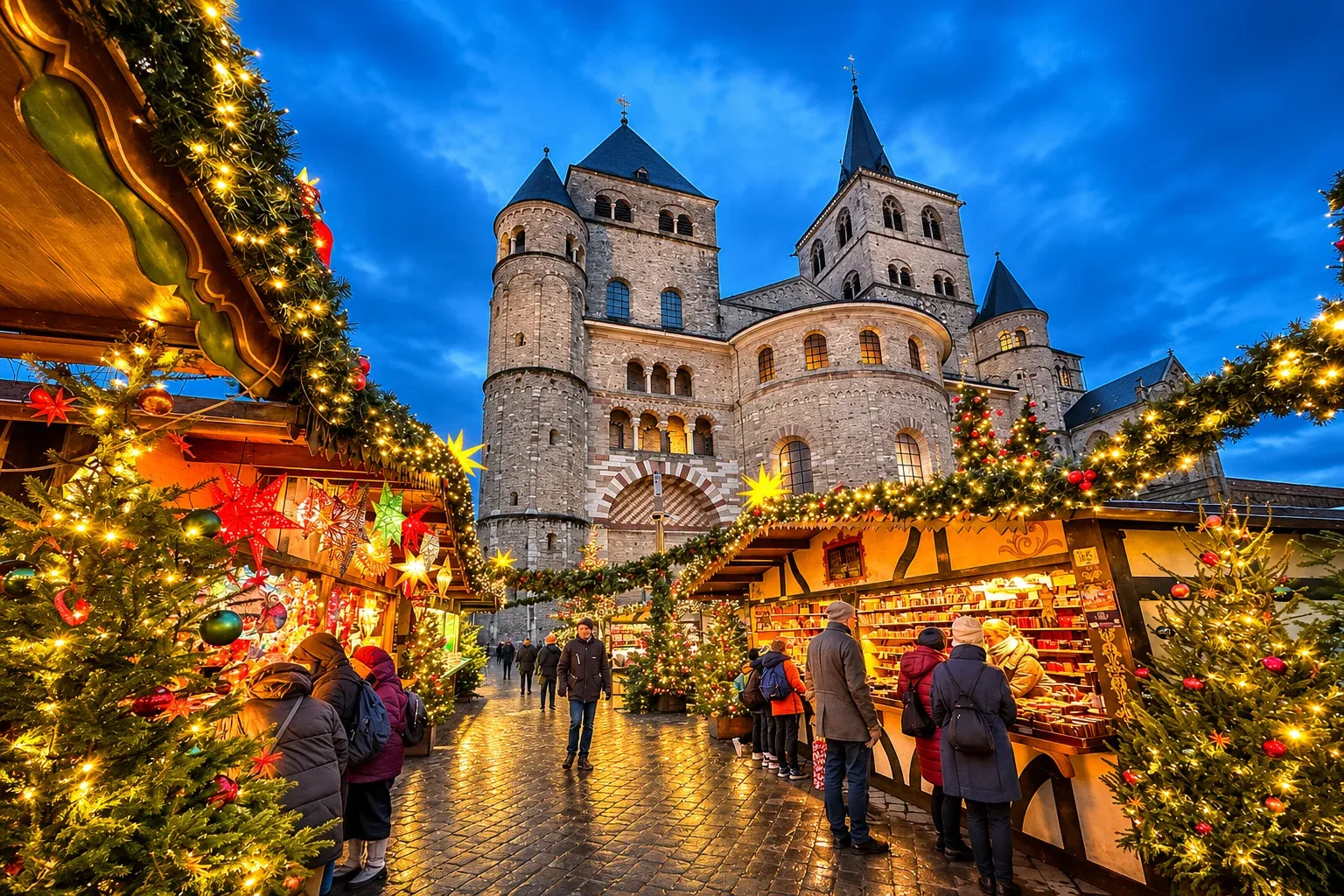
Pack for damp cold
Bring a waterproof coat, warm layers, gloves, a scarf, and comfortable shoes. Market visits involve standing outdoors after sunset. Carry a small amount of cash, although card acceptance varies by vendor.
Book holiday meals and events
Accommodation, popular performances, and restaurants serving on December 24–26 may require advance reservations.
Read more: Once you’ve picked a base and worked out how long to stay, use Traveling to Germany from the USA: What You Must Know to prepare for the trip from the US.
Christmas in Germany on a Budget
Germany's Christmas markets are generally free to browse. Most public Christmas markets are free to enter, so visiting them, walking illuminated streets, and enjoying historic town squares can cost little.
Costs rise with centrally located hotels, long-distance rail journeys, food purchases, special performances, and festive dinners.
For lower costs, travel on weekdays, choose a single region, use public transport, and compare accommodation away from the most popular squares. Germany during Christmas needn't involve an expensive guided tour to enjoy its festive atmosphere.
For other seasonal travel ideas, see our Best Destinations to Visit at Christmas Holidays guide.
Staying Connected During Christmas in Germany
Maps, local transit apps, tickets, translation, and restaurant reservations are easier to manage with mobile data. International visitors can compare home-carrier roaming, a local SIM card, and a travel eSIM according to their phone and trip length.
A Jetpac eSIM Germany plan is one option for a compatible, unlocked phone, with a reusable eSIM profile and supported network connections.
Compare eSIM Germany plans based on data allowance, validity, hotspot rules, and available partner networks rather than assuming uniform coverage everywhere
An eSIM for Germany can help with city-to-city travel, but reception still depends on the local mobile network.
FAQs
Does Germany have Christmas markets?
Yes. Germany's Christmas markets usually run from late November to just before Christmas, although some winter attractions continue into late December or January. Check the specific market's schedule before booking flights.
What is the weather like in Germany at Christmas?
Expect chilly days, cold nights, and a chance of rain, frost, or snow. Temperatures vary by region and elevation. Snow is more likely in Alpine areas than in major low-elevation cities.
Are shops, restaurants, and attractions open on Christmas Day?
Most ordinary shops close on December 25 and 26. Some restaurants, museums, and attractions remain open, but their hours vary. Reserve meals and verify official schedules.
How many days do you need to visit Germany at Christmas?
Three to four days is enough for one city and a nearby excursion. Five to seven days allows two or three destinations within one region without excessive transit.
Is Germany expensive to visit at Christmas?
It can be during busy Advent weekends, particularly for centrally located hotels. Many markets, lights, and old-town walks are free, so the final cost depends on transport, accommodation, food, and paid experiences.
Disclaimer
This blog is for informational and educational purposes only. Travel information, including dates, admission rules, market hours, transport schedules, and attraction availability, can change without notice. Readers should verify the latest details with official sources before making travel arrangements. Jetpac is not responsible for any inaccuracies, changes, losses, or inconveniences arising from reliance on the information provided.
Get connected as soon as you land with a Jetpac travel eSIM.