25 Fun Facts About Greece You Probably Never Knew
Greece has 6,000 islands, 3,400 years of written Greek, and 18 UNESCO sites. Explore 25 surprising facts about its history, food, culture, geography, and traditions.
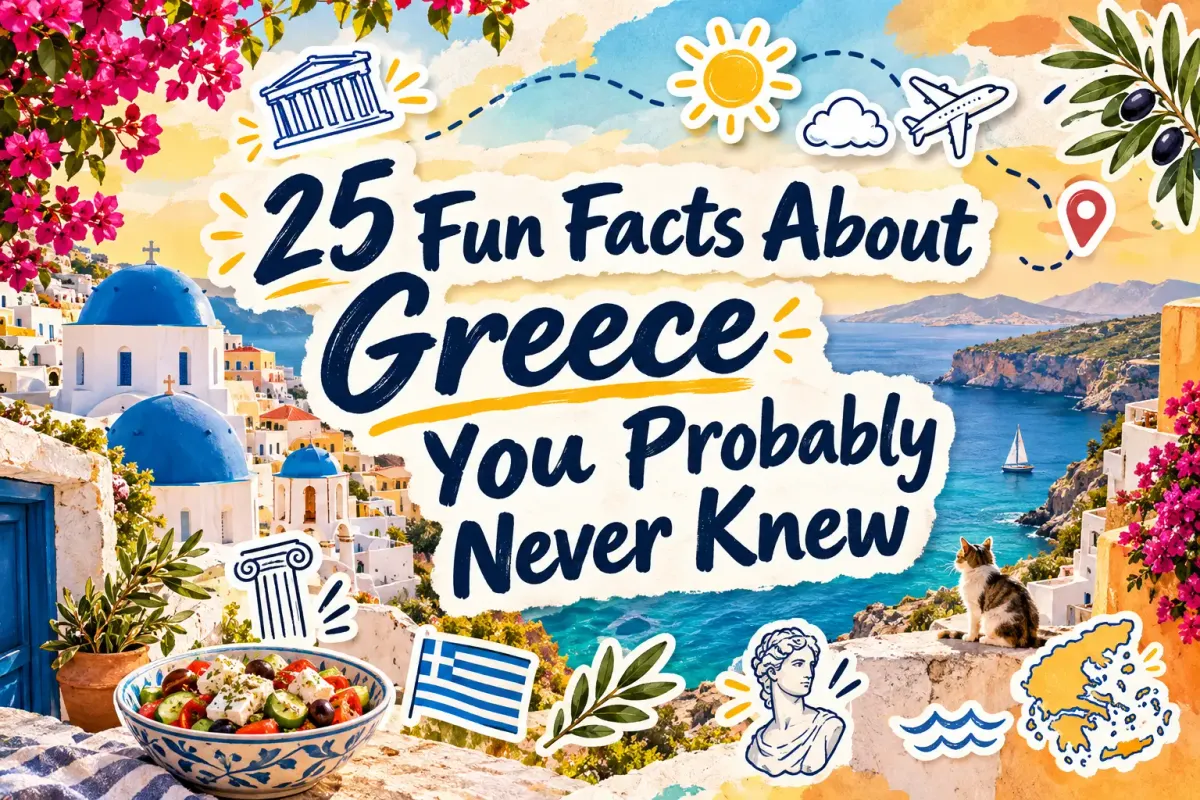
Greece gave the world democracy, the Olympic Games, and foundational mathematics. But beyond those famous legacies, Greece holds genuinely unexpected stories in its culture, food, language, and geography.
These fun facts about Greece cover the ancient, the modern, and the wonderfully bizarre across all 25 discoveries.

Quick Facts About Greece
Source: Hellenic Statistical Authority, 2024 estimate.
Fun Facts About Greece's History
Greece's history stretches back further than almost any other continuously inhabited civilization. These fun facts about Greece from antiquity still shape the modern world daily.
1. Athens Introduced Democracy Around 508 BCE
Cleisthenes created a system that let citizens vote directly on legislation in Athens around 508 BCE. This made Athens unlike any governance model existing elsewhere at the time.
This important facts about Greece as a political pioneer underpin every modern democratic system globally.
2. The Olympic Games Began at Olympia in 776 BCE
Ancient athletes competed at Olympia every four years to honor Zeus while city-states declared temporary truces for safe travel.
The modern Olympics revival in Athens in 1896 traced its format directly to these ancient contests held in the western Peloponnese.
3. Greece Was Under Ottoman Rule for Nearly 400 Years
Greece gained independence in 1821 after approximately 400 years of Ottoman control. This long period deeply shaped the country's cuisine, architecture, and cultural identity.
The history of Greece as a country during this era is central to understanding modern Greek national consciousness.
4. Alexander the Great Created an Empire Spanning Three Continents
Born in Macedon in northern Greece, Alexander conquered territories from Egypt to modern Pakistan before he died in 323 BCE. He spread the Greek language so effectively that the entire era following his campaigns is called the Hellenistic Age.
These amazing facts about Greece in ancient history remain unmatched in scale for the era.
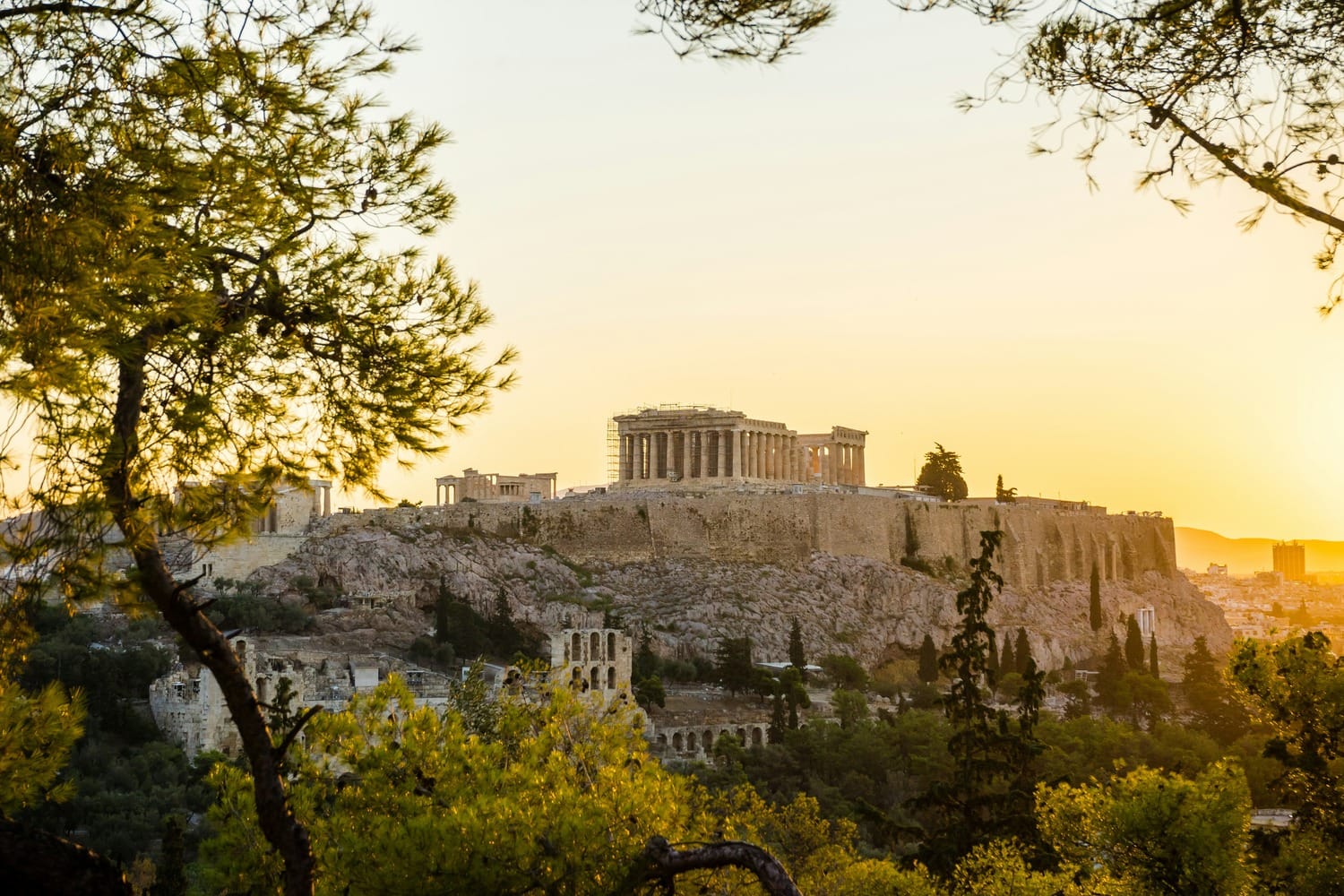
Read more: Turkey shares Greece's ancient Mediterranean history and offers dozens of equally surprising cultural and geographical facts for curious travelers. 👉 25 Fun Facts About Turkey That Sound Too Crazy to Be True
Interesting Facts About Greece's Culture and Traditions
The interesting facts about Greece that surprise visitors most come from everyday customs rather than ancient ruins.
5. Greeks Celebrate Name Days More Than Birthdays
Greeks traditionally honor the feast day of their patron saint rather than their personal birthday. Friends visit unannounced bearing sweets and gifts, and the celebration is open to any well-wisher.
These unique facts about Greece that talk about social customs explain why "chronia polla" is heard year-round.
6. The Evil Eye Shapes Daily Life Across All Generations
The mati (evil eye) amulet hangs in homes, cars, and businesses as protection against jealous glances believed to cause misfortune. Mothers whisper protective prayers over newborns, and the amulet is given as a standard new baby gift.
This is one of the most genuinely unusual facts about Greece that surprises secular visitors entirely unfamiliar with its roots in Greek Orthodox tradition.
7. Greek Has Been in Written Use for Approximately 3,400 Years
The Greek language has been continuously written for approximately 3,400 years, making it one of the oldest living languages on earth. Words used by Homer in the Iliad remain recognizable in modern spoken Greek today.
These unusual facts about Greece and linguistic continuity are among the most remarkable for visitors from other language backgrounds.
8. Plate Smashing Has a Specific Licensed Context
The tradition of breaking plates evolved from mourning rituals into festive celebration but is now mainly permitted at licensed venues rather than practiced freely.
These funny facts about Greece that talk about cultural customs reach most visitors through exaggerated portrayals that miss the genuine historical nuance entirely.
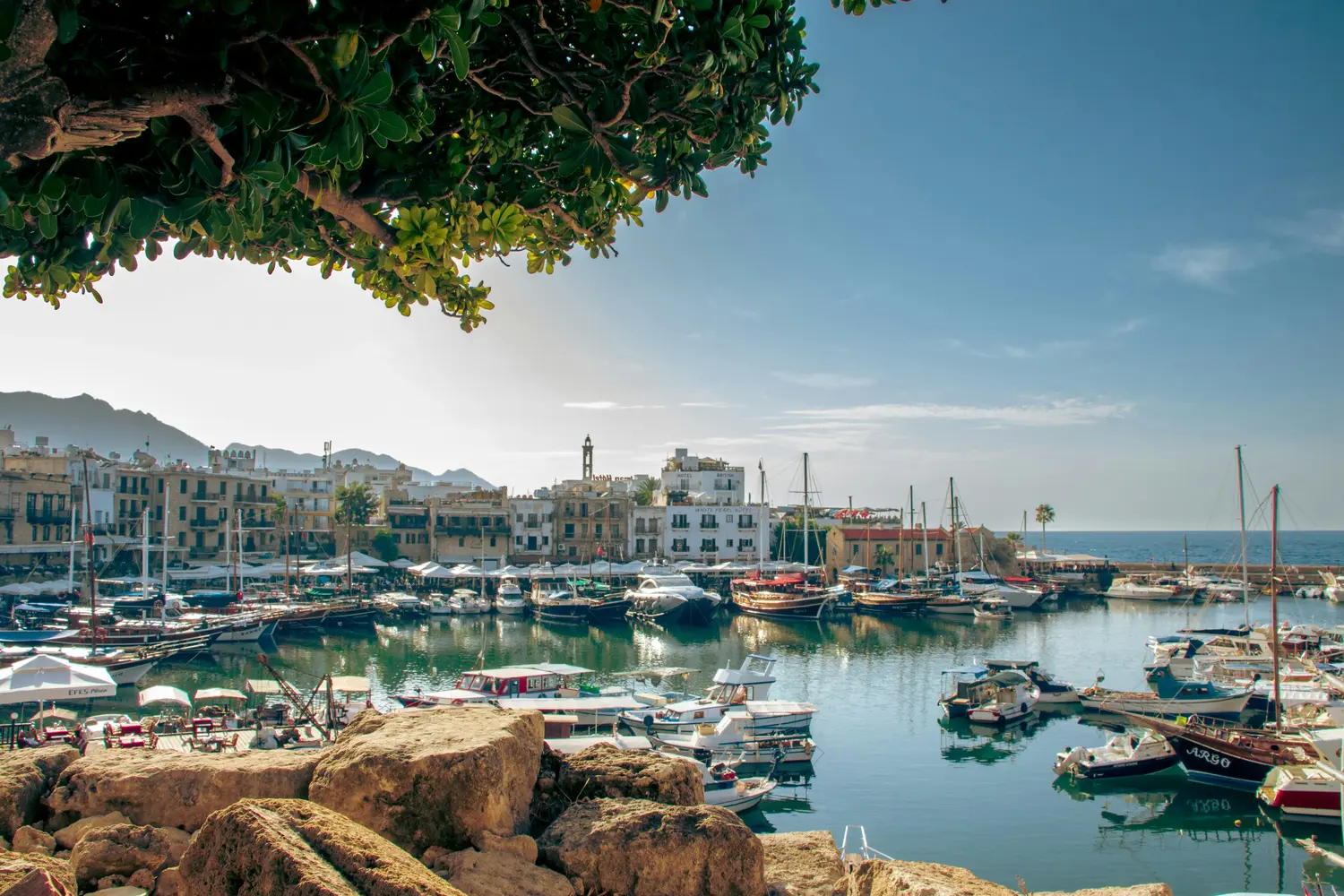
Read more: Italy shares Greece's Mediterranean depth in food culture and ancient heritage, with its own equally remarkable set of cultural facts across history and modern life. 👉 20 Fun Facts About Italy You Probably Didn't Know
Fun Facts About Food and Drink in Greece
What is Greece known for in culinary culture extends well beyond moussaka and souvlaki into legally protected foods and ancient agricultural traditions.
9. Feta Holds EU Protected Designation of Origin Status
Feta can only legally be called feta if produced in specific Greek regions using Greek milk, as established by the European Commission.
Products made elsewhere must use different names entirely. These amazing facts about Greece's food law have caused significant international trade disputes with other dairy-producing nations.
10. Greece Is the World's Third Largest Olive Oil Producer
Greece produces approximately 300,000 to 400,000 tonnes of olive oil annually, ranking third globally behind Spain and Italy. Crete is the leading domestic producing region. Olive cultivation in Greece dates back at least 3,500 years.
11. Ouzo Can Only Be Legally Produced in Greece or Cyprus
Ouzo carries Protected Geographical Indication status under EU law and is flavored with anise. Traditionally served with ice and small mezze plates rather than as a standalone shot, this distinction matters to Greek drinkers and separates it from common tourist misconceptions.
12. Greek Coffee Follows a Sugar Ordering System
Greek coffee is brewed in a small pot called a briki and ordered by sugar level: "sketo" (no sugar), "metrio" (medium sweet), and "glykos" (very sweet). These cool facts about Greece and coffee etiquette help visitors avoid awkward ordering moments at traditional kafeneions.
Read more: France shares Greece's passion for legally protected food designations and culinary tradition, with equally rich and surprising gastronomic history. 👉 20 Fun Facts About France That Will Surprise You
Geography and Nature Facts About Greece
What is Greece known for geographically is only partially captured by its famous islands. These cool facts about Greece reveal a far more complex landscape than most visitors anticipate.
13. Greece Has Over 6,000 Islands But Only Around 227 Are Inhabited
Approximately 6,000 islands and islets surround Greece's coastlines, yet only around 227 have permanent populations. These interesting facts about Greece about its island geography explain why sea travel is as routine for many Greek residents as road travel is for most Europeans.
14. Greece Has the Longest Coastline in the Mediterranean
At approximately 13,676 kilometers, Greece's coastline is the longest in the Mediterranean and the 11th longest globally.
These cool facts about Greece about its coastal geography reflect how deeply the sea defines daily life, with island ferries serving as routine transport for thousands of residents throughout the year.
15. Mount Olympus Reaches 2,917 Meters
The legendary home of the ancient gods is a genuinely demanding mountain. Its highest peak, Mytikas, was first officially climbed in 1913 and remains snow-covered for much of the year.
These unique facts about Greece about its terrain consistently surprise visitors who picture only sunshine and beaches.
16. Athens Is One of the Sunniest Capital Cities in Europe
Greece averages over 250 sunny days per year, with Athens ranking among Europe's sunniest capital cities by annual sunshine hours. Aegean island averages run even higher.
These amazing facts about Greece about its climate help explain why outdoor tourism thrives across a significantly longer season than most European neighbors.

Read more: Spain shares Greece's Mediterranean coastline and ancient heritage, with equally surprising records across history, culture, and modern geography. 👉 20 Surprising Fun Facts About Spain You Didn't Know
Famous Inventions, Achievements, and World Records From Greece
These amazing facts about Greece demonstrate how disproportionate its intellectual contribution has been relative to its geographic size.
17. The Marathon Race Originates Directly in Ancient Greece
The race commemorates the legendary run of Pheidippides from the Battle of Marathon to Athens in 490 BCE to announce Greek victory. The modern standardized distance of 42.195 km was set at the 1908 London Olympics.
These are among the most important facts about Greece for global sports history and origins.
18. Foundational Mathematics Was Established by Ancient Greek Thinkers
Euclid's geometry, the Pythagorean theorem, and Archimedes' principles all originated with ancient Greek scholars. These unique facts about Greece in mathematics remain taught in classrooms worldwide, more than 2,000 years after their initial formulation.
19. Greece Has 18 UNESCO World Heritage Sites as of 2026
Greece's UNESCO World Heritage list includes the Acropolis, Delphi, Epidaurus, Olympia, and medieval Rhodes. These unique facts about Greece about its heritage density explain why cultural tourism underpins the modern Greek economy across a relatively compact land area.
Weird and Surprising Facts About Greece
20. The Corinth Canal Is Only About 21 Meters Wide at Its Base
Cut through solid rock between 1882 and 1893, the Corinth Canal connects the Ionian and Aegean seas but is far too narrow for modern cargo ships. At approximately 6.3 km long with a base width of around 21 meters, it handles primarily tourist and small commercial vessels today.
These weird facts about Greece that talk about engineering ambition consistently astonish first-time visitors.
21. The Greek Flag Has No Officially Standardized Precise Shade of Blue
Despite being one of the world's most recognized flag designs, Greece's Presidential Decree specifies only "sky blue" without designating a precise Pantone or color code. The shade has varied considerably across different historical eras and official contexts.
These unusual facts about Greece that talk about national identity catch even long-term residents off guard.
22. Greece Has Among Europe's Highest Concentrations of Archaeological Museums
Over 100 state archaeological museums operate across Greece, placing it among Europe's highest concentrations of such institutions.
These weird facts about Greece about its museum density consistently challenge visitors who expect a small country to have a small cultural footprint.
23. The Greek Diaspora Spans Every Inhabited Continent
An estimated 3 to 5 million Greeks live outside Greece across Australia, the United States, Germany, and Canada, forming one of the Mediterranean's most geographically dispersed diasporas.
Greek communities in Melbourne and Chicago have maintained distinct cultural traditions for generations. These funny facts about Greece that are about its international demographic presence consistently astonish first-time visitors.
24. Athens Has Been Continuously Inhabited for Over 7,000 Years
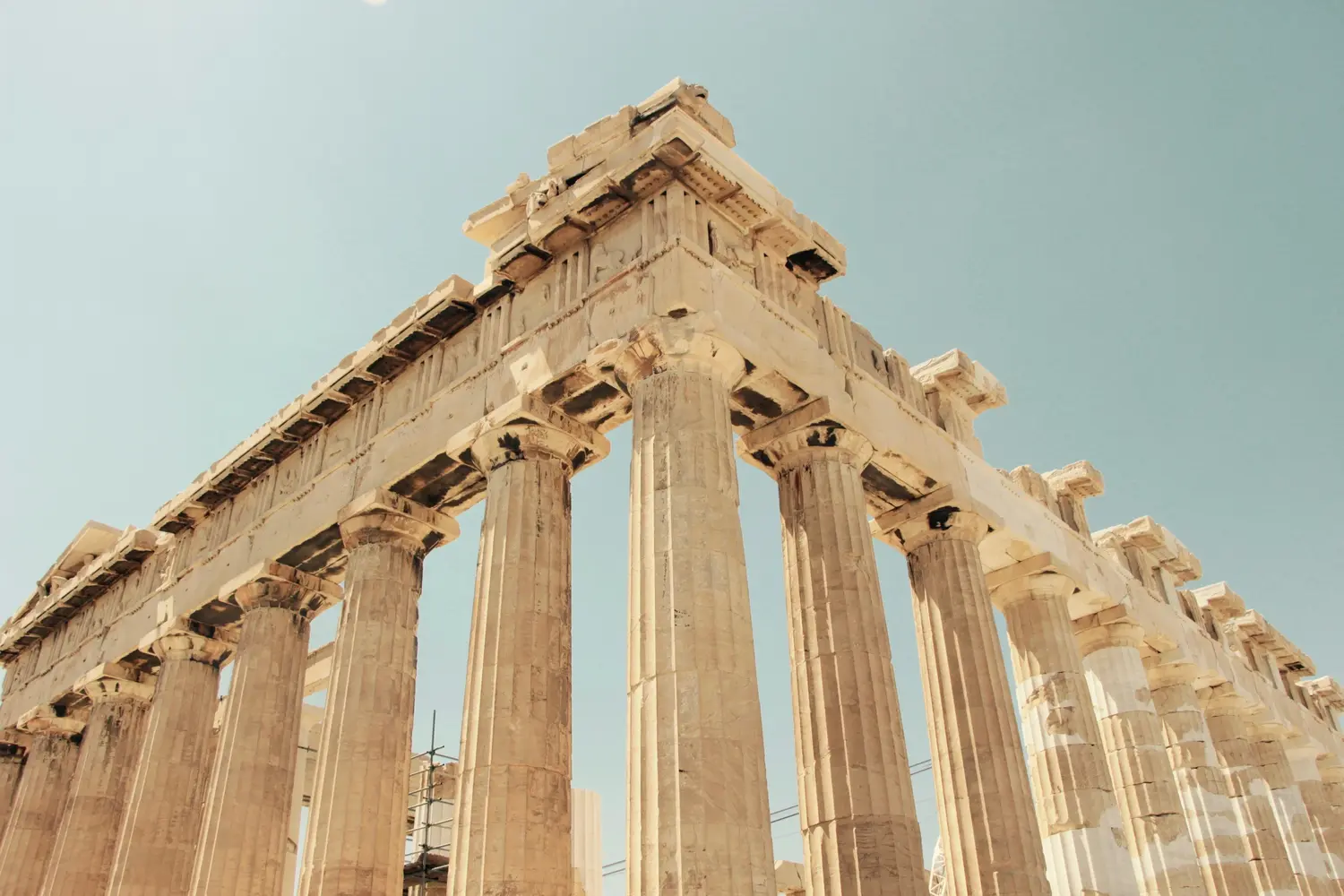
Archaeological evidence places human settlement in the Athens area from at least 5,000 BCE. This means Athens was already thousands of years old when the Parthenon was constructed in 447 BCE.
These cool facts about Greece that are about urban continuity dwarf almost every other European city's documented history.
25. Greece Produces More Cement Per Capita Than Almost Any European Nation
Greece has historically ranked among Europe's highest cement producers per capita, driven by extensive construction demands across mountainous terrain and scattered island communities.
These weird facts about Greece about its industrial output consistently surprise travelers who associate the country primarily with ancient marble and white-washed walls.
Read more: Germany's blend of ancient history and modern record-breaking achievements offers equally surprising contrasts for curious travelers and fact enthusiasts. 👉 15 Fun Facts About Germany You Didn't Know
Fun Facts About Greece That Travelers Should Know
Local Gestures Visitors Often Misunderstand
The Greek hand gesture of an open palm thrust outward (moutza) is a serious insult, not a friendly wave. Even a casual waving motion at the wrong moment causes unintended offence.
These important facts about Greece that talk about non-verbal communication matter from the very first hours of any visit.
Island Transportation Planning
Inter-island ferry travel is the primary mode of transport across the Aegean and Ionian islands. Booking in advance during July and August is essential as crossings between popular islands sell out weeks ahead.
The best places to visit in Greece span multiple island clusters requiring separate ferry connections to navigate properly.
Ancient Site and Budget Practicalities
The best things to do in Greece at ancient sites require flat, comfortable footwear as surfaces consist of uneven marble and stone.
The best time to visit Greece for major site exploration is April through June or September when visitor volumes and temperatures are both more manageable. Knowing how much does it cost to go to Greece helps with budgeting.
Budget travelers can manage USD 70 to USD 90 per day outside August, while mid-range island stays peak at USD 150 to USD 200 daily.
Tipping Culture in Greece Is Discretionary
Unlike many countries where service charges are automatic, tipping in Greek restaurants and tavernas is appreciated but not mandatory.
Rounding up the bill or leaving 10 percent is common in tourist areas, while in local neighborhood eateries, leaving small coins is entirely acceptable.
Planning a Trip to Greece? Stay Connected With a Jetpac eSIM
Navigating Greek ferry schedules, finding restaurants in unmarked Cycladic alleyways, and reading menus written entirely in Greek all require reliable mobile data from the moment you land.
A Jetpac eSIM Greece plan installs before departure and activates automatically on landing across 4G and 5G networks covering mainland Greece and its major islands. The best eSIM for Greece from Jetpac starts from USD 4 with unrestricted hotspot sharing.
An eSIM for Greece from Jetpac means no airport SIM card queue and no roaming charges across the full trip. A Jetpac Greece eSIM keeps maps, bookings, translations, and communications live across every island and mainland destination you visit.

FAQs
What is Greece known for?
Greece is known as the birthplace of democracy and the Olympic Games, for ancient sites including the Acropolis, for Mediterranean cuisine including protected feta and ouzo, and for over 6,000 islands across its surrounding waters.
What makes Greece unique?
Greece combines nearly 7,000 years of continuous civilization with the Mediterranean's longest coastline, 18 UNESCO World Heritage Sites, and a language that has been written continuously for approximately 3,400 years.
What is a surprising fact about Greece?
An estimated 3 to 5 million Greeks live outside Greece, forming a geographically dispersed diaspora with established communities in Australia, the United States, Germany, and Canada spanning multiple generations.
What is Greece's national food?
Greece has no single officially designated national dish, but moussaka, souvlaki, spanakopita, and fresh-caught seafood are among the most culturally representative foods eaten across the country's different regions.
What is Greece's national animal?
The dolphin is Greece's national animal, reflecting centuries of deep maritime culture visible across ancient coinage, mythology, and mosaics throughout the extensive Greek archaeological record.
What is the most interesting cultural tradition in Greece?
Name day celebrations are distinctly Greek, where friends and family honor the patron saint's feast day rather than a personal birthday, often arriving unannounced with sweets and gifts for the person being celebrated.
What are some fun facts about Greece for kids?
The word "democracy" comes from ancient Greek, the Olympic Games started over 2,800 years ago in Greece, and the marathon race was inspired by a legendary messenger who ran over 40 kilometers to announce a battle victory.
What language do people speak in Greece?
Modern Greek is the official language and has been in continuous written use for approximately 3,400 years, making it one of the world's oldest living languages still in active daily use by millions of people.
Disclaimer
The information in this blog was accurate at the time of writing. Travel costs, ferry schedules, attraction access, UNESCO listings, population figures, connectivity services and other details may change after publication. Jetpac is not responsible for any changes made after publication.