
Best Places to Visit in Europe in September (Fewer Crowds & Better Weather)
Warm days, quiet cobblestones, harvest tables, and hotel rates that actually make sense. September strips away the peak-season chaos and leaves the best version of Europe standing. Here is where to go, why the timing works, and how to make the most of it.
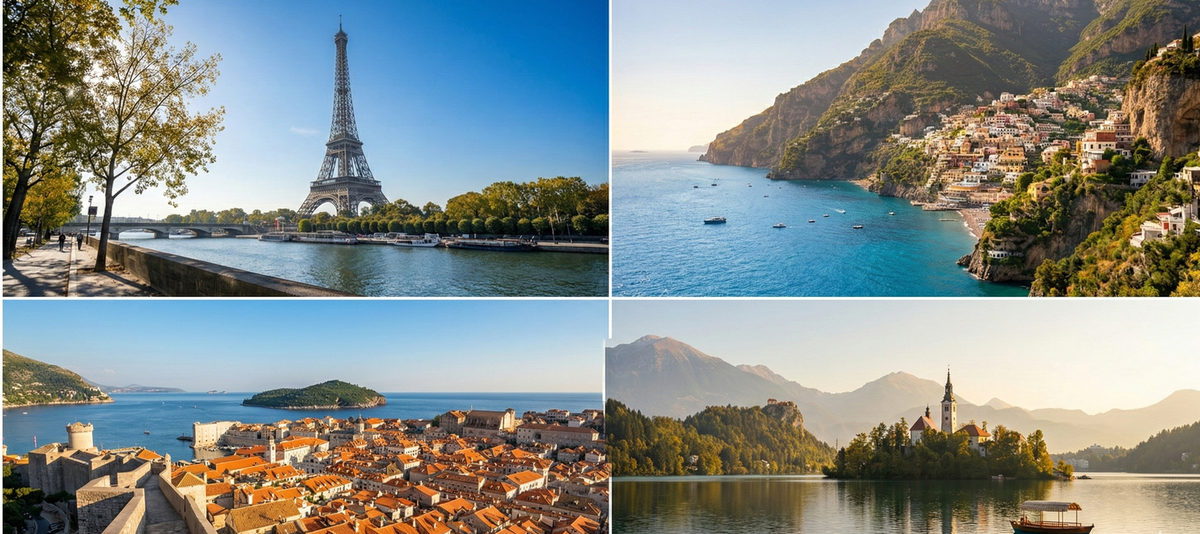
Most US travelers book Europe for July or August and spend half their trip in queues. September changes the equation entirely. Temperatures are still warm, the summer crowds have thinned, and prices on flights and accommodation drop the moment European schools resume.
September also coincides with harvest season across wine regions, olive groves, and truffle country. Vineyards in Tuscany, Bordeaux, and the Douro Valley begin picking in early to mid-September. Local festivals and food markets fill the calendar across Southern and Central Europe. Europe in September is not a diminished shoulder season. It is simply the continent at a more manageable, more affordable, and often more authentic pace.
Before departure, a Jetpac eSIM means you arrive connected across every country on this list without hunting for local SIMs or paying daily roaming charges.

Why September is ideal for US travelers heading to Europe?
Mild temperatures: The brutal heat that makes cities like Rome, Athens, and Seville genuinely unpleasant in July and August has passed by September.
Daytime temperatures across Southern Europe settle into the mid-70s to mid-80s Fahrenheit. Northern Europe sits comfortably in the 60s and low 70s.
It is warm enough to enjoy outdoor terraces, beach days, and long evening walks without the exhaustion that comes with peak summer heat.
Lower prices: The moment European school holidays end in late August, flight fares, hotel rates, and tour costs drop meaningfully.
US travelers who shift their trip by just four to six weeks from August to September often find meaningful reductions on transatlantic flights and similar drops on accommodation across the most popular destinations.
Harvest season: September is when Europe's food and wine culture peaks. Grape harvests begin across Tuscany, Bordeaux, and the Douro Valley.
Truffle season opens in Emilia-Romagna and Périgord. Olive groves in Spain and Greece come to life. Food festivals, village markets, and harvest tables fill the calendar across Southern and Central Europe in a way that no other month matches.
Why is September one of the best months to visit Europe?
Weather Improvement
The heat that makes Rome, Seville, and Athens uncomfortable in July and August eases significantly in September. Southern Europe drops from the high 90s to a comfortable 75°F to 85°F range. Northern and Central Europe settle into crisp, clear days ideal for walking and outdoor sightseeing. The first three weeks of September are reliably dry across most of the continent.
Reduced Crowds
Schools reopen across Europe by the second week of September, and the drop in tourist numbers at major sites is immediate.
The Colosseum, the Acropolis, and old towns across the continent all operate at noticeably lower capacity. Pre-booking is still advisable, but queue times and atmosphere improve substantially.
Price Drops
Flights from the US to European cities typically fall by 15 to 30 percent in September versus peak July and August fares.
Hotel rates, car rentals, and tour costs all drop across the board. September offers the rare combination of good weather and off-peak pricing that summer simply cannot match.
Best places to visit in Europe in September
September suits the entire continent, but these ten destinations are particularly well-matched to the month.
1. Prague, Czech Republic
Prague is one of the best cities to visit in Europe in September, when the summer heat and tour groups thin out and the city's medieval architecture can be appreciated at a gentler pace. The Old Town Square, Charles Bridge at dawn, and the castle district above the river are extraordinary in the soft September light. Czech beer garden culture is at its best in the warm early autumn evenings.
2. Seville, Spain
Seville in summer is genuinely brutal, with July temperatures regularly exceeding 100°F. September brings the city back to life.
The Alcázar palace, the Cathedral and Giralda tower, and the Triana neighborhood across the river are all best explored in September's more forgiving heat. The local calendar fills with cultural events, and outdoor festivals thrive in the evening warmth.
3. Kotor, Montenegro
Kotor is a walled medieval city on a dramatic Adriatic bay and one of the most beautiful and underrated destinations in Europe.
September is the ideal month to visit: the Adriatic is at its warmest for swimming, the July and August cruise ship crowds have largely gone, and the bay's mountain backdrop takes on deeper color in the softer light. Montenegro is one of the most affordable countries in Europe for US travelers.
4. Ghent, Belgium
Ghent is one of the amazing European cities in September that most US travelers overlook entirely in favor of Bruges or Brussels.
Its medieval guildhalls, working canal network, and genuinely local food and beer culture are best experienced outside summer peak weeks. September brings a calmer, more authentic version of the city with shorter queues at the Gravensteen castle and St. Bavo's Cathedral.
5. Bologna, Italy
Bologna is the food capital of Italy and one of the best places to visit in Europe in September for travelers who care about eating well.
The city's covered arcades, medieval towers, and university atmosphere make it distinctly different from Rome or Florence. September marks the start of truffle season in the surrounding Emilia-Romagna hills, and the city's markets and restaurants reflect it immediately.
6. Budapest, Hungary
Budapest is one of the top places to visit in Europe in September, combining grand 19th-century architecture, thermal baths, Danube river walks, and one of the most vibrant food and nightlife scenes in Central Europe.
September temperatures are warm but not extreme, the ruin bars of the Jewish Quarter are at their best in the outdoor evening warmth, and prices are significantly lower than Western European capitals.
7. Riga, Latvia
Riga is one of the amazing European cities in September for travelers seeking something genuinely different from the Mediterranean circuit. Its Art Nouveau architecture, covered market halls, medieval old town, and proximity to the Baltic coast make it one of the most distinctive capitals in Northern Europe.
September is the last comfortable month before Baltic autumn sets in, and the city's parks and outdoor café culture are at their best.
8. Split, Croatia
Split sits around a Roman emperor's palace converted into a medieval city over centuries, and it is one of the best cities to visit in Europe in September for a combination of history and beach access.
The Adriatic is still warm enough for swimming through most of September, the peak-season crowds on the Dalmatian Coast have thinned, and ferry connections to the nearby islands of Hvar and Brač remain fully operational.
9. Thessaloniki, Greece
Thessaloniki is Greece's second city and one of the most underrated amazing European cities in September. Its Byzantine churches, Ottoman-era markets, Roman forum, and waterfront promenade combine with one of the best food cultures in the country.
September brings the Thessaloniki International Fair, the largest trade and cultural fair in the Balkans, which adds energy to an already lively city.Note: The Thessaloniki International Fair is one of the most prominent trade and cultural events in Southeastern Europe. Visitors should check the current year's programme and dates before planning their trip around it.
10. Innsbruck, Austria
Innsbruck sits in a valley in the Austrian Alps and is one of the must-visit destinations in Europe in September for travelers who want mountain scenery without the winter crowds or the summer heat.
Cable cars from the city reach alpine meadows within minutes. The old town below is compact, walkable, and full of Tyrolean food culture. September hiking conditions in the surrounding mountains are excellent.
Best Places in Europe in September for a Summer Vacation With Kids
Europe in September opens up significantly for families. The settled weather, thinned crowds, and lower prices make destinations that were overwhelming in August genuinely enjoyable with children.
Prague is one of the best European countries to visit in September with children. Its compact old town is entirely walkable, the puppet theater tradition is well-established, and the interactive exhibits at the National Technical Museum hold attention across age groups.
Split works particularly well for families in September because the Adriatic is still warm enough for beach days, while the Roman-era old town provides genuine historical depth. The combination of swimming, history, and island day trips via ferry keeps children of different ages engaged.
Bologna's covered arcade network, the interactive science museum, and the city's famous Gelato University make it one of the top European destinations in September for families who want a cultural city stay without the crowds of Rome or the logistics of Venice. It is also one of the most popular European countries in September for food-focused travelers.
Budapest's thermal baths with dedicated children's sections, river cruise options, and compact flat city center make it one of the most practical European destinations for families in September.
Best Beach Destinations in Europe in September
September extends the European beach season well beyond what the calendar suggests. Sea temperatures across the Mediterranean and Adriatic remain warm through most of the month, and the crowds that made August unpleasant have largely gone.
Split and the Dalmatian Coast deliver the best combination of beach quality and historical depth. The Adriatic averages 72°F to 75°F in September. Hvar, Brač, and Korčula are all accessible by ferry from Split and significantly quieter than peak season.
Kotor's bay beaches and the Budva Riviera in Montenegro offer warm Adriatic water, dramatic mountain scenery, and prices well below comparable Croatian destinations.
Halkidiki in northern Greece, accessible from Thessaloniki, offers three peninsulas of clear Aegean water and pine-backed beaches at September prices well below summer.
The Algarve in southern Portugal rounds out the best beach options. Atlantic temperatures average 68°F to 72°F in September. The cliff formations, surf beaches, and seafood culture of the Algarve coast are world-class at a fraction of August crowds.
Is September cheaper than July or August?
Yes, consistently and meaningfully. September is cheaper than July or August across almost every category of European travel spending.
Transatlantic flights from major US hubs to European cities typically cost 15 to 30 percent less in September than in peak summer. The most significant drops come in the second and third weeks of September once European schools have resumed.
Accommodation rates in popular destinations drop immediately after the August bank holiday period ends. In beach destinations like Split, Kotor, and the Algarve, mid-range hotel rates can fall by 20 to 40 percent versus July peaks.
Attractions and tours are easier to book and sometimes discounted. Restaurant availability improves as local establishments that close in August reopen, giving travelers access to a wider range of options at better prices.
Europe in September With Kids
The back-to-school calendar works directly in favor of US families who can travel in early September. European schools reopen by the second week of September, crowds drop immediately, but the weather holds.
Europe in September is ideal weather for family outdoor exploration. Temperatures across Central and Southern Europe sit in the 70s and low 80s Fahrenheit, warm enough for beach days and outdoor sightseeing but cool enough to walk a city for hours without heat exhaustion.
Activities that are too hot or too crowded in summer become genuinely enjoyable in September. Cycling in Prague, hiking outside Innsbruck, kayaking around Kotor's bay, and exploring Bologna's markets with children are all significantly better experiences than in peak summer.
Travel Tips for Europe in September
Pack in layers: September in Northern Europe can be crisp in the evenings and warm in the afternoons. A light packable jacket and one warmer layer cover the full range of conditions from Riga to Seville. For a complete seasonal checklist, refer to our Europe Packing List before your trip.
Book accommodation early: Popular destinations like Prague, Budapest, and Split still fill their best mid-range options weeks ahead, even in September. The price advantage of September does not mean availability is unlimited.
Plan around harvest festivals: The Thessaloniki International Fair runs in early September. Wine harvest festivals across Tuscany, Alsace, and the Douro Valley run through September and October. Checking the local events calendar adds genuine cultural depth to any September itinerary.
Check entry requirements: The month of September still falls within the summer travel season, and visa requirements, passport validity rules, and ETIAS pre-authorization requirements for the Schengen Zone apply year-round regardless of season.
Stay connected from the moment you land: September travel often involves moving between multiple countries quickly, taking advantage of cheaper fares and less crowded transport. A Jetpac Europe eSIM covers all the destinations on this list, activates before you leave home, and keeps the whole group online across every border.
From Prague to the Algarve, these are genuinely the best places to visit in Europe in September, and having reliable data across all of them makes the difference between a smooth trip and a stressful one.
One eSIM for every country on your September Itinerary
September in Europe is multi-country travel by nature. The combination of lower prices, connected rail networks, and uncrowded destinations makes it the ideal month for the kind of Prague to Budapest to Split itinerary that feels too rushed and expensive in July. That circuit crosses three countries and three different carrier networks in under two weeks.
Here is how a Jetpac eSIM keeps you connected across all of it.
🌍No SIM Shopping at Each Border
Prague, Seville, Kotor, Bologna, Budapest, Riga, Split, Thessaloniki, Innsbruck, and the Algarve span ten different countries. A Jetpac eSIM covers all of them and 200+ destinations beyond under a single prepaid plan activated before you leave the US. No SIM swaps at borders, no carrier shop visits, no asking hotel staff where to buy a local card.
💰 Fixed Cost Plans
A prepaid Jetpac eSIM locks your connectivity cost before departure. It offers plans up to 70% cheaper than traditional roaming. No per-day roaming charges accumulating across a two-week multi-country trip. No bill shock when you return home.
📡One Connection for the Whole Group
Unlimited hotspot sharing through a single Jetpac eSIM keeps tablets, laptops, and second phones connected through one plan. No individual data packages per device, no rationing hotspot mid-trip.
⚡ Fast Enough for Trains, Ferries, and Last-Minute Bookings
September travel means spontaneous itinerary changes. Fast prepaid 5G handles timetables, accommodation bookings, and navigation apps simultaneously without relying on station WiFi.
🔄 Best Signal Across Every Country, Automatically
Jetpac's multi-network switching connects to the strongest available signal in each location without any manual adjustment, whether you are in a Riga market hall or on a Croatian ferry.
📞 Connect on a call whenever needed
Harvest festival restaurants and smaller family hotels across Europe still prefer phone reservations. Voice calls from USD 1.99 for 5 minutes cover what you need without a full international calling plan.
💬 Help support is available around the clock
If connectivity issues arise at any point, support is available around the clock. Useful whether you are troubleshooting in a Budapest ruin bar at midnight or trying to reconnect on a ferry between Croatian islands.
FAQs
Which destinations in Europe are worth visiting in September?
Prague, Seville, Split, Bologna, and Budapest are among the best places to visit in Europe in September for US travelers. Each offers the combination of good September weather, thinned crowds, and lower prices that make the month so well-suited to European travel.
Which cities in Europe are worth visiting in September?
The best cities to visit in Europe in September include Prague for medieval architecture, Budapest for thermal baths and food culture, Seville for Andalusian atmosphere, Bologna for Italian food at its best, and Thessaloniki for an underrated Greek city experience with outstanding local cuisine.
Is Europe less crowded in September?
Yes, significantly. The departure of European school holiday travelers in early September reduces visitor numbers at most major sites by a meaningful margin. Pre-booking is still advisable for the most popular attractions, but queue times, accommodation availability, and general atmosphere all improve noticeably compared to July and August.
Is September cheaper than summer in Europe?
Yes. Flights, accommodation, and tours all cost less in September than in peak July and August. The price drop is most pronounced in beach destinations and major cultural cities. Booking the second or third week of September typically returns the best combination of weather, crowds, and price.
What are the best countries to visit in Europe in September?
Croatia, the Czech Republic, Spain, Italy, and Greece are among the best European countries to visit in September for US travelers. All five offer excellent September weather, strong tourism infrastructure, and meaningful price reductions compared to the summer peak.
What should I pack for a September trip to Europe?
Light clothing for warm daytime temperatures, a packable jacket for cooler evenings, one pair of comfortable walking shoes, and a light layer for air-conditioned interiors. A compact rain layer is advisable for northern destinations like Riga and Ghent. Check the specific forecast for each destination in your itinerary, as conditions vary significantly across the continent.
Disclaimer
The information in this blog is based on publicly available sources at the time of writing. Temperature ranges, price estimates, and crowd levels are general assessments based on historical patterns and may vary by year and specific travel dates. Entry requirements, visa conditions, and ETIAS timelines are subject to change. We recommend verifying all practical details directly with official sources before your trip. Jetpac is not responsible for any changes after publication.

 //
//
//
//
//
//