22 Hidden & Best Places to Visit in Germany by Region
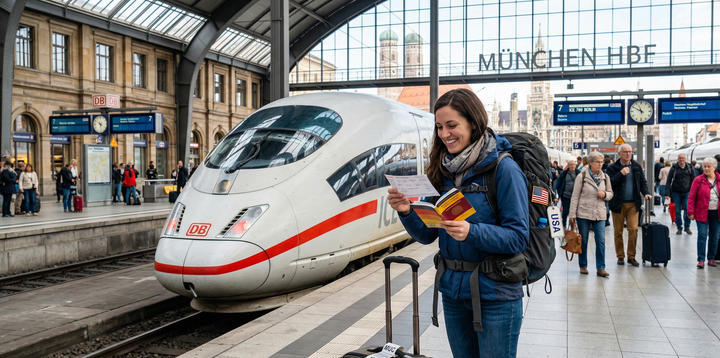
Germany rewards travelers who go beyond Berlin. From Bavarian castles to Rhine Valley vineyards and Baltic Sea coastline, these 22 best places to visit in Germany cover every region, every travel style, and the hidden spots most guides miss.
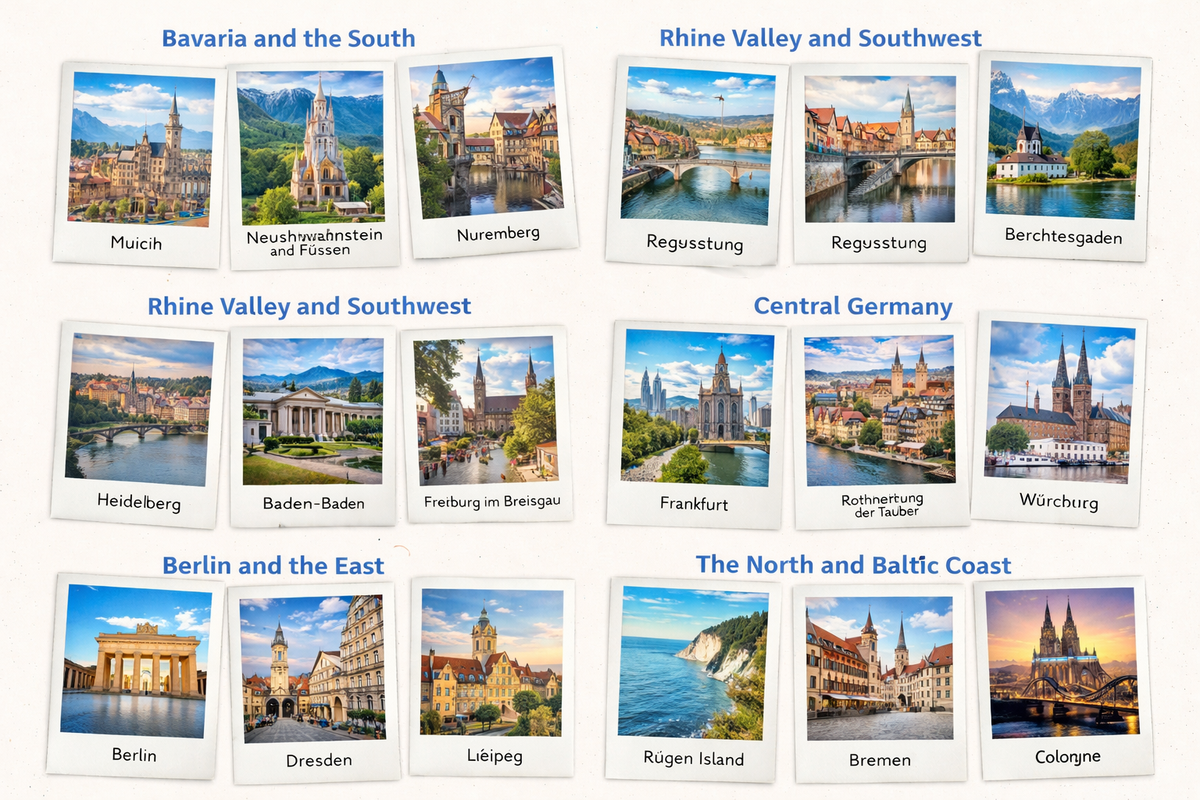
Germany is far more than Berlin. From Bavarian castles and Rhine Valley vineyards to medieval walled towns and Baltic Sea coastline, the best places to visit in Germany span 16 states and centuries of history.
This blog covers 22 destinations organised by region, including hidden gems most US travelers never discover, alongside the iconic German tourist attractions every first-timer should see. Whether you are planning your first trip from the USA or returning for more, this is your regional playbook.
Quick Reference: All 22 Places by Region
Five Places to Visit in Bavaria and the South
Bavaria is the most visited region in Germany and arguably its most visually spectacular. Alpine scenery, Baroque churches, beer halls, and fairytale castles make it one of the best places to visit in Germany for first-timers and returners alike.
#1. Munich
Germany's third-largest city blends world-class museums, Oktoberfest tradition, and easy access to the Alps into one supremely liveable place. The Marienplatz and Neues Rathaus glockenspiel, the Deutsches Museum (the world's largest science and technology museum), and the English Garden (larger than Central Park) are the anchors. Beer halls like Hofbräuhaus have been running since 1589. From Munich, the Bavarian Alps are 90 minutes away by train.
Travel tip: Bavaria Ticket covers unlimited regional train travel for up to 5 people from USD 43 (€37). Best value transport deal in Germany.
#2. Neuschwanstein Castle and Füssen (⭐ Hidden Gem)
Neuschwanstein is the most photographed castle in Germany and the primary inspiration for Sleeping Beauty Castle at Disneyland, confirmed by Walt Disney's own visit to the castle in the 1950s. Built by King Ludwig II in the 1870s, it sits perched above the village of Füssen in the Bavarian Alps with views that genuinely look computer-generated. Book tickets weeks in advance as they sell out daily in summer. Füssen itself, just 5km from the castle, is a beautifully preserved medieval town worth an overnight stay that most day-trippers miss entirely.
#3. Nuremberg
One of Germany's most historically layered cities, Nuremberg is where the Holy Roman Empire held its imperial diets, where Nazi war crimes trials were conducted, and where some of the best Christmas markets in Europe happen every December. The medieval Altstadt (old town) is remarkably intact for a city that was 90% destroyed in WWII. The Documentation Centre at the former Nazi Party Rally Grounds is one of the most important historical sites in Europe.
#4. Regensburg (⭐ Hidden Gem)
Regensburg is one of the best-preserved medieval cities in Germany and one of the least known among international visitors. Its 12th-century stone bridge, Gothic cathedral, and 1,000-year-old sausage kitchen (Historische Wurstküchl, serving grilled sausages continuously since 1135) are genuinely extraordinary. UNESCO listed the entire old town as a World Heritage Site in 2006. Unlike Nuremberg and Munich, it draws almost no international crowds.
#5. Berchtesgaden and the Eagle's Nest (⭐ Hidden Gem)
Berchtesgaden sits in a dramatic Alpine setting near the Austrian border and houses two of Bavaria's most extraordinary experiences. The Eagle's Nest (Kehlsteinhaus), Hitler's former mountain retreat at 1,834 metres, is accessible only by a specially built elevator and offers 360-degree Alpine views. Königssee, the emerald glacial lake inside Berchtesgaden National Park, is arguably the most beautiful lake in Germany. Most tourists in this region go no further than Neuschwanstein.
Travel tip: Eagle's Nest is open mid-May to October only. Bus and elevator from the valley are included in the USD 36 (€31) return ticket.
Four Places to See in the Rhine Valley and Southwest
The southwest is where Germany softens. Vineyard-covered hills, thermal spa towns, fairy-tale forests, and one of Europe's most romantic river valleys make this region one of the most rewarding things to do in Germany for travelers who want to slow down.
#6. Heidelberg
Heidelberg's ruined red-sandstone castle overlooking the Neckar River is one of the most iconic German tourist attractions and the most visited castle in the country after Neuschwanstein. Germany's oldest university (founded in 1386) gives the city a permanent intellectual energy. The Altstadt below the castle is compact, walkable, and lined with cafés, bookshops, and Baroque architecture. Mark Twain spent time here and wrote about it in A Tramp Abroad.
#7. Baden-Baden
Baden-Baden has been a spa destination for over 2,000 years, first as a Roman settlement and later as the 19th-century playground of Russian writers including Dostoevsky and Tolstoy. The thermal baths (Caracalla and Friedrichsbad) remain the heart of the town. One of the most underrated good places to go in Germany for US travelers who want something beyond cities and castles.
Travel tip: Friedrichsbad (Roman-Irish tradition) from USD 32 (€28). Caracalla Spa from USD 18 (€16). 1.5 hours from Frankfurt by train.
#8. Freiburg im Breisgau (⭐ Hidden Gem)
Freiburg sits at the edge of the Black Forest near the French border and is one of the sunniest cities in Germany. Its medieval Münster cathedral, completed in 1330, has been described as one of the finest Gothic spires in the world. The Bächle (small water channels running through the streets since medieval times) are unique to Freiburg and still used for cooling the city in summer. Compared to Heidelberg, it draws a fraction of the international visitors despite being equally beautiful.
#9. The Black Forest (⭐ Hidden Gem)
The Black Forest (Schwarzwald) is one of the most atmospheric places in Germany, a dense highland forest stretching 160km through Baden-Württemberg near the French border. It is the landscape behind the Brothers Grimm fairy tales, Black Forest gateau, and cuckoo clock culture. The Triberg waterfalls (Germany's highest), Titisee lake, and the medieval village of Gengenbach are the standout places to see in Germany within the region.
Four Places Not to Miss in Central Germany
Central Germany sits between the Rhine and the East, containing some of the most undervisited places in Germany, including the Romantic Road's medieval towns and Thuringia's remarkably preserved historic cities.
#10. Frankfurt
Germany's financial capital and main international gateway deserves at least a day. The Dom-Römer Quarter, rebuilt after WWII and reopened in 2018, is one of the most ambitious historic reconstructions in Europe. The Museumsufer (Museum Embankment) has 15 museums on one riverside stretch. Frankfurt is also the 2026 World Design Capital, hosting 200+ design events throughout the year.
Travel tip: Frankfurt Airport connects to the city centre in 11 minutes by S-Bahn for USD 6 (€5). All major European and US cities connect directly.
#11. Rothenburg ob der Tauber (⭐ Hidden Gem)
Rothenburg is the most complete medieval walled city in Germany and one of the most extraordinary places to see in Germany at dawn or dusk when the day-trippers have left. Dating to 1274, the cobblestone streets, half-timbered houses, and intact town walls create an atmosphere that feels genuinely medieval rather than reconstructed. The Plönlein corner is the most photographed street corner in Germany after the Brandenburg Gate.
Travel tip: 2.5 hours from Munich by regional train via Ansbach. Stay overnight to experience it after the tour buses leave.
#12. Würzburg (⭐ Hidden Gem)
Würzburg sits at the northern end of the Romantic Road in the Franconian wine region and is anchored by the Residenz Palace, a UNESCO World Heritage Site containing what is claimed to be the world's largest ceiling fresco, painted by Giovanni Battista Tiepolo in 1753. The Marienberg Fortress overlooks the city from across the Main River. Würzburg's Franconian wine (Bocksbeutel bottle) is worth seeking out in the old town wine cellars.
#13. Erfurt (⭐ Hidden Gem)
Erfurt is the capital of Thuringia and one of the best-preserved medieval cities in Germany that most Americans traveling to Germany never visit. Martin Luther studied here before the Reformation. The Krämerbrücke (Merchants' Bridge), built in 1325, is one of the longest inhabited medieval bridges in the world, with 32 houses built directly on top of it. The cathedral and the Severi Church, side by side on the Domplatz, create one of the most dramatic urban squares in Central Europe.
Travel tip: 2 hours from Frankfurt by ICE for USD 28 (€24). Combine with Weimar (15 min by regional train), home of Goethe, Schiller, and the Bauhaus school.
Four Places Not to Miss in Berlin and the East
East Germany is one of the most underrated travel regions in Europe. Beyond Berlin, a string of cities with extraordinary medieval and communist-era architecture, thriving art scenes, and almost no international tourist crowds make this one of the best places to visit in Germany for experienced travelers.
#14. Berlin
Berlin is one of the great cities of the world and the essential starting point for Americans traveling to Germany. The Brandenburg Gate, Reichstag, Holocaust Memorial, East Side Gallery (the longest remaining section of the Berlin Wall), and Museum Island (5 world-class museums on one island) are all within walking distance of each other. Berlin's nightlife, street food, and contemporary art scene make it one of the best and good places to go in Germany for any age group.
Travel tip: Berlin Welcome Card covers unlimited public transport plus museum discounts from USD 26 (€23) for 48 hours.
#15. Dresden
Dresden is one of the most visually stunning cities in Germany, rebuilt after the catastrophic Allied firebombing of 1945 into something genuinely extraordinary. The Zwinger Palace, Semper Opera House, and Frauenkirche cathedral (reconstructed and reopened in 2005) cluster together in a Baroque ensemble along the Elbe that rivals anything in Vienna or Prague. The Albertinum and Gemäldegalerie Alte Meister house world-class art collections.
#16. Leipzig (⭐ Hidden Gem)
Leipzig is one of Germany's most exciting cultural cities and is consistently underrated. Johann Sebastian Bach spent 27 years here. Richard Wagner was born here. The Peaceful Revolution of 1989 that ended East Germany began here with the Monday Demonstrations at the Nikolaikirche. Today, Leipzig has one of Germany's most vibrant music and arts scenes, affordable living costs, and a compact old town with the remarkable Mädler Passage shopping arcade beneath it.
#17. Görlitz (⭐ Hidden Gem)
Görlitz sits on the Polish border and is Germany's best-preserved medieval city, containing over 4,000 listed historic buildings spanning Gothic, Renaissance, Baroque, and Art Nouveau periods. It was never bombed in WWII, and the result is an architectural time capsule. Hollywood has filmed here repeatedly as a stand-in for pre-war European cities. The old town across the bridge in Poland (Zgorzelec) is free to enter with a valid US passport.
Five Places to See in the North and Baltic Coast
Northern Germany is one of the least visited regions by international tourists and one of the most rewarding for travelers who want a maritime atmosphere, UNESCO heritage, and a Germany that feels completely different from Bavaria or Berlin.
#18. Hamburg
Hamburg is Germany's second-largest city and one of its most atmospheric, built around the Alster lakes and the historic Speicherstadt warehouse district (UNESCO World Heritage Site). The Elbphilharmonie concert hall, opened in 2017 and built on top of a 1960s warehouse, is one of the most architecturally significant buildings in Europe. Hamburg's fish market at dawn on Sunday is one of the great free experiences in the country.
Travel tip: The Hamburg Card covers all public transport for USD 14 (€12) for 24 hours. 1.5 hours from Berlin by ICE for USD 23 (€20).
#19. Lübeck (⭐ Hidden Gem)
Lübeck is a UNESCO World Heritage city on Germany's Baltic coast and one of the finest medieval cityscapes in Northern Europe. The entire old town sits on an island surrounded by the Trave River, its skyline dominated by seven Gothic church towers. Thomas Mann was born here. The Holstentor gate is one of the most recognisable German tourist attractions in the north, yet the city itself draws a fraction of Hamburg's visitor numbers.
#20. Rügen Island (⭐ Hidden Gem)
Rügen is Germany's largest island at 926 km² and one of its most beautiful natural destinations. The chalk cliffs of Jasmund National Park (UNESCO World Heritage Site) drop directly into the Baltic Sea in formations that inspired the Romantic painter Caspar David Friedrich. Wide natural beaches, amber-hunting on the shore after storms, and the ornate Victorian seaside resort architecture of Binz make it one of the most atmospheric places in Germany.
#21. Bremen (⭐ Hidden Gem)
Bremen is one of Germany's oldest Hanseatic trading cities, and despite being the 10th largest city in the country, it remains genuinely off the international tourist radar. The UNESCO-listed Rathaus and Roland statue on the Marktplatz are outstanding. The Schnoor neighbourhood is a perfectly preserved medieval quarter of narrow lanes and craftspeople's houses dating to the 15th century.
#22. Cologne
Cologne's Gothic cathedral (Kölner Dom), which took over 600 years to build and miraculously survived the WWII bombing that destroyed 90% of the surrounding city, is one of the most astonishing German tourist attractions in the country. The cathedral's twin spires at 157 metres are visible from across the city. The old town along the Rhine, the Ludwig Museum, and the Chocolate Museum make Cologne one of the most complete city breaks in Germany.
Germany's Top 3 Tourist Attractions for First Timers
If this is your first trip to Germany and you can only prioritise three German tourist attractions:
1. Berlin Wall Memorial (Berlin)
The most historically significant site in modern European history. The East Side Gallery section (1.3km) is free. The Berlin Wall Memorial on Bernauer Strasse is one of the most moving open-air museums in the world.
2. Neuschwanstein Castle (Bavaria)
The most photographed place in Germany. Book tickets in advance at tickets.hohenschwangau.de. The view from the Marienbrücke bridge above the castle is worth the 20-minute walk alone.
3. Cologne Cathedral (Cologne)
Entry to the main cathedral is free. The climb to the top (533 steps, USD 6 / €5) gives the best view of any city in western Germany. Over 600 years of construction in one building.
Most Beautiful Region in Germany
Bavaria is the most consistently beautiful region for dramatic scenery, castles, and Alpine views. But the Rhine Valley between Koblenz and Bingen, with its 40+ castles, vineyard-covered slopes, and medieval river towns, is the most cinematically beautiful stretch of landscape in Germany. The Black Forest competes hard for the most atmospheric. For US travelers visiting Germany for the first time, Bavaria is the answer. For returners, the Rhine Valley and Görlitz in the East are the revelations.
Practical Tips for US Travelers Visiting Germany
Entry requirements from the USA:
- US passport valid for the duration of your stay
- No visa required for stays under 90 days
- ETIAS (EU travel authorisation) launches in Q4 2026, after the summer. US travelers visiting in summer 2026 are not affected. Once launched: USD 23 (€20), valid 3 years. Check travel-europe.europa.eu
Currency
Germany uses the Euro. USD 1 = approximately €0.87 in March 2026. Most places accept Visa and Mastercard. Carry some cash for smaller towns, markets, and traditional restaurants.
Transport
Deutsche Bahn (DB) is the national rail network. Book at bahn.de. The Deutschland-Ticket costs USD 72 (€63) per month from January 2026 for unlimited travel on all regional trains and local transport. For US travelers doing a multi-city Germany trip, it is the single best value transport pass available.
Language
English is widely spoken in all tourist areas, major cities, and transport hubs. In rural areas and smaller towns, basic German phrases are appreciated.
What not to do as an American in Germany?
- Do not jaywalk. Germans take pedestrian signal laws seriously, and locals will let you know
- Do not be loud in residential areas after 10 pm. Quiet hours (Ruhezeit) are culturally enforced
- Do not expect shops to be open on Sundays. Most retail closes completely. Plan grocery shopping for Saturday
- Do not tip as generously as in the USA. Rounding up or leaving 5-10% is standard. 20% American-style tips are not expected
- Do not assume directness means unfriendliness. German communication style is direct by nature, not rude
Staying Connected: eSIM for Germany
This guide covers 22 destinations across five regions, from Bavaria in the south to Rügen Island on the Baltic coast. Every city switch means a new transport app, a new map, a new set of directions.
FAQs
Which is the most beautiful part of Germany?
Bavaria is the most consistently beautiful region, combining Alpine scenery, Baroque architecture, and fairytale castles. For pure landscape drama, the Rhine Valley between Koblenz and Bingen, with its 40+ castles and vineyard-covered slopes, is unmatched. The Black Forest is the most atmospheric. For US travelers visiting for the first time, Bavaria wins. For returners, the Rhine Valley and the medieval cities of the East are the most surprising discoveries.
Where to go in Germany for first-timers?
Start with Berlin for history and culture, Munich for Bavarian tradition and Alps access, and Cologne for the cathedral and Rhine atmosphere. These three cities are the best places to visit in Germany for first timers, are well connected by fast train, and cover the country's cultural and geographical range. Add Heidelberg or Rothenburg ob der Tauber if time allows for a classic medieval Germany experience.
What are the top three tourist attractions in Germany?
The Berlin Wall Memorial and East Side Gallery, Neuschwanstein Castle in Bavaria, and Cologne Cathedral are Germany's top three tourist attractions by visitor numbers and cultural significance. All three are among the best places to visit in Germany and are accessible by public transport without a car.
What is the unfriendliest city in Germany?
Frankfurt has historically carried a reputation as Germany's least welcoming city for tourists, partly because it is primarily a business and finance hub rather than a tourist destination. The area around the main train station (Bahnhofsviertel) is gritty by German standards. However, Frankfurt is actively reinventing itself as the 2026 World Design Capital, and a day here is worth it. The reputation is overstated for anyone visiting beyond the station district.
What not to do in Germany as an American?
Do not jaywalk, do not be loud after 10 pm in residential areas, do not expect Sunday shopping, and do not over-tip. More practically: do not skip the smaller cities in favour of only Berlin and Munich. Rothenburg, Görlitz, Lübeck, and Erfurt are among the best things to do in Germany, and most Americans traveling to Germany never reach them. The Deutschland-Ticket at USD 72 (€63) per month covers all regional rail and local transport in Germany, making every destination in this guide accessible without a car.
Disclaimer
This blog is based on verified travel sources, official tourism information, and publicly available data as of March 2026. Attraction prices, train fares, and transport pass costs have been converted from Euro to US Dollars at an approximate rate of 1 EUR = USD 1.15 based on the EUR/USD exchange rate as of March 2026. Currency amounts are indicative only and will vary at the time of travel. Always verify the latest pricing at the official venue and transport websites before booking. ETIAS (EU travel authorisation) is expected to launch in Q4 2026 after the summer travel season. US travelers visiting Germany in summer 2026 are not affected. Check travel-europe.europa.eu for the latest entry requirements. Jetpac is not responsible for network variations or outcomes related to travel decisions made based on this content.