
Best Time to Visit Iceland: Seasons, Northern Lights & Roads
June to September is the best time to visit Iceland for Ring Road trips, open roads and long daylight, while September to March suits Northern Lights and November to March is best for ice caves. April, May, October and November offer lower prices and fewer crowds.
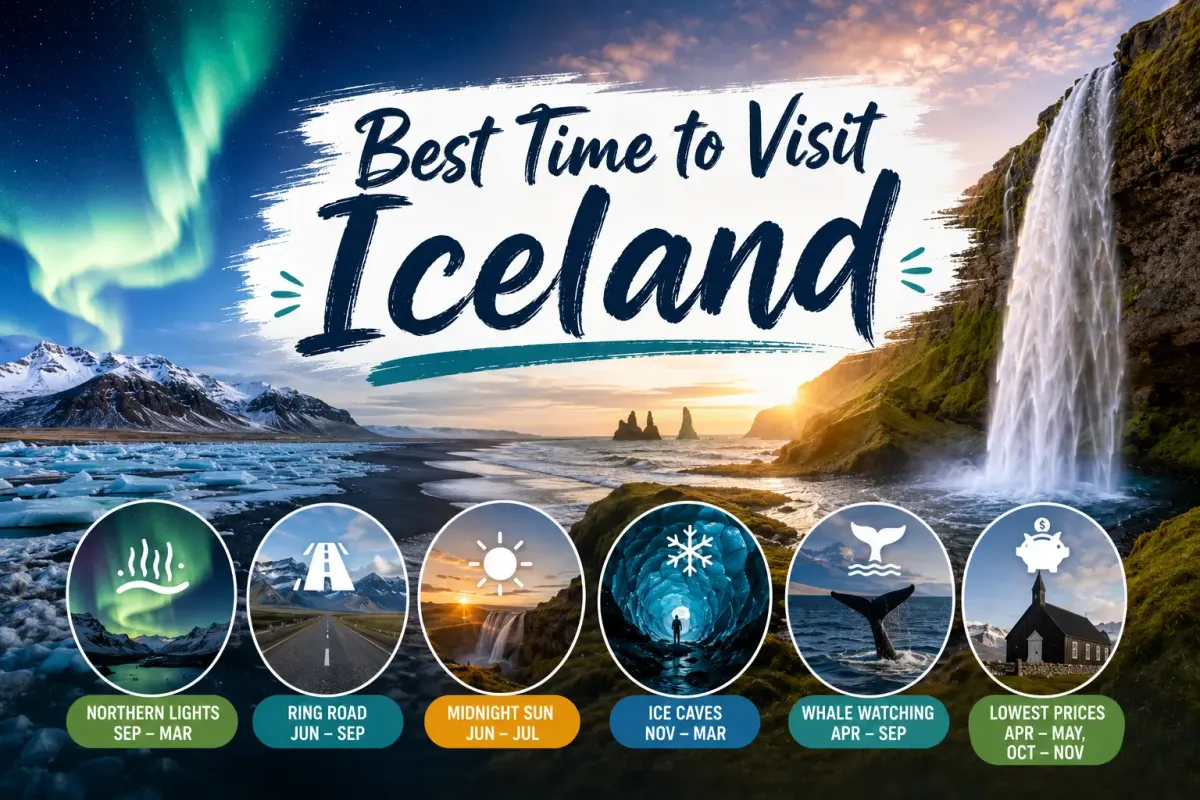
Iceland is a spectacular year-round destination where no two months look the same. Iceland is completely different in every season.
You can hike under the midnight sun in summer, or explore frozen glaciers in winter. Because the landscape transforms entirely throughout the year, choosing the best time to visit Iceland ultimately depends on what you want to see, whether you chase summer puffins or winter storms.
Finding a good time to go to Iceland is all about syncing your bucket list with the island's unique calendar.
Best Time to Visit Iceland
If you are looking for a fast recommendation, the ideal travel window depends entirely on your primary sightseeing goals. Figuring out the best time to travel to Iceland comes down to matching your must-see bucket list with the island's seasonal shifts. Use this quick-reference table to find the perfect months for your trip:
Iceland Seasons Explained
Iceland does not follow traditional seasonal rules, as the conditions change drastically from one month to the next. Looking at the weather by month in Iceland is the easiest way to understand these sudden shifts. Checking these patterns helps you figure out the best time of year to visit Iceland based on your specific travel goals:
Spring (April to May)
The snow begins to melt, revealing cascading waterfalls and returning puffins. This is a quieter shoulder season with lower prices, though mountain roads remain closed.
Summer (June to August)
This is the most popular travel window, offering nearly 24 hours of daylight under the midnight sun. The weather is relatively mild, and all highland roads open up for exploration.
Autumn (September to October)
The landscapes turn into beautiful shades of gold and rust, while the nights grow dark enough to see the northern lights. The weather gets wilder, but tourist crowds thin out.
Winter (November to March)
Iceland transforms into a snowy wonderland with short days and long nights. This is the prime time for exploring natural ice caves, chasing the auroras, and soaking in hot springs.
Read more: Planning another trip across the North Atlantic? Explore Best time to visit Ireland for seasonal weather, local festivals, and the best months for sightseeing.
Iceland Weather by Month
To help you choose the precise window for your trip, looking at monthly weather in Iceland is the easiest way to compare changing conditions, tourist traffic, and pricing tiers across the country. Reviewing these seasonal shifts makes it easy to see exactly "when is the best time to go to Iceland?" is based on your specific budget and sightseeing goals.
Which Season Is Right for You?
Iceland is essentially two entirely different countries depending on when you visit. If you are having trouble deciding when to book, using this quick seasonal cheat sheet will help you pick the best time to visit Iceland based on your top travel priorities:
Best Time to Visit Iceland Based on Your Travel Goals
Finding your perfect travel window depends heavily on how you plan to spend your days, as different months unlock completely different experiences across the island. Pinning down the best time to travel to Iceland requires matching your personal bucket list with the country's unique seasonal shifts.
Best Time for Northern Lights
Best Months
September to March
Why These Months?
To witness the aurora borealis, you need three things: complete darkness, clear skies, and strong solar activity. The deep winter months provide the necessary dark skies, but you must also contend with highly unpredictable winter weather that can cause heavy cloud cover.
🌌 Viewing Tip: Check the local aurora forecast regularly, head away from city light pollution, and be patient—the Northern Lights can appear and disappear within minutes.
Best Time for Ring Road Trips
Best Months
June to September
Why These Months?
Summer is the ultimate season for a classic Icelandic road trip. If you want to experience one of the best places to visit in Europe, hitting the famous Ring Road highway during these months ensures the tarmac is completely clear of snow, making driving conditions smooth and safe.
Accessibility: You get up to 24 hours of daylight to pace your driving, and remote gravel roads leading to the dramatic Westfjords or interior highlands finally open up for exploration.
Read more: Prefer mountain scenery and alpine adventures? See Best time to visit Switzerland for the ideal months for skiing, hiking and scenic train journeys.
Best Time for Midnight Sun
Best Months
June to July
Why These Months?
The midnight sun is a natural phenomenon where the sun never fully sets below the horizon, bathing the island in a continuous, golden twilight.
Hiking & Camping: This endless daylight gives you ultimate flexibility. You can hike popular volcanic trails or set up camp at midnight to enjoy Iceland's most famous waterfalls completely devoid of daytime crowds.
Best Time for Ice Caves
Best Months
November to March
Why These Months?
Entering a natural subglacial chamber requires consistent freezing temperatures. If you are trying to figure out when is the best time to go to Iceland for an underground glacial trek, the peak winter season is the only window where these massive ice structures are stable enough to enter safely.
Safety First: Glaciers are constantly shifting environments. You must never attempt to visit an ice cave without a certified local guide who provides proper safety gear like helmets and crampons.
Best Time for Wildlife
Best Months
April to September
Why These Months?
If your main goal is to spot unique animals, summer is the absolute best time of year to visit Iceland for nature enthusiasts. The season welcomes an incredible influx of marine life and nesting birds to the island's coastal cliffs and surrounding waters.
Puffins & Whales: Millions of puffins nest on cliffs like Latrabjarg from May through August. Simultaneously, coastal whale-watching tours boast a 95% success rate for spotting humpback and minke whales. Keep an eye out for camouflaged Arctic foxes in nature reserves too.
Read more: Looking for spring colour and city breaks? Read Best time to visit Netherlands to plan around tulip season, summer events and quieter travel periods.
Cheapest Time to Visit Iceland
Best Months
April to May & October to November
Why These Months?
The shoulder season months are the most budget-friendly windows to book your trip. Tourism slows down significantly during these transition periods between the peak summer and winter rushes.
Deals: You will find the lowest hotel prices, excellent rental car promotions, and discounted flight deals. While the weather can be a bit volatile, you get a peaceful experience with far fewer tourists at major sights.
Read more: Comparing shoulder-season trips in Europe? Discover the best time to visit Italy for sightseeing, beaches, food festivals and lower crowds.
Iceland Road Conditions by Season
Navigating the roads here is a unique experience because weather patterns directly dictate which parts of the island are accessible. Understanding how conditions shift throughout the year is a vital part of finding the best time to visit Iceland for a self-drive holiday, ensuring a safe and smooth journey.
💡 Pro Tip: Always check the official road.is website every single morning before starting your car to monitor real-time closures and wind speeds.
What to Pack for Iceland
The golden rule for visiting this island is preparation because the weather can throw four seasons at you in a single afternoon. Packing these essential items ensures you stay warm, dry, and comfortable during your outdoor adventures, no matter what time of year you decide is a good time to visit Iceland.
- A waterproof jacket is absolutely essential to block intense waterfall spray and sudden downpours, so choose a fully waterproof shell rather than a simple water-resistant one.
- Thermal layers made of merino wool or synthetic fabrics should be worn close to your skin to trap body heat and allow easy adjusting throughout the day.
- Sturdy hiking boots with ankle support and deep rubber tread are non-negotiable for safely navigating slippery trails and rough volcanic rock.
- Gloves and a beanie should stay in your daypack at all times because glacial winds can drop temperatures rapidly even during the summer months.
- Sunglasses are vital to protect your eyes from the low-lying sun and the intense glare reflecting off white snow and massive glaciers.
Festivals & Events in Iceland
Integrating a local festival into your itinerary adds a fantastic layer of culture to your journey. Icelanders love to celebrate their heritage, music, and changing seasons, making these major annual events highly worth planning around.
For culture seekers looking at the best time to visit Europe, syncing your trip with these local gatherings is a brilliant choice.
National Day (June 17th)
Celebrating the country's independence, this summer holiday fills the streets of downtown Reykjavík with vibrant colourful parades, brass bands, street performers, and traditional poetry readings. If you want to see the capital at its liveliest, June is the absolute best time to go to Iceland.
Reykjavík Culture Night (August)
Known locally as Menningarnótt, this single-day festival turns the capital into a massive open-air art gallery. You can enjoy free concerts, museum access, street food, and a spectacular late-night fireworks show over the harbour. It highlights why August is arguably the best time of year to visit Iceland if you love arts and community spirit.
Iceland Airwaves (November)
This iconic multi-day music festival showcases a mix of cutting-edge local and international artists. Performances pop up everywhere from cozy downtown record stores and bars to grand churches, offering the perfect indoor escape during the chilly autumn nights.
Christmas Celebrations (December)
Winter magic takes over the country with beautiful festive light displays and traditional holiday markets. You can learn all about the folklore of the 13 mischievous Yule Lads who visit children in the days leading up to Christmas Eve.
Read more: Looking for warmer Mediterranean weather? Explore Best time to visit Malta to find the best months for sunshine, beaches and fewer tourists.
Travel Tips Before Visiting Iceland
A successful trip requires a mix of smart digital tools and forward planning. While finding a good time to go to Iceland is a great first step, utilizing these quick practical tips will help you navigate the island safely and efficiently once you land.
- Renting a car requires choosing wisely, so stick to a standard car for the summer Ring Road or a legal 4x4 SUV for rugged highland F-roads.
- Staying connected is vital for navigation, so set up an eSIM for Iceland or another dependable data connection to track live route updates and manage digital bookings on the go.
- Road safety means never stopping on the highway shoulders, so always pull completely into designated viewing areas to snap photos.
- Weather apps like Vedur and the road.is platform must be checked every morning to avoid sudden, dangerous storms and route closures.
- Booking accommodation should be done six months in advance if you plan to visit during the highly competitive summer peak season.
- Fuel costs run high, and automated pumps require a credit card with a 4-digit PIN, so confirm your card settings before leaving home.
Staying Connected in Iceland
Finding a good time to visit Iceland requires balancing unpredictable weather and your budget, but exploring safely means you cannot go offline. Relying on carrier roaming in remote Arctic regions leads to severe bill shock, often costing 70% more than digital options. When comparing plans to find the best eSIM for Europe travel, you often face hidden fees and poor coverage.
Getting a Jetpac Iceland eSIM solves these hurdles instantly. This connection allows you to use Google Maps, check real-time road conditions, and track live aurora forecast apps with cheap, high-speed data and zero surprise fees.
Jetpac also offers coverage in 200+ destinations, making it ideal for travellers exploring Iceland and beyond. Plus, eligible SmartDelay users receive complimentary airport lounge access during qualifying flight delays. With transparent pricing and reliable high-speed data, Jetpac delivers a smoother, more connected travel experience.

FAQs
What is the best month to visit Iceland?
July is incredible for long sunny days and open roads. However, the absolute best time to travel to Iceland depends entirely on the specific sights you want to tick off your bucket list.
When can you see the Northern Lights in Iceland?
You can spot them from September to March. These months offer the deep night darkness required to see the green auroras dancing clearly across the sky.
Is summer or winter better for visiting Iceland?
Summer is perfect for endless daylight and hiking. Conversely, winter is a good time to visit Iceland if you want to experience magical ice caves and frozen waterfalls.
When is the cheapest time to visit Iceland?
The shoulder months of April, May, October, and November offer the lowest prices. You will find great deals on flights and hotels because tourist crowds thin out.
What month has the best weather in Iceland?
July and August offer the warmest temperatures and the most stable conditions. These months bring minimal rain and virtually no risk of sudden winter blizzards.
When are Iceland's ice caves open?
Natural ice caves are typically safe to enter from November to March. Freezing winter temperatures are absolutely necessary to keep the glacial structures stable and frozen solid.
What should I pack for Iceland in different seasons?
Always pack waterproof layers, thermal underwear, and sturdy hiking boots. Add thick gloves and a windproof beanie for winter, or bring sunglasses for the bright summer sun.
What is the best eSIM for Iceland?
A Jetpac eSIM is your best choice, as it connects you to local high-speed data instantly upon arrival, helping you track weather changes without expensive roaming fees.
Disclaimer
The information in this blog is based on seasonal weather patterns, road accessibility criteria, and northern lights visibility timelines available to the Jetpac team at the time of writing in 2026. Icelandic weather is notoriously volatile; real-time highland F-road openings, ice cave stability windows, and safety updates fluctuate and are subject to change. We strongly advise checking live updates on official platforms like road.is and vedur.is before travelling. Jetpac is not responsible for any changes or outcomes post-publication.