20 Biggest Festivals in Europe for Food, Music & Culture
From Oktoberfest to Tomorrowland, explore the biggest festivals in Europe with real insights on scale, culture, and smart planning. Navigate crowds, book early, and stay connected across countries with a Jetpac eSIM so every stage, street, and celebration runs smoothly.
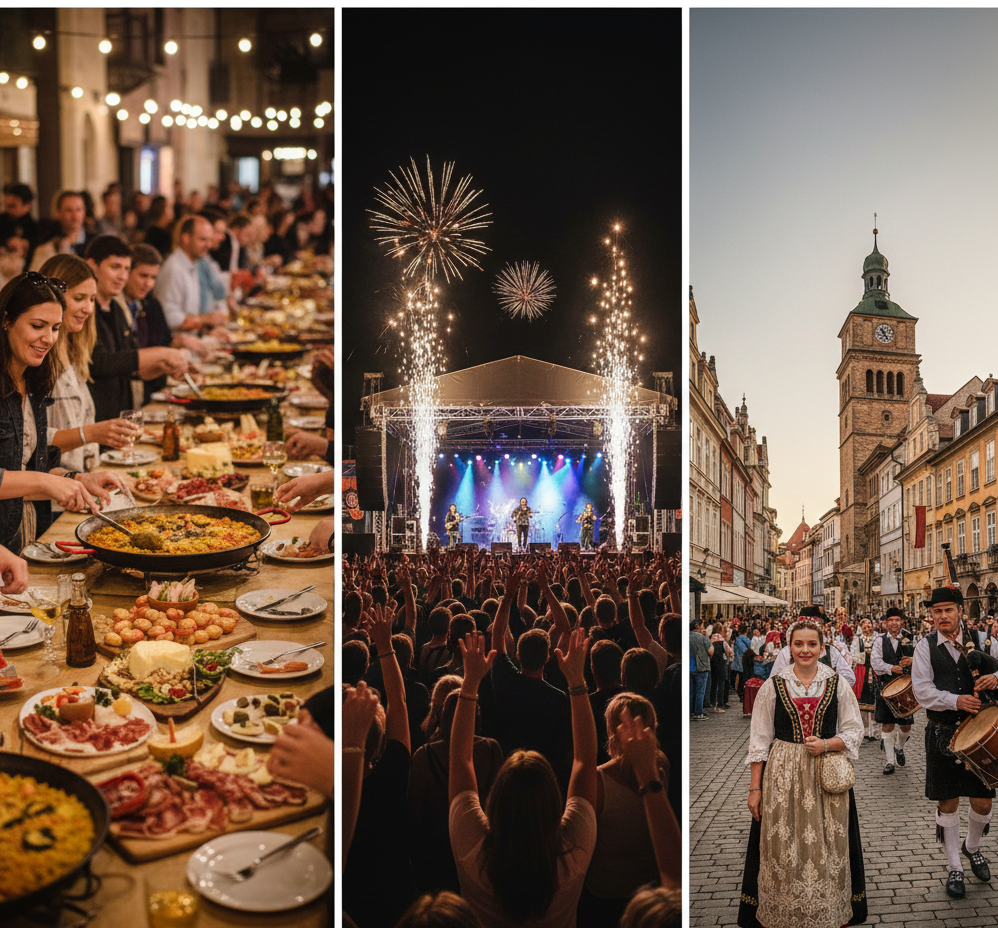
Europe’s festival calendar is built for big moments, the kind that take over whole cities, reshape local routines, and pull in visitors from every continent. If you are planning around the biggest festivals in Europe, it helps to know what “big” really means, not just attendance, but cultural weight, logistics, and how early you need to book.
Jetpac keeps you connected across borders so you can navigate venues, scan tickets, and coordinate meetups without relying on patchy public Wi-Fi. With a reliable eSIM for Europe, festival travel becomes smoother from arrival to encore.
This list covers Europe's biggest festivals across food, music, and culture, plus practical tips to help you handle crowds, timing, and budgeting like a pro.
Before we jump in, here is the key mindset shift: the biggest festivals in Europe reward planning, but they do not require luxury budgets if you know when to go, where to stay, and how to move.
First, lock in the festivals that define Europe’s food and drink identity.

Food and Drink Festivals
1) Oktoberfest, Munich, Germany
Oktoberfest is the world’s most famous beer festival and one of the biggest festivals in Europe by sheer scale, with millions visiting the Theresienwiese every year.
The “secret” is that it is not only beer, it is also Bavarian tradition, family tables, brass bands, and regional food culture on full display.
How to do it right: Go on a weekday morning for shorter queues, and pre-book a tent table if you want guaranteed seating.
2) Fête de la Gastronomie, France
This nationwide celebration turns France into a moving food festival, with tastings, chef demos, and regional specialties highlighted across towns and cities. It feels less like a single venue event and more like an edible cultural map.
How to do it right: Pick one region, like Lyon for bouchons or Provence for markets, and build your itinerary around pre-booked workshops.
3) Alba White Truffle Festival, Piedmont, Italy
This is where luxury food becomes a public ritual. The market is the headline, but the real experience is pairing truffles with local wines, learning how truffles are graded, and understanding why chefs chase them.
How to do it right: Book a truffle hunt with a licensed trifolau and dog, then plan lunch immediately after.
4) San Sebastián Gastronomika, Spain
A heavyweight in the culinary world, this festival brings top chefs, panels, and tastings to one of Europe’s best food cities. If you want depth, this is where you learn how modern European cuisine evolves in real time.
How to do it right: Balance ticketed sessions with pintxos crawls, and reserve dinner slots early.
5) Taste of London, London, UK
This event condenses London’s restaurant scene into one venue, with small plates, chef stages, and drink pairings. It is especially good if you want breadth without city-hopping.
How to do it right: Go early in the day for shorter lines, then treat it like a tasting menu, not a full meal at each booth.
Next, shift from food crowds to stage crowds, where logistics matter even more.
Music Festivals
6) Tomorrowland, Boom, Belgium
Tomorrowland is a global EDM landmark and one of Europe's biggest festivals for ticket demand, production value, and international attendance. The scale is not just the crowd; it is the city-like design, themed stages, and tightly timed movement between areas.
How to do it right: Pick one stage as your anchor per time slot, and use meet-up points because phone signals can bottleneck at peak moments.
7) Glastonbury, Somerset, UK
Glastonbury is a cultural institution, not just a lineup. It is a multi-zone world of music, comedy, art, and late-night scenes, and it earns its reputation as one of the best European music festivals because it shapes pop culture beyond the weekend.
How to do it right: Pack for mud even in summer, and plan one “must-see” act per day to avoid burnout.
8) Sziget Festival, Budapest, Hungary
Sziget is a week-long island takeover with multi-genre programming and a strong international crowd. It is often listed among the coolest festivals in Europe because it blends music with art installations, pop-up communities, and a genuine city-within-a-city feel.
How to do it right: If you camp, bring earplugs and an eye mask, the party runs late, and the sun rises early.
9) Primavera Sound, Barcelona, Spain
Primavera is curated for discovery, with indie, alternative, and electronic scenes sharing space. It is ideal if you care about depth in the lineup and not only headline names.
How to do it right: Study the schedule in advance because set clashes are common, and venues can be spread out.
10) Roskilde Festival, Roskilde, Denmark
Roskilde is known for community and purpose; it is a non-profit and reinvests proceeds into charitable causes. That ethos shapes everything, from volunteering to the shared campsite culture.
How to do it right: Consider volunteering if available; it can reduce costs and deepen the experience.
Roskilde’s charitable ethos and genre diversity frequently place it among the best festivals in Europe for travelers seeking both music and meaning.
Many travellers build entire itineraries around the biggest festivals in Europe, planning multi-city trips to experience more than one celebration in a single season.
Read More: Want to bring home something that feels local, not generic? Read our blog 👉 Best European Souvenirs to Bring Home from Every Country. It breaks down meaningful keepsakes from every country, so you can choose items with a real cultural story and not just shelf appeal.
If you're specifically interested in electronic music, explore our guide to the best electro music festivals in Europe for top events across the continent.
Now that music is covered, move into festivals where heritage and spectacle are the main event.
Many of Europe's biggest festivals are rooted in centuries-old traditions that continue to shape modern cultural identity.
Culture and Tradition Festivals
11) Venice Carnival, Venice, Italy
Venice Carnival is a living theatre of masks, costumes, and rituals, and it remains one of the major festivals in Europe for historical atmosphere. It works because the city itself becomes the stage, and every alleyway feels curated by time.
How to do it right: Book early and prioritize morning photo walks before day-trippers swell the streets.
12) Notting Hill Carnival, London, UK
Notting Hill is Europe’s largest street carnival, rooted in Caribbean culture and London’s multicultural identity. It is one of the great festivals in Europe for pure street energy, food, sound systems, and parade artistry.
How to do it right: Arrive early, pick one parade corridor, and keep your route simple; crowd movement can become slow.
13) San Fermín, Pamplona, Spain
San Fermín is famous for the bull runs, but the larger truth is that it is a city-wide festival of music, tradition, and constant communal celebration. Even if you do not engage with the runs, the cultural intensity is undeniable.
How to do it right: Know that the schedule, parades, and concerts are easier to enjoy than the most crowded daytime routes.
14) La Tomatina, Buñol, Spain
A tomato fight sounds simple until you see the scale and choreography, trucks rolling in, rules enforced, and thousands participating at once. It is one of the most photographed experiences in Europe.
How to do it right: Wear eye protection, bring a waterproof pouch, and accept that your clothes will not recover.
15) Up Helly Aa, Shetland, Scotland
A Viking fire festival in the far north, Up Helly Aa is cultural heritage, community craftsmanship, and spectacle combined. The torchlit procession and ship burning are deeply symbolic, not just performative.
How to do it right: Plan accommodation early because options are limited and fill fast.
16) Las Fallas, Valencia, Spain
Las Fallas is a masterclass in controlled chaos: giant sculptural satirical figures, fireworks, street food, and an ending that literally burns the art. It is a strong contender in any conversation about the biggest festivals in Europe for sensory impact.
How to do it right: Earplugs help, and balconies are worth it for viewing because street-level density gets intense.
Finally, close with festivals that blend light, film, and arts, where Europe’s creativity shows off.
Arts, Film, and Citywide Spectacles
17) Edinburgh Festival Fringe, Edinburgh, Scotland
The Fringe is the world’s largest arts festival, and the city transforms into a nonstop theatre grid. The “big” here is volume, thousands of shows, every day, every genre.
How to do it right: Book only a few anchor shows, then leave room for spontaneous picks, that is where the magic is.
The Fringe is widely regarded as one of the great festivals in Europe for artistic experimentation and global cultural exchange.
18) Festival of Lights, Berlin, Germany
Berlin’s landmarks become projection canvases, and the city turns into a night-time art route. It is one of the coolest festivals in Europe for photographers and anyone who loves city atmospheres after dark.
How to do it right: Plan a walking loop with public transport shortcuts, and go on a weekday for easier movement.
19) Cannes Film Festival, Cannes, France
Cannes is cinema as a global industry theatre. Even without red carpet access, the city buzz, pop-up events, and film culture make it iconic.
How to do it right: Stay nearby and commute in; hotel pricing in the center spikes sharply.
20) Montreux Jazz Festival, Montreux, Switzerland
Montreux is about intimacy inside greatness. It combines major artists with a lakeside setting and a schedule that encourages discovery. It consistently belongs in lists of the best festivals in Europe for music lovers who want quality without the chaos of giant fields.
How to do it right: Mix paid headliners with free stages to keep both budget and variety balanced.
Experiencing multiple biggest festivals in Europe in one journey requires early bookings and strategic route planning across countries.
With the list in mind, planning becomes the real difference between stress and joy.
Festival Planning Tips for Timing, Budget, and Connectivity
If you are trying to stack multiple events, the best time to visit Europe for music is usually late spring through summer, while winter and early spring bring carnivals and cultural festivals.
If your trip combines festivals with budget travel, consider building parts of your itinerary through the Cheapest European countries to visit, then splurge on one anchor event elsewhere.
For winter festival energy, the best places to go in February in Europe can help you find city celebrations when the crowds are different.
This is because the biggest festivals in Europe often coincide with peak travel periods, and accommodation prices and transport availability can shift rapidly.
Packing well is underrated. Think layers for temperature swings, earplugs, a compact rain layer, and a portable charger, since queues and long days drain batteries fast.
Connectivity is a major stress reducer. An eSIM for Europe can keep you online across borders, and the best eSIM for Europe is the one that matches your movement, whether you are staying in one country or hopping between several.
If you expect heavy streaming and constant maps, an eSIM for Europe for unlimited data can prevent mid-day slowdowns that ruin coordination.
Jetpac for Festival Travel Across Europe
Big events create small problems, signal congestion, sold-out transport, last-minute venue updates, and meetups that shift by the hour. A Jetpac eSIM is designed for those moments, so you stay online when crowds are at their densest.
🎟️ Festival Proof Coverage Across 200+ Destinations
Jetpac keeps one setup ready across borders, which is ideal when Europe's biggest festivals pull you from one country to the next with little downtime.
🔥 Share Data Freely With Unrestricted Hotspot
Hotspot sharing helps when friends need directions, tickets, or ride apps, especially near major festivals in Europe where Wi-Fi networks overload. Enjoy using the hotspot without any data restrictions.
💸 Save More Versus Traditional Roaming
Jetpac plans can be up to 70% cheaper than traditional roaming, which matters when festival weekends already inflate accommodation and transport costs.
🧭 Keep Essentials Working After Data Ends
Even if your data runs out, key apps like WhatsApp chat, Google Maps, and Uber services remain usable, so you do not lose navigation or coordination.
📞 Call Anyone With In-App Voice Calling
In-app calling works in 50+ countries, making it easier to contact hotels, taxis, or local businesses, even if they are not on messaging apps.
📡 Smarter Signal With Multi Network Support
Jetpac connects to the strongest available network, which can reduce frustrating dropouts in the busiest zones of the biggest festivals in Europe.
For many travelers comparing providers, Jetpac is often considered the best eSIM for Europe option for multi-country festival seasons, and pairing it with an eSIM for Europe for an unlimited data plan can be a practical choice if you know you will stream, navigate, and coordinate constantly.
FAQs
What are the biggest festivals in Europe by crowd scale?
Oktoberfest, Donauinselfest, and major city carnivals often sit at the top by attendance, but “biggest” also includes city impact, transport load, and how early hotels sell out. If you want the true scale experience, prioritize festivals that take over entire districts, not just a fenced venue.
Which are the coolest festivals in Europe for music and atmosphere?
Many travelers point to Tomorrowland, Sziget, and Berlin’s light festivals because they combine production, community vibe, and immersive settings. The coolest festivals in Europe usually have more than good lineups; they have a distinct identity that changes how the city or venue feels.
Which events are the best European music festivals for first-timers?
If you want a bucket-list atmosphere, Glastonbury is iconic, and if you want high production and global crowd energy, Tomorrowland is unmatched. The best European music festivals for first-timers are the ones where logistics are well-developed, since that reduces friction when you are learning how festival days flow.
What are the smartest ways to handle travel around Europe's biggest festivals?
Start by booking accommodation and trains before tickets go on sale, since transport and hotels often sell out first. Choose one base area, then plan short commutes rather than changing hotels daily. This cuts stress and keeps your mornings smoother.
How do I stay connected reliably during the coolest festivals in Europe?
Festival sites can bottleneck phone networks at peak moments, so plan for it. A Jetpac eSIM for Europe helps you stay online across countries, and it is especially valuable when you are coordinating meetups, scanning tickets, or rerouting after last-minute schedule changes.
Disclaimer
All information in this blog was accurate at the time of writing and is based on historical climate data and publicly available travel sources. The pricing, availability, transportation schedules, and local regulations may change after publication. Travelers should verify current details before making travel decisions. Jetpac is not responsible for any changes, updates, inaccuracies, or third-party service variations that occur after publication.