Cost of Living in Japan in 2026: Monthly Expenses Breakdown
Navigating Japanese living costs in 2026 calls for balancing regional rent, seasonal utility spikes, and daily grocery bills. Detailed monthly expense matrices outline single, couple, and family budgets while contrasting Tokyo's price premium with cheaper hubs like Fukuoka or Sapporo.

Determining the overall cost of living in Japan depends heavily on your lifestyle, housing preferences, and location.
While living in bustling hub cities like Tokyo comes with a premium price tag, regional cities such as Osaka, Fukuoka, or Sapporo offer far more affordable living conditions.
So, is it expensive to live in Japan? It can be, but managing your daily budget effectively makes it surprisingly manageable.
Whether you are relocating or using this as a financial Japan travel guide, planning your budget in 2026 requires a clear breakdown of monthly expenses.
The following sections explore key costs including rent, groceries, utilities, public transit, healthcare, dining out, and entertainment.

Quick Answer: How Much Does It Cost to Live in Japan?
Understanding "how much does it cost to live in Japan" depends heavily on your location and lifestyle preferences. While exact expenses vary across regions, planning your budget requires looking at realistic ranges.
Average Monthly Cost of Living in Japan
What Are the Main Expenses in Japan?
Your monthly budget in Japan comprises several predictable spending categories. For most residents, housing forms the largest single expense by a wide margin.
Other core categories include utilities, groceries, dining out, public transportation, mobile and internet service, healthcare, entertainment, and miscellaneous personal items.
Understanding the overall Japan cost of living means balancing these elements carefully. While rent takes up a significant portion of your income, expenses like public transit and food can remain surprisingly affordable depending on your choices.

How Much Is Rent in Japan?
If you are wondering “how much is rent in Japan”, location is the single biggest deciding factor. Living near a major urban hub commands a high premium, whereas moving to suburban outskirts or regional areas makes rent significantly cheaper.
- Studio / 1K Apartment: Standard compact layouts (15–25 m²) cost around $350–$600 (¥55,000–¥95,000) in regional cities or outer suburbs, but climb to $700–$1,100+ (¥90,000–¥150,000+) in central Tokyo wards like Shibuya or Minato.
- 1-Bedroom Apartment (1DK/1LDK): A setup with a separate living/dining space averages $500–$700 (¥75,000–¥105,000) in regional areas, reaching $1,100–$1,800+ (¥150,000–¥250,000+) in prime central Tokyo.
- 2-Bedroom Apartment (2LDK): Multi-room units average $700–$1,000 (¥105,000–¥155,000) in suburbs and regional cities like Fukuoka or Sapporo, compared to $1,500–$2,500 in downtown Tokyo.
Location drives these price gaps. In central Tokyo, high demand keeps rents elevated, whereas suburban areas (such as Saitama or Kanagawa) and regional cities (like Osaka or Nagoya) offer far more space per yen.
Upfront Move-In Costs
Renting a Japanese apartment requires substantial upfront capital. Initial move-in costs often equal 3 to 5 times the single month’s rent due to itemized fees:
- Security Deposit (Shikikin): 1–2 months' rent (refundable minus damages).
- Key Money (Reikin): 1–2 months' rent (a mandatory, non-refundable monetary gift to the landlord).
- Agency Fee: 0.5–1 month's rent + tax to the real estate broker.
- Guarantor Company Fee: 0.5–1 month's rent (required if you lack a native Japanese guarantor).
- Advance Rent & Insurance: First month's prorated rent plus mandatory fire insurance ($100–$200).
Cost of Living in Tokyo vs. Other Japanese Cities
Comparing the cost of living in Tokyo with other major regional hubs highlights significant budget differences across the country.
Many expats tracking the overall Japan cost of living find that stepping outside the capital opens up incredible financial flexibility.
#1. Tokyo
Tokyo carries the highest rent and lifestyle costs in the country, though its unmatched public transit network, massive job market, and endless entertainment options justify the financial premium for many residents.
#2. Osaka and Kyoto
These cultural hubs feature significantly lower housing costs paired with legendary local food scenes and historical charm, making them some of the best places to live in Japan for those seeking a balance of city life and affordability.
#3. Yokohama
Yokohama offers a slightly quieter coastal vibe just a short train ride away from Tokyo, providing residents with marginally lower rent, spacious neighborhoods, and slightly cheaper everyday expenses.
#4. Fukuoka and Sapporo
Both cities offer highly affordable apartment rent, excellent local cuisine, and exceptionally easy access to stunning nature, making them incredibly budget-friendly choices for expats and remote workers alike.
#5. Nagoya
As a major industrial and economic hub, Nagoya provides a very stable job market with balanced housing costs, predictable utility rates, and highly moderate everyday living expenses.
The cost of living in Tokyo is not dramatically higher in every category, but rent and entertainment can inflate your monthly spending significantly compared to regional alternatives.

Grocery and Food Costs in Japan
Food costs are manageable if you balance home cooking with casual dining out. Checking the prices of goods in Japan at local supermarkets shows reasonable rates for daily staples like rice, eggs, milk, seasonal vegetables, and pork or chicken, though imported fruits can be expensive.
- Convenience store meals: $3–$6 for bento boxes or rice balls.
- Casual restaurant meal: $5–$13 for ramen, gyudon, or set meals.
- Coffee and fast food: $2–$5 at local cafes and chain restaurants.
Shopping at local supermarkets and cooking at home keeps your food budget low. Exploring local food stalls also offers great budget-friendly things to do in Japan.
Read more: Looking to stretch your budget even further while traveling or living in Japan? Learn practical strategies for saving money on transport, food, and attractions. Read our blog👉 Japan Budgeting Tips to Make the Most of Your Yen
Utilities, Internet and Mobile Phone Costs
Monthly utility bills fluctuate seasonally, largely due to air conditioning in humid summers and heating during cold winters. Understanding these fluctuations helps pinpoint the average cost of living in Japan for an individual.
- Electricity, Gas, and Water: Expect to spend $100–$190 per month for a standard single or couple's apartment. Larger layouts increase energy consumption.
- Home Internet: High-speed fiber broadband costs around $30–$45 per month.
- Mobile Phone: Major carriers and MVNOs offer reliable plans ranging from $13 to $32 per month.
Planning for seasonal swings ensures your utility budget remains balanced throughout the year.
Transportation Costs in Japan
Japan's public transit system is efficient, clean, and extensive, drastically reducing the need to own a car in major urban areas.
- Trains and Subways: Local fares range from $1.50 to $4.00 per ride.
- Commuter Passes: Monthly train passes cost $65–$130, though employers in Japan frequently cover work commute costs.
- Buses and Cycling: Local buses offer low flat rates, and cycling is a popular, cheap way to navigate neighborhoods.
- Taxis and Domestic Travel: Taxis get expensive quickly, while Bullet Trains (Shinkansen) serve long-distance travel.
Using commuter passes and bicycles provides great practical Japan travel tips for minimizing transportation costs.
Read more: Navigating Japan’s rail networks and local city transport is much easier with the right tools. Discover essential applications for navigation, translation, and itinerary planning. Read our blog👉 Best Travel Apps for Japan
Healthcare and Other Monthly Expenses
Enrolling in Japan's National Health Insurance system makes medical care affordable. Insurance premiums depend on your income, but out-of-pocket costs for doctor visits and prescription medications are capped at 30% for standard residents.
Personal care, gym memberships ($60–$100/month), clothing, and household items make up the remainder of your non-essential spending.
While healthcare remains manageable, newcomers must remember that monthly insurance premiums are separate from routine out-of-pocket medical bills.
Read more: Considering other popular destinations in the Asia-Pacific region? Read our breakdown of housing, groceries, and healthcare expenses down under. Read our blog👉 Cost of Living in New Zealand: What You'll Really Pay
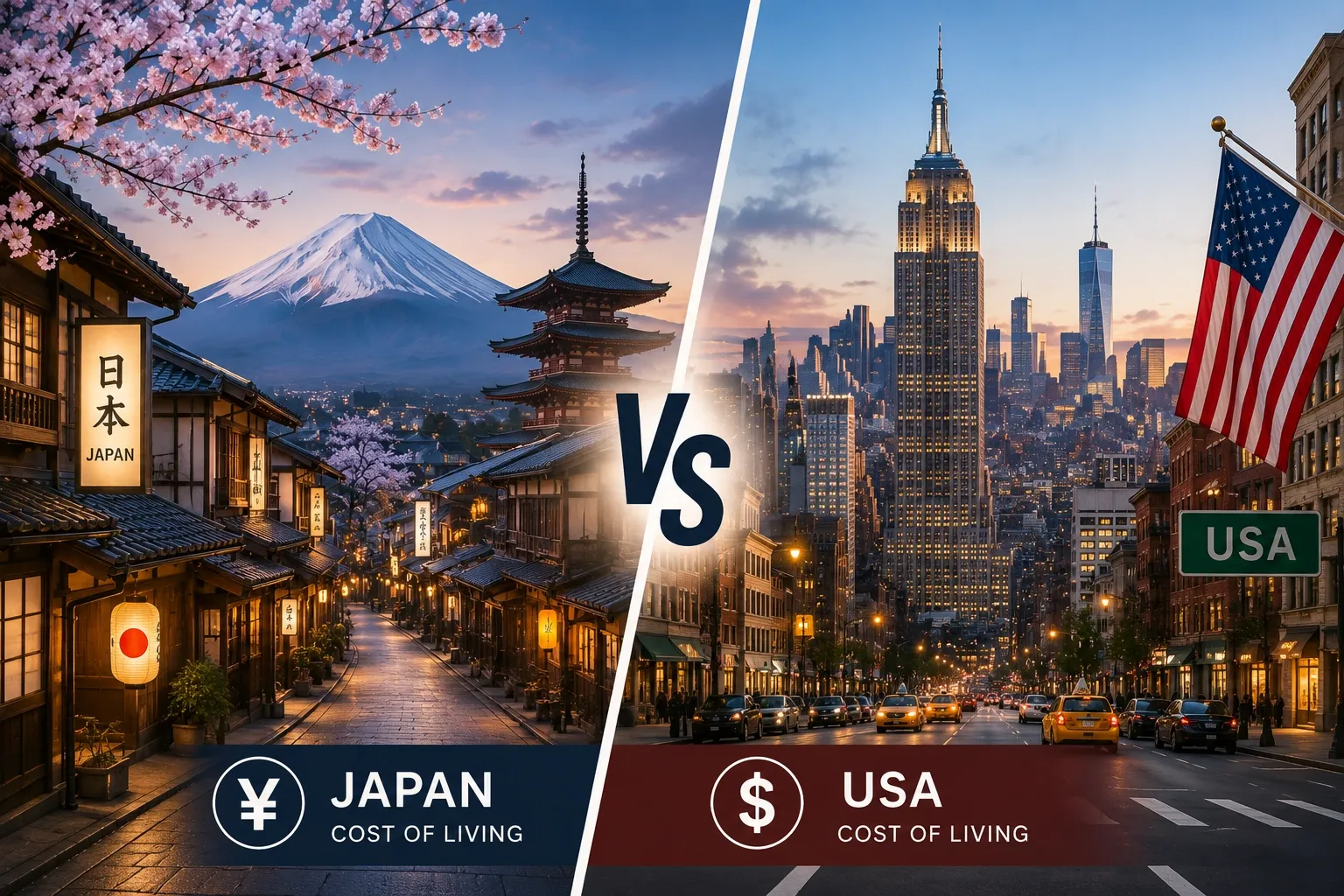
Cost of Living in Japan vs. the US
Comparing the cost of living in Japan vs the US reveals key structural differences in everyday spending.
Japan vs. US Cost of Living


Overall, Japan can be more affordable than many major U.S. cities for everyday expenses such as public transportation, casual dining, and healthcare, while housing costs vary considerably by location.
Tokyo can still be expensive, but its cost of living may compare favorably with cities such as New York or San Francisco in some categories.
How Much Money Do You Need to Live Comfortably in Japan?
So, is it expensive to live in Japan if you want to settle down comfortably? A monthly range of $1,250 to $1,900 (¥200,000–¥300,000) serves as a solid target for a single person.
Budget lifestyle
You reside in a smaller apartment or shared house, cook almost all meals at home, rely strictly on public transportation, and strictly limit your entertainment spending.
Comfortable lifestyle
You enjoy better housing options outside the core center, dine out regularly with friends, participate in local weekend entertainment, and take occasional domestic travel trips.
Premium lifestyle
You choose a spacious central urban apartment, frequent high-end restaurants, rely heavily on taxis for convenience, and enjoy much higher discretionary spending on luxury goods.
Your exact budget depends heavily on individual choices. Keep in mind that expensive central Tokyo rent can easily push these baseline figures much higher.
Read more: Comparing global relocation destinations? Explore full expense breakdowns, housing costs, and lifestyle budgets in top European countries. Read our blog👉 Real Cost of Living in Switzerland: Rent, Food & More
How to Save Money While Living in Japan
Keeping your overall Japan cost of living manageable is easy with a few practical habits:
- Choose housing slightly outside prime central neighborhoods to lower rent.
- Rely on public transportation and maximize your employer-funded commuter passes to travel cheaply.
- Cook at home more often and shop at local supermarkets, especially near closing time when fresh items are discounted.
- Limit expensive taxi usage by keeping close track of late-night train and bus schedules.
- Select budget mobile providers (MVNOs) over premium plan tiers.
- Buy quality home goods and furniture at secondhand stores like Off-House or 2nd Street.
- Take advantage of local point cards and regional neighborhood discounts to save daily.
One of the fun facts about Japan is that supermarkets apply steep discount stickers to bento boxes and sushi late in the evening, so you can score amazing food for super cheap.
Read more: Planning an expat budget in Northern Europe? Get a clear guide to monthly bills, rent, and daily living costs. Read our blog👉 Cost of Living in Sweden: Essential Expense Guide for Expats
Stay Connected in Japan With an eSIM
Understanding the average cost of living in Japan helps you manage daily expenses while exploring major cities. When managing travel costs, staying connected online is essential for using train navigation, translating menus, searching for local restaurants, and making mobile payments.
Buying a Japan eSIM before landing lets you move smoothly between regions without relying entirely on hotel Wi-Fi networks or paying unexpected roaming fees.
Choosing a Jetpac eSIM for Japan automatically connects your phone to the strongest local network 24/7 across multiple top national carriers.
You also get unlimited hotspot sharing to keep laptops connected, alongside continuous access to essential tools like Google Maps and translation apps even after your high-speed data balance runs low.
Comparing cellular signal strength, data packages, and validity terms helps you select the best eSIM for Japan travel.
Read more: Want a detailed breakdown of network reliability, data speeds, and coverage across Tokyo and regional areas? Read our full performance review. Read our blog👉 Is Jetpac eSIM Good in Japan

FAQs
How much does it cost to live in Japan per month?
A single person typically spends $940 to $1,875 monthly. Your total cost of living in Japan depends mainly on your city, housing, and dining habits.
Is Tokyo expensive to live in?
Tokyo is Japan's most expensive city, mainly due to high rent. A central studio can cost $700 to $1,100 monthly, though food and public transit remain relatively affordable.
How much money do I need to live comfortably in Japan?
A monthly budget of $1,250 to $1,875 lets a single person live comfortably. This covers a modern apartment outside the core center, dining out, and occasional domestic travel.
Is food expensive in Japan?
Food is quite reasonable if you buy local staples. Everyday prices of goods in Japan at supermarkets stay low, while convenience store meals cost $3 to $6 and casual dining costs $5 to $13.
Which Japanese city has the lowest cost of living?
Regional cities like Fukuoka and Sapporo offer a lower Japan cost of living. Their rents and daily expenses are much cheaper than in major hubs like Tokyo or Osaka.
How much money should I save before moving to Japan?
You should save three to five times your monthly rent for upfront move-in fees, including key money and deposits, plus enough funds to cover three months of basic living expenses.
What salary do you need to live comfortably in Japan?
An annual salary of ¥3,000,000 to ¥4,500,000 ($20,000 to $30,000) allows a single person to live comfortably, though higher earnings are necessary if you live in central Tokyo with a family.
Disclaimer
The information provided in this guide is based on cost estimates, living expenses, and regional averages available at the time of writing in 2026. Specific costs, including apartment rents, utility rates, food prices, and public transportation fares, are subject to variation and change without notice. We recommend verifying current rates and local guidelines directly with official sources and service providers before making financial or relocation decisions. Jetpac is not responsible for any changes or outcomes following publication.
Get connected as soon as you land with a Jetpac travel eSIM.