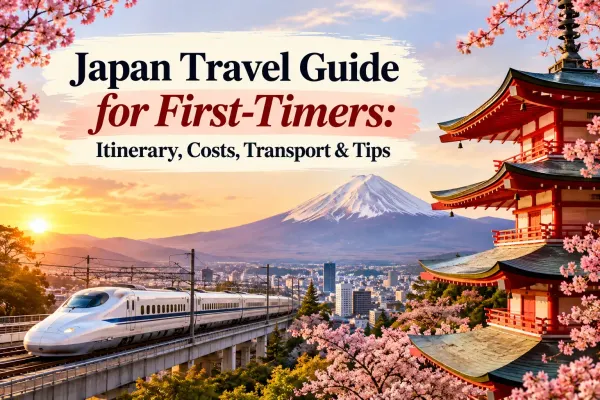
Japan Travel Itinerary Guide: How to Plan Your Trip for 2, 7, 10, or 14 Days
Explore Japan at your own pace with itineraries for 2, 7, 10, or 14 days, including routes, travel times, budgets, and advice on visiting Tokyo, Kyoto, Osaka, Hiroshima, and Hakone.

A Japan itinerary built around the Shinkansen bullet train connects Tokyo, Kyoto, Osaka, and Hiroshima without a rental car. Two days cover Tokyo’s essential neighborhoods; fourteen days cover northern mountain towns, samurai castle districts, and island beaches in one connected arc.
When you plan a trip to Japan, the Tokaido Shinkansen corridor forms the backbone of any first visit. A Japan travel itinerary that stays rail-based is faster, more affordable, and significantly less stressful than driving across Japan’s cities.
Japan rewards depth over breadth. Two nights in each destination consistently delivers more value than one-night stops across many cities.

Japan Itinerary at a Glance
Japan by Trip Length:
| Trip Length | Recommended Route | Best For |
|---|---|---|
| 2 days | Tokyo highlights | Stopover visitors |
| 7 days | Tokyo, Kyoto, Osaka | First-time travelers |
| 10 days | Classic arc plus Hiroshima and Nara | Deeper trip |
| 14 days | Classic arc plus Kanazawa and Hakone | Longer vacation |
Tokyo by Days:
| Days | Suggested Areas |
|---|---|
| 1 day | Asakusa, Shibuya, Shinjuku |
| 2 days | Above plus Harajuku and teamLab Borderless |
| 3 days | Above plus Ueno and Akihabara |
| 5 days | Full Tokyo plus Kamakura or Nikko day trip |
How Many Days Do You Need in Japan?
Minimum worthwhile stay: Seven days. Two to three days cover Tokyo but leave Kyoto, Osaka, and western Japan inaccessible on the same trip. Seven days opens the classic Tokaido corridor at a manageable pace.
Ideal stay: Ten to fourteen days. Ten days adds Hiroshima and Nara. Fourteen opens Kanazawa or Hakone for genuine regional variety beyond the main corridor.
Longer stay: Twenty-one days allows slow travel through multiple regions with time for rural Japan, outer islands, and mountain areas missed on shorter trips.
What changes with each additional block:
2 days: Tokyo essentials (Asakusa, Shibuya, Shinjuku); 7 days: Tokyo plus Kyoto and Osaka on the Shinkansen; 10 days: Classic arc plus Hiroshima and Nara; 14 days: Full arc plus one northern or southern extension
How many days do you need in Japan depends most on which regions matter to you. Plan a trip to Japan with fewer than seven days and most of the country beyond Tokyo stays out of reach.
Best Japan Itineraries by Trip Length
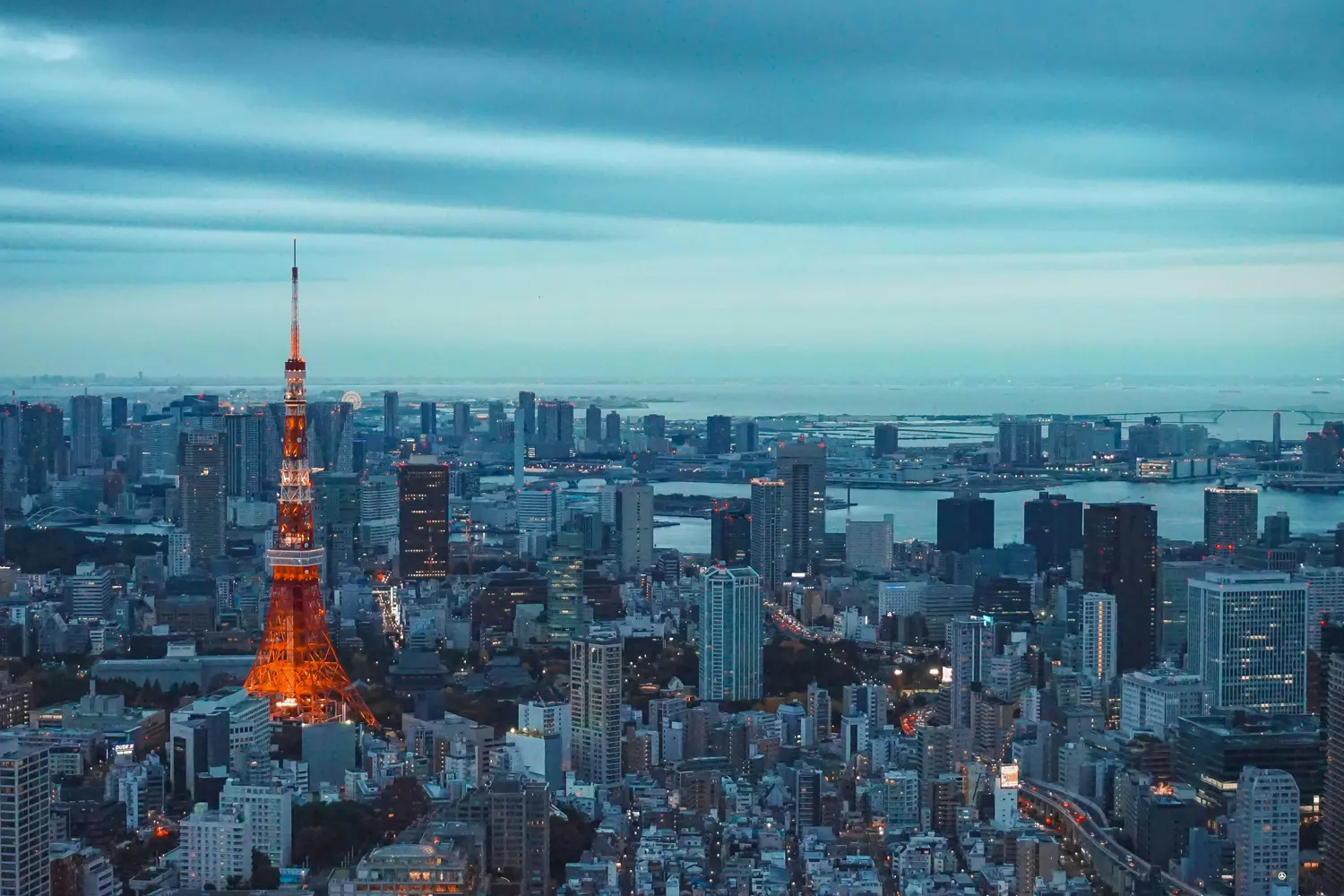
Japan 1-Day Itinerary
One day in Japan means Tokyo. Use the metro and walk between neighborhoods.
- Morning: Senso-ji Temple and Nakamise Street in Asakusa (free from 6 am)
- Afternoon: Shibuya Crossing; Shibuya Sky observation deck (approximately USD 14-17)
- Evening: Shinjuku’s Memory Lane ramen (approximately USD 10-14); Golden Gai bar circuit
Japan 3-Day Itinerary
Day 1: Senso-ji and Asakusa riverside. Morning: Ueno Park. Afternoon: Akihabara.
Day 2: teamLab Borderless morning (approximately USD 22; book in advance); Shibuya and Harajuku afternoon; Omotesando evening
Day 3: Kamakura day trip by JR Yokosuka Line (approximately 1 hour; Great Buddha entry approximately USD 3; Hase-dera garden approximately USD 5)
Japan 5-Day Itinerary
Day 1: Tokyo (Asakusa, Ueno, Shinjuku)
Day 2: Tokyo (teamLab Borderless, Shibuya, Harajuku)
Day 3: Shinkansen to Kyoto (approximately 2 hours 20 minutes; from approximately USD 90 reserved); Fushimi Inari in the afternoon
Day 4: Kyoto (Arashiyama bamboo grove, Kinkaku-ji entry approximately USD 5)
Day 5: Nara day trip (45 minutes from Kyoto; Todai-ji entry approximately USD 8); return to Tokyo
Read more: When you already know whether your phone connects in Japan and which data option suits your trip, it prevents coverage problems from the first day. 👉 Will My Phone Work in Japan? What You Must Know Before Travel
Japan 7-Day Itinerary
The Japan itinerary 7 days covers Tokyo (3 nights), Kyoto (2 nights), and Osaka (2 nights).
Day 1: Tokyo
Morning: Senso-ji and Asakusa.
Afternoon: Ueno Park.
Evening: Akihabara.
Overnight: Shinjuku or Asakusa.
Day 2: Tokyo
Morning: teamLab Borderless.
Afternoon: Shibuya Sky.
Evening: Golden Gai.
Overnight: Tokyo.
Day 3: Tokyo
Morning: Meiji Shrine (free) and Harajuku.
Afternoon: Omotesando.
Evening: Shibuya Crossing at dusk.
Overnight: Tokyo.
Day 4: Shinkansen to Kyoto
Morning: (approximately 2 hours 20 minutes; from approximately USD 90).
Afternoon: Fushimi Inari (free).
Evening: Gion evening walk.
Overnight: Kyoto
Day 5: Kyoto
Morning: Arashiyama and Tenryu-ji gardens (approximately USD 11).
Afternoon: Kinkaku-ji (approximately USD 5).
Evening: Pontocho dining alley.
Overnight: Kyoto.
Day 6: Shinkansen to Osaka (15 minutes)
Afternoon: Dotonbori food circuit.
Evening: Shinsekai kushikatsu.
Overnight: Namba.
Day 7: Osaka
Morning: Kuromon Ichiba Market.
Afternoon: Sumiyoshi Taisha shrine (free).
Evening: Final Dotonbori walk.
Overnight: Osaka or return to Tokyo.
This 7-day Japan itinerary suits first-time independent travelers wanting the full Tokaido corridor without overloading any single day.
Japan 10-Day Itinerary
The 10-day Japan itinerary extends the classic arc west with Hiroshima and Miyajima.
- Days 1-3: Tokyo
- Days 4-5: Kyoto
- Day 6: Nara day trip (45 minutes from Kyoto)
- Days 7-8: Osaka
- Day 9: Hiroshima (Shinkansen from Osaka approximately 1 hour; Peace Memorial Museum entry approximately USD 2)
- Day 10: Miyajima Island (JR Ferry approximately 25 minutes; Itsukushima Shrine entry approximately USD 4)
This 10-day trip to Japan itinerary suits travelers wanting history, culture, and iconic island scenery in one connected Shinkansen arc.
Japan 14-Day Itinerary
The 14-day Japan itinerary adds Kanazawa and Hakone after the full classic circuit.
- Days 1-3: Tokyo
- Days 4-5: Kyoto
- Day 6: Nara day trip
- Days 7-8: Osaka
- Days 9-10: Hiroshima and Miyajima
- Days 11-12: Kanazawa (train from Osaka approximately 1 hour 30 minutes to 2 hours with connection at Tsuruga; Kenroku-en garden entry approximately USD 2-3)
- Days 13-14: Hakone (Mt. Fuji views; ryokan stay from approximately USD 150-300/person including meals)
This two-week Japan itinerary suits travelers wanting cultural depth alongside Japan’s most iconic natural landmark.
On a Japan itinerary 14 days extension, Kanazawa’s samurai districts and Hakone’s onsen landscape offer experiences the Tokaido corridor alone cannot provide.
Detailed Japan Itinerary
The 7-day Japan travel itinerary below gives the full practical day-by-day breakdown.
Day 1: Tokyo
Morning: Senso-ji and Nakamise Street (free exterior).
Afternoon: Ueno Park and Tokyo National Museum (approximately USD 10).
Evening: Akihabara electronics district.
Where to stay: Shinjuku or Asakusa.
Getting around: Tokyo Metro single fare approximately USD 1.40-2.50; Suica IC card recommended.
Day 2: Tokyo
Morning: teamLab Borderless at Azabudai Hills (approximately USD 22; book 2-4 weeks ahead).
Afternoon: Shibuya Sky (approximately USD 14-17).
Evening: Shibuya Crossing.
Where to stay: Tokyo.
Getting around: JR Yamanote Line covers Shibuya and Shinjuku directly.
Day 3: Tokyo
Morning: Meiji Shrine (free) and Harajuku.
Afternoon: Omotesando.
Evening: Shinjuku Golden Gai.
Where to stay: Tokyo.
Getting around: JR Yamanote Line; Harajuku to Omotesando is 20 minutes on foot.
Day 4: Kyoto
Morning: Shinkansen from Tokyo Station (approximately 2 hours 20 minutes; from approximately USD 90; JR Pass covers this route).
Afternoon: Fushimi Inari torii trail (free).
Evening: Gion evening walk along Hanamikoji Street.
Where to stay: Kyoto Station area or Gion.
Getting around: Kyoto City Bus one-day pass approximately USD 5.
Day 5: Kyoto
Morning: Arashiyama bamboo grove and Tenryu-ji gardens (approximately USD 11).
Afternoon: Kinkaku-ji (approximately USD 5).
Evening: Pontocho dining alley dinner.
Where to stay: Kyoto.
Getting around: Bicycle hire from approximately USD 10/day covers central Kyoto sights.
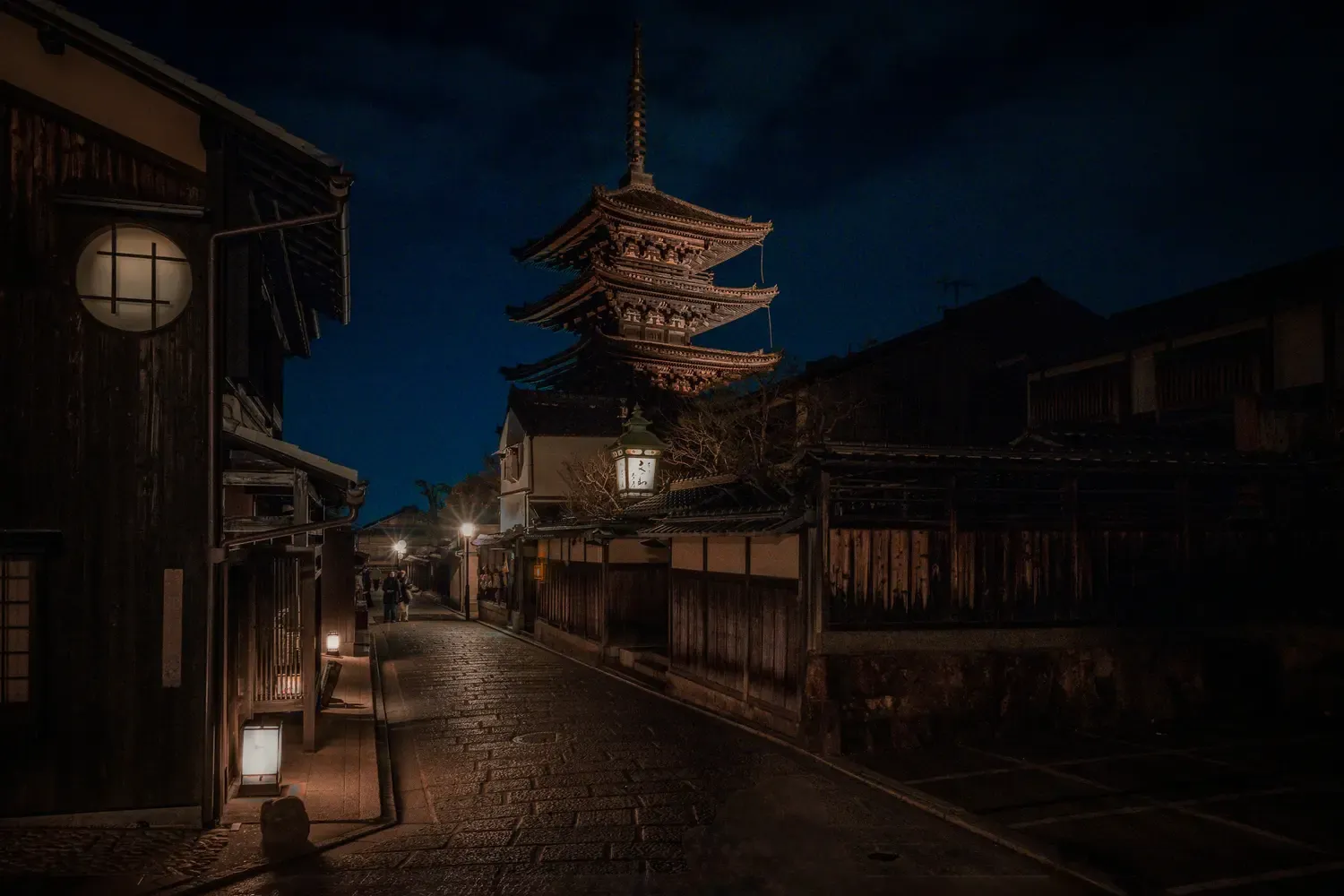
Day 6: Osaka
Morning: Shinkansen to Osaka (15 minutes from Kyoto; IC card covers this short hop).
Afternoon: Dotonbori food circuit and Osaka Castle exterior.
Evening: Shinsekai kushikatsu.
Where to stay: Namba or Shinsaibashi.
Getting around: Osaka Metro day pass is approximately USD 5-6.
Day 7: Osaka and Departure
Morning: Kuromon Ichiba Market.
Afternoon: Sumiyoshi Taisha Shrine (free).
Evening: Shinkansen to Tokyo or Haruka Express to Kansai Airport (approximately USD 15-18).
Where to stay: Tokyo return hotel or Kansai Airport area.
Getting around: Osaka Metro to Namba; Haruka Express for airport connection.
Japan Itinerary by Region
Northern Japan
A northern Japan itinerary covering Hokkaido, Tohoku, and the Japan Alps suits 7-10 dedicated days. Sapporo, Niseko ski terrain, Furano lavender fields (peak July), and Shirakawa-go’s UNESCO thatched villages offer experiences unavailable on the Tokaido corridor.
The best places to visit in Japan in the north are most accessible from May through October.
Central Japan
Tokyo, Kamakura, Nikko, Hakone, and the Tateyama-Kurobe Alpine Route form central Japan’s main travel arc.
Japan travel guide resources consistently point to Nikko’s Toshogu shrine complex as the most undervisited major site within two hours of Tokyo.
Southern Japan
A southern Japan itinerary from Osaka through Hiroshima to Kyushu runs best on the Shinkansen with 10-14 dedicated days.
This southern Japan itinerary opens Beppu’s volcanic hot springs, the Aso caldera trail, and Nagasaki’s historically significant Glover Garden alongside the Kansai highlights.
Japanese Islands
Okinawa suits beach and diving travel from March through October; domestic flight from Tokyo is approximately 2 hours 30 minutes (from approximately USD 40-100 booked in advance).
Ishigaki and the Yaeyama chain reward travelers extending Okinawa beyond three nights.
Best Japan Routes
Classic First-Time Route: Tokyo (3 nights) → Kyoto (2 nights) → Osaka (2 nights). All by Shinkansen; JR Pass 7-day covers the full journey from both ends.
Northern Japan Route: Tokyo (2 nights) → Nikko (1 night) → Sendai (1 night) → Sapporo (2 nights). Suits nature, heritage, and ski travelers on a dedicated northern circuit.
Southern Japan Route: Osaka (2 nights) → Hiroshima (1 night) → Hakata/Fukuoka (2 nights) → Nagasaki (2 nights). Best for volcanic landscapes and Kyushu’s distinct food culture.
Japan Plus South Korea Route: Fukuoka to Busan by Beetle high-speed ferry (approximately 3 hours 10 minutes; from approximately USD 70 one way) makes a natural two-week trip to Japan itinerary extension for travelers ending in Kyushu.
How Long to Spend in Each Place
| Destination | Recommended Stay | Reason |
|---|---|---|
| Tokyo | 3 nights | Scale, neighborhoods, and day trip range each need time |
| Kyoto | 2-3 nights | Temple circuit, Arashiyama, and Gion each take a half-day |
| Osaka | 2 nights | Food circuit and castle; compact enough for thorough coverage |
| Hiroshima | 1-2 nights | Peace Memorial Museum plus Miyajima Island |
| Kanazawa | 1-2 nights | Kenroku-en and samurai districts |
| Hakone | 1-2 nights | Mt. Fuji views and onsen; ryokan stay adds genuine value |
Read more: Japan holds a long list of distinctive experiences that most first-time visitors discover only after arriving. 👉 Best Unique Things to Do in Japan You Need to Know!
Best Day Trips in Japan
Kamakura from Tokyo
Why go: Great Buddha and Zen temple gardens without a full city change; a coastal town with a distinct character from central Tokyo.
Travel time: Approximately 1 hour from Tokyo Station.
How to get there: JR Yokosuka Line from Tokyo Station; approximately USD 6-8 return.
How long you need: Half to full day.
What to do: Kotoku-in Great Buddha (approximately USD 3), Hase-dera garden (approximately USD 5), Zaimokuza beach (free).
Nara from Kyoto
Why go: Free-roaming deer, Japan’s largest bronze Buddha, and lower visitor volumes than Kyoto’s busiest sites.
Travel time: Approximately 45 minutes from Kyoto.
How to get there: Kintetsu Nara Line from Kyoto Station; approximately USD 6-8 return.
How long you need: Half day.
What to do: Nara Park deer (free), Todai-ji temple (approximately USD 8), Kasuga Taisha shrine grounds (free).
Miyajima from Hiroshima
Why go: Itsukushima Shrine’s floating torii gate on a car-free island with oyster restaurants and maple walks.
Travel time: Approximately 25 minutes by JR Ferry from Hiroshima.
How to get there: JR Ferry from Hiroshima Port; approximately USD 4 one way (covered by JR Pass).
How long you need: Half to full day.
What to do: Itsukushima Shrine (approximately USD 4), Momijidani Park maple walk (free), Senjokaku Pavilion (approximately USD 1.50).
Japan Itinerary by Travel Style
First-Time Visitor Itinerary
Tokyo (3 nights), Kyoto (2 nights), and Osaka (2 nights) is the strongest first-time Japan vacation itinerary. All three connect by Shinkansen; a 7-day JR Pass covers every intercity journey without separate ticket purchases.
Family Itinerary
Tokyo (3 nights) plus Osaka (2 nights). teamLab Borderless (approximately USD 22), Osaka Aquarium Kaiyukan (approximately USD 18-19 for adults), and Nara’s deer park suit children aged 6 and above.
When you plan a trip to Japan with children, a Suica IC card handles all city transit without individual ticket machine stress.
Couples Itinerary
A Hakone ryokan overnight with private onsen access, Kyoto’s Gion evening walk at dusk, and a Kanazawa sake district evening make a Japan vacation itinerary for couples distinctly different from the standard tourist circuit.
Japan itineraries for couples consistently benefit from slower pacing with two full nights in each base.
Solo Travel Itinerary
Japan is one of the most solo-friendly destinations in the world. Solo travelers consistently point to capsule hotels in Shinjuku (approximately USD 25-50/night), shared izakaya counter dining throughout Osaka, and the community atmosphere on the Kumano Kodo pilgrimage trail in Wakayama.
Convenience store meals, IC card transit, and Google Maps translate make self-directed days genuinely stress-free.
Budget Itinerary
Japan travel costs are more accessible than most visitors expect. Convenience store meals average approximately USD 3-8; many temple exteriors are free; the IC card covers metro transit from approximately USD 1.50 per journey.
A budget day in Japan typically runs approximately USD 50-70 all-in.
Luxury Itinerary
Ryokan stays in Hakone (approximately USD 150-300/person including kaiseki dinner and breakfast), private geisha dinner in Kyoto (from approximately USD 350/person), and omakase sushi in Tokyo’s Ginza (from approximately USD 150-300/person) define the luxury end of a Japan travel itinerary.
Read more: Japan is one of the most rewarding solo destinations in the world, but navigating safety, costs, and logistics on your own takes specific preparation. 👉 Solo Travel in Japan: Safety, Costs & Tips
Japan Itinerary by Season
Spring (March-May): Cherry blossom season peaks late March through mid-April. Japan travel tips for spring consistently highlight booking Kyoto accommodation 3-4 months ahead; the city fills during peak sakura week.
Summer (June-August): Gion Matsuri in Kyoto runs the full month of July; fireworks festivals occur nationwide in August. A northern Japan itinerary centered on Hokkaido suits summer when mainland Japan runs humid and above 35°C.
Autumn (September-November): Foliage peaks October through mid-November. Kyoto’s Tofuku-ji maple corridor and Nikko’s mountain valleys deliver the strongest autumn scenery. October trips balance vivid scenery, comfortable temperatures, and moderate crowds.
Winter (December-February): Hokkaido ski resorts run December through March. Tokyo and Kyoto temple sites sit at their quietest visitor volumes in January and February, making Japan winters surprisingly accessible for first-time temple visitors.
How to Get Around Japan
- Shinkansen: Tokyo to Kyoto approximately 2 hours 20 minutes; 7-day JR Pass at approximately USD 310-350 covers most routes; purchase before arriving in Japan
- IC card (Suica/Pasmo): Load yen and tap in and out on all metro, local rail, and bus lines; available as a digital card via Apple Pay or Google Pay
- Metro: Tokyo Metro single fare approximately USD 1.40-2.50; Osaka Metro day pass approximately USD 5-6
- Domestic flights: Tokyo to Sapporo approximately 1 hour 30 minutes (from approximately USD 30-90); Tokyo to Okinawa approximately 2 hours 30 minutes
- Ferry: Hiroshima to Miyajima approximately 25 minutes (JR Pass covers this route)
- Rental car: Suits rural Hokkaido and Okinawa’s outer islands only; avoid in all Japanese city centers
- Walking: All Japanese historic districts are compact; Kyoto’s central temple zone covers 4- 6 km on foot
Where to Stay on Your Japan Itinerary
- 2-day Tokyo trip: Shinjuku for central rail access; Asakusa for traditional neighborhood atmosphere
- 7-day Japan itinerary: Shinjuku or Asakusa Tokyo (3 nights), Kyoto Station or Gion (2 nights), Namba Osaka (2 nights)
- Japan itinerary 10 days: Add Hiroshima city center (1-2 nights) after Osaka
- 14-day route: Add Kanazawa city center (1-2 nights) and Hakone ryokan (1-2 nights)
Changing base every 2-3 nights suits any multi-city Japan itinerary. Moving every night adds fatigue and removes time needed to discover neighborhoods beyond the main sights.
Japan Itinerary Cost
| Category | Budget | Mid-Range | Luxury |
|---|---|---|---|
| Accommodation/night | Approx. USD 25-55 | Approx. USD 80-150 | Approx. USD 200+ |
| Food/day | Approx. USD 15-30 | Approx. USD 35-70 | Approx. USD 100+ |
| Local transport/day | Approx. USD 5-15 | Approx. USD 15-30 | Approx. USD 50+ |
| Attractions/day | Approx. USD 5-20 | Approx. USD 20-50 | Approx. USD 100+ |
Source: Numbeo Japan and JNTO 2026 cost data. All figures are approximate.
A mid-range Japan travel itinerary of 7 days typically runs approximately USD 900-1,400 per person, excluding international flights and the JR Pass.
Read more: Stretching your yen further in Japan comes down to knowing where costs concentrate and which daily expenses are easy to reduce without affecting the trip quality. 👉 Japan Budgeting Tips to Make the Most of Your Yen
What to Book in Advance
Book 2-3 months ahead:
- teamLab Borderless Tokyo; books out months ahead during cherry blossom peak
- Ryokans in Hakone and Kyoto for spring cherry blossom season (late March through mid-April)
- Shinkansen reserved seats for Golden Week (late April through early May)
Book 2-4 weeks ahead:
- Omakase restaurants in Tokyo’s Ginza and Shinjuku
- Cooking class experiences in Kyoto’s Nishiki Market area
Usually flexible (on arrival or 1 week ahead):
- Most temple and shrine visits, including Fushimi Inari, Meiji Shrine, and Nara Park
- Day trip trains to Kamakura and Nara
What to Pack for Japan
Packing for Japan requires specific preparation that differs from European travel:
- Shoes: Slip-on shoes are practical throughout Japan; ryokans, traditional restaurants, and many temple interiors require shoe removal at the entrance
- Technology: Type A plug adapter (two flat pins; 100V); portable power bank for full city walking days
- Documents: Passport, JR Pass, IC card, and all booking confirmations saved offline
- Cash: Carry approximately USD 50-100 equivalent in yen daily; many rural restaurants and local shrines are cash-only
A packing list for Japan should specifically account for slip-on shoes; shoe removal happens multiple times daily in Kyoto, Nara, and rural towns throughout any trip.
Common Japan Itinerary Mistakes
These errors are specific to Japan and not generic travel cautions:
- Planning five or more temple visits per day in Kyoto; the city has over 1,600 Buddhist temples and Shinto shrines, and seeing many in one day means absorbing none properly
- Not purchasing the JR Pass before leaving home; the foreign visitor rate is unavailable inside Japan and requires an exchange order obtained overseas
- Skipping the IC card for city metro transit; buying individual tickets at Japanese station machines wastes 10-15 minutes per journey across a full day
- Booking Kyoto accommodation for cherry blossom peak without 3-4 months lead time; the city fills during sakura week
- Choosing a Tokyo hotel without checking its metro line connection; some areas require 25-30 minute metro commutes to key tourist zones
Stay Connected During Your Japan Itinerary With Jetpac
Tokyo metro routing, Kyoto bus schedules, and teamLab digital tickets all require live mobile data from the moment you arrive. Mountain ryokans and rural ferry ports often have no reliable Wi-Fi at exactly the moments navigation matters most.
How to get internet in Japan? In 2026, there are three options in 2026: pocket Wi-Fi rental (approximately USD 5-10/day), a local SIM from airport vending machines, or a travel eSIM that activates before departure and connects on landing without queuing at the airport.
Install a Jetpac eSIM Japan plan before departure so it connects on landing, covering Japan’s 4G and 5G network from Hokkaido to Okinawa. Plans start from approximately USD 4 with a 100 percent money-back guarantee and no physical SIM required.
The best eSIM for Japan travel compared to daily international roaming charges typically saves approximately USD 10-25 per day; a Japan eSIM avoids the daily fees that most carrier plans add from day one.
eSIM for Japan plans from Jetpac of 3 GB or more include unrestricted hotspot sharing and free WhatsApp, Google Maps, and Uber access even after data runs out, with 24/7 WhatsApp support from real people throughout every leg of the trip.
Read more: Understanding what daily life in Japan actually costs in 2026 helps both short-stay visitors and longer-term travelers set realistic budgets before arrival. 👉 Cost of Living in Japan in 2026: Monthly Expenses Breakdown
FAQs
How many days do I need in Japan?
Seven days covers Tokyo, Kyoto, and Osaka comfortably; ten adds Hiroshima and Nara; fourteen opens Kanazawa, Hakone, or Hokkaido without rushing any region.
What is the best Japan itinerary for first-time visitors?
Tokyo (3 nights), Kyoto (2 nights), and Osaka (2 nights) connected by Shinkansen is the strongest first-visit combination; a 7-day JR Pass covers all intercity travel without separate ticket purchases.
Is a 7-day Japan itinerary enough?
A Japan itinerary 7 days covers the classic Tokaido corridor well; adding Hiroshima or Kanazawa requires at least 10 days to avoid consecutive travel days with no meaningful settling time.
What should I not miss in Japan?
Fushimi Inari at dawn, Arashiyama bamboo grove, the Hiroshima Peace Memorial Museum, and one ryokan night with onsen access consistently rank as the four experiences first-time visitors cite most as trip highlights.
Can I visit Kyoto and Osaka in one day?
Kyoto and Osaka are 15 minutes apart by Shinkansen; many travelers base in Osaka and day-trip to Kyoto, though two nights in Kyoto delivers a depth that a one-day visit cannot replicate.
Is Japan easy to travel around?
Japan’s Shinkansen and metro systems are among the world’s most punctual and clearly English-signed; a Suica IC card and Google Maps transit handle most navigation without difficulty.
What is the best Japan route?
The Tokyo-Kyoto-Osaka Shinkansen corridor suits most first visits; the 10-day trip to Japan itinerary extending to Hiroshima and Miyajima is the strongest single expansion of this base circuit.
What is the best time to visit Japan?
Autumn (October through November) and spring (late March through mid-April) offer the best mix of scenery, comfortable weather, and variety for a first-time Japan trip.
Disclaimer
The information in this blog was accurate at the time of writing and is based on available travel and destination information. Prices, exchange rates, transport fares, schedules, attraction fees, and other details may change after publication. Jetpac is not responsible for any changes to this information after publication. Verify current information with official sources before booking.
Get connected as soon as you land with a Jetpac travel eSIM.