
Best eSIM App Guide: Features, Pricing & Reviews
Choosing the best eSIM for travel depends on transparent pricing, practical features, and real traveler reviews. Coverage, data limits, setup ease, and support all affect reliability on the road. Jetpac suits travelers who want predictable costs and seamless connectivity across countries.
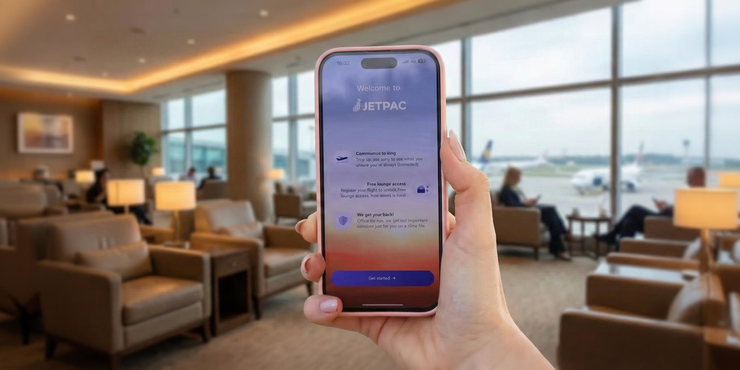
When you travel to a new country, staying connected is no longer optional. You need maps, ride apps, hotel details, messages, and sometimes work access. Yet getting mobile data abroad often turns into a small headache.
Buying a local SIM means finding a store, standing in line, showing documents in some countries, and swapping out your home SIM. Many people lose their original SIMs or miss important calls and messages because their main numbers are inactive. International roaming avoids this, but it usually comes with high costs and bill shocks.
This is where travel eSIMs come in.
A travel eSIM is a digital SIM you install on your phone without removing your physical SIM. You buy a plan online, install it in a few minutes, and use it for mobile data during your trip. For most travelers, this removes several problems at once.
Why are eSIMs Better for Trips and Vacations?
The biggest advantage of an eSIM is convenience.
You do not need to search for a SIM shop after landing. You do not need to swap SIM cards or worry about losing your main SIM. You can buy and set up everything before you travel or right after you arrive.
With an eSIM:
- Your physical SIM stays in the phone.
- Your main number can remain active for calls and messages.
- Data works through the eSIM.
- You can choose plans based on country, region, and trip length.
For short trips, family vacations, and even longer stays, this setup is simply easier and more predictable than local SIMs or roaming packs.
That said, not all eSIMs are the same. Choosing the right one matters.
What to Look for When Choosing a Travel eSIM?
1) Coverage that matches your trip
Start with the basics.
- Check that the eSIM covers the exact country you are visiting.
- If you are visiting more than one country, see if a regional plan includes all destinations.
- If the provider lists partner networks or says it connects to the best available network, that is usually a good sign.
Do not assume all European or Asian plans cover every country. Always check the list.
2) Data amount and validity
Choose a plan that fits how you actually use your phone.
- Light usage like maps, messaging, and bookings usually needs 1 to 3 GB.
- Regular usage, including social media and browsing, usually needs 5 to 10 GB.
- Heavy usage, video calls, or work needs 15 GB or more.
Also, check validity.
- Match the plan validity to your travel dates.
- Avoid paying for extra days you will not use.
Most importantly, check when the plan's validity begins. Some eSIM plans start as soon as you install the eSIM, while others start only when you first connect to a network at your destination. This difference is important and often overlooked.
3) Speed and usage rules
Not all data plans behave the same.
- Check if 4G or 5G is supported.
- Do not assume 5G is guaranteed everywhere.
- Check if hotspot or tethering is allowed if you plan to use a laptop or tablet.
Be careful with unlimited plans. Many have fair use limits where speed drops after a certain amount of data. This is not always obvious at first glance.
4) Ease of setup
A good travel eSIM should be easy to install.
- In-app installation is the simplest.
- QR code installation is common and usually fine.
- Manual setup with codes is harder and more error-prone.
Clear instructions matter, especially if you need to troubleshoot while abroad.
5) Top-ups and plan management
Travel plans rarely go exactly as expected.
- Check if you can top up data without installing a new eSIM.
- Check if usage tracking is clear inside the app.
- Alerts when data is running low are helpful.
This makes a big difference for longer trips or unexpected extensions.
6) Support and refunds
Things can go wrong, even with good products.
- Look for providers that offer live chat or fast support.
- Check what happens if the eSIM does not activate.
- Refund clarity is important if you buy the wrong plan.
Good support matters more when you are already traveling.
7) Phone compatibility
Before buying anything:
- Make sure your phone supports eSIM.
- Check that your phone is not carrier-locked.
- Dual SIM support is useful if you want to keep your main SIM active.
Most newer phones support eSIM, but it is always worth checking once.
Why the eSIM App Experience Matters as Much as the Plan
Once an eSIM is installed, the app becomes the main way you manage your connectivity. This is where real differences between providers start to show, not in coverage maps or pricing tables, but in everyday use while traveling.
A good eSIM app should feel calm and predictable. You should be able to understand what is happening at a glance, manage your plan without confusion, and get help quickly if something goes wrong. If the app adds friction, the eSIM itself becomes harder to rely on.
What to Look for in a Good eSIM App?
Instead of focusing only on feature lists, it helps to think in terms of moments that happen during real trips. These are baseline requirements that should not be negotiable.
During Travel Days, the App Should
- Show how much data is left clearly and instantly.
- Display when the plan expires without digging through menus.
- Allow you to keep using the same eSIM without reinstalling anything.
When Plans Change, the App Should
- Allow quick top-ups without interrupting your connection.
- Make extending or switching plans feel straightforward.
- Provide alerts before data runs out, not after.
When Something Goes Wrong, the App Should
- Offer easy access to support from inside the app.
- Respond fast enough to be useful while traveling.
- Resolve issues without long email chains or repeated explanations.
These are not advanced features. They are basic expectations. Any eSIM app that does not meet them will likely create stress at the exact moments when connectivity matters most.
What Best eSIM App Reviews Usually Reveal?
Reviews of eSIM apps tend to focus less on technical promises and more on how the app behaves during real trips. Travelers often talk about whether the app made things easier or added friction once they were already on the move.
Common themes in best eSIM app reviews include:
- Whether data tracking felt accurate and easy to understand.
- If the setup instructions were clear the first time.
- How simple it was to add more data mid-trip.
- How quickly did support respond when something went wrong?
To get a balanced view, it helps to look beyond a single source. Checking reviews on trusted platforms like Trustpilot, TechRadar, and Cybernews gives insight from detailed testing and user feedback. App-level reviews on the Google Play Store and Apple App Store often highlight everyday usability issues that long articles miss. Social platforms like Instagram and Facebook also reveal unfiltered experiences shared during real travel days.
Looking across these sources gives a clearer picture of what using the eSIM app will actually feel like once the trip starts, not just how it looks on a comparison page.
How to Choose the Right eSIM for Your Trip?
A simple way to decide:
- Visiting one country only: choose a single-country plan with matching validity
- Visiting multiple countries: choose a regional plan
- Using a lot of data or working remotely: prioritize higher data limits and hotspot support
- Want the least hassle: prioritize easy installation, clear activation rules, and reliable support
What Jetpac Does Differently for Travelers?
Jetpac is built for real travel moments, not just data usage. It keeps you connected while moving, adjusting plans, or solving things on the go.
1. Essential apps work even after data runs out
Running out of data often happens at the worst time, right after landing, while navigating, or when plans change.
✅ With Jetpac, WhatsApp chat, Google Maps, and Uber continue to work even after your data is exhausted. You can still message, navigate, and book rides.
You are not fully offline when data runs out.
2. Call anyone without a local SIM
Many hotels, taxis, and local businesses rely on phone calls, not messaging apps.
✅ Jetpac includes in-app voice calling in over 50 countries, letting you call landlines and non-WhatsApp numbers directly from the app. Voice packs start at USD 1.99 for 5 minutes.
✅ No local SIM is needed for quick calls.
3. One plan for multiple devices
Travel often involves more than one device, from phones to laptops to sharing data with companions.
✅ Jetpac allows unrestricted hotspot sharing. One plan supports multiple devices with no extra charges or hidden limits.
4. Clear pricing with no roaming surprises
Jetpac plans are prepaid and priced upfront. There are no background roaming charges or surprise bills.
✅ Travelers often save up to 70 percent compared to traditional international roaming.
5. One eSIM across 200+ destinations
✅ Jetpac uses a single eSIM that works in over 200+ destinations. Install it once and keep using it across borders.
✅ No SIM swapping or profile reinstallation is needed.
6. Automatic connection to the strongest network
✅ Jetpac connects to multiple carrier networks in each country and automatically selects the strongest option.
✅ This improves stability and reduces dropouts while moving between locations.
7. Fast, reliable speeds where available
✅ Jetpac provides 4G and 5G access where available, with reliable fallback to strong 4G.
✅ Speeds are optimized for maps, messaging, browsing, and everyday travel needs.
8. Simple money-back guarantee
✅ Jetpac includes a 100% money-back guarantee on eligible eSIMs.
You can choose your plan with confidence, even if plans change or something does not work as expected.
5 Common Mistakes Travelers Make
Many bad eSIM experiences come from simple mistakes:
- Buying the wrong country or region plan.
- Installing too early and starting validity before the trip.
- Forgetting to turn on data roaming for the eSIM line.
- Assuming unlimited means unlimited speed.
- Not checking hotspot rules until they actually need it.
Avoiding these mistakes already puts you ahead of most first-time users.
Bringing It All Together When Choosing an eSIM App
After narrowing down coverage and pricing, the app experience often becomes the deciding factor.
A simple way to compare options:
- Choose apps that make usage and expiry easy to understand.
- Look for fast, accessible support.
- Read recent app reviews for real travel context.
- Prioritize features that help during disruptions, not just normal days.
This helps you choose not just a good eSIM, but an eSIM app that fits how travel actually unfolds.
FAQs
What is a travel eSIM and how does it work?
A travel eSIM is a digital SIM that installs directly on your phone. You buy a plan online, install it in a few minutes, and use it for mobile data while traveling without removing your physical SIM.
Is an eSIM better than international roaming?
For most travelers, yes. An eSIM offers clearer pricing, easier setup, and avoids roaming bill shocks. It also lets you stay connected across countries without changing SIM cards.
Can I keep my main phone number while using an eSIM?
Yes. If your phone supports dual SIM, your physical SIM stays active for calls and messages while the eSIM handles data.
How much data do I need for a typical trip?
Light use, like maps and messaging, usually needs 1 to 3 GB. Regular use, including social media, needs around 5 to 10 GB. Work, video calls, or hotspot use may need 15 GB or more.
What should I check before buying a travel eSIM?
Make sure your phone supports eSIM, is carrier unlocked, covers your destination, matches your travel dates, and allows hotspot use if you need it.
Disclaimer
Information shared in this blog is based on general travel experiences and publicly available details at the time of writing. Network performance, coverage, speeds, and availability may vary by country, carrier, device, and local conditions. Pricing, features, and terms are subject to change without notice. This content is for educational purposes only and does not guarantee specific outcomes. Travelers should verify compatibility, coverage, and plan details directly with the provider before purchasing.