Iceland in December: Weather, Events, Things to Do & More
December in Iceland brings long nights, ice cave tours, and unusual Christmas traditions. Find where to go, what to do, what weather to expect, and how much to budget.

Planning a Christmas vacation in December to Iceland puts you at one of the world's most dramatic winter destinations. Frozen waterfalls line the highway south of Reykjavik, the Northern Lights sweep across skies that stay dark for 19 hours a day, and the country's Christmas celebrations run on centuries-old Icelandic traditions.
Is December a good time to visit Iceland? For travelers drawn to aurora hunting, ice caves, and snow-covered landscapes without summer crowds, the answer is yes.
Traveling to Iceland in December places you at the winter solstice, when roughly four to five hours of daylight make the darkness itself one of the main attractions.
This blog covers December weather across Iceland's main regions, the best destinations for winter travel, seasonal events, packing essentials, and practical tips for arriving ready.

Is Iceland Worth Visiting in December?
December is the right time to visit Iceland if you have come for what winter delivers: the northern lights, accessible glacier ice caves, and a Christmas atmosphere built on Icelandic tradition rather than borrowed European convention.
The advantages are clear. December gives you the longest nights of the year and therefore the best aurora odds of any month. Visitor numbers outside the holiday window sit well below summer levels, and the south coast's volcanic landscapes look entirely different under snow.
The main drawbacks are limited daylight, around four to five hours, and weather that can close roads and cancel tours on short notice.
December suits aurora chasers, families looking for a distinctive winter holiday, and photographers drawn to winter landscapes. It suits travelers on tight budgets less, as prices return to peak-season levels during the Christmas and New Year week.
Weather in Iceland in December
The weather in Iceland in December is cold, unpredictable, and more variable than a single forecast can capture. Coastal areas, including Reykjavik, typically sit between 34 and 38 degrees Fahrenheit (1 to 3 degrees Celsius) during the day, kept milder by the Gulf Stream.
In December, temperatures in Iceland fall much lower inland and at elevation, where subfreezing conditions hold steady throughout the month.
Does it snow in Iceland in December? Along the coast, rain and sleet are more common than consistent snowfall. Inland and at higher elevations, snow is reliable from early December.
The best time to visit Iceland for sustained snow-covered landscapes is late December through February, when cold fronts bring accumulation that stays for days.
Read more: If you are weighing up European winter destinations, Paris in December offers a very different experience, warmer, lighter. Read our blog 👉 Paris in December: Things to Do, Festive Events and Tips
Traveling to Iceland in December means planning every outdoor activity around rapid forecast changes. Clear skies can turn into a full storm within hours, so make checking the Icelandic Met Office forecast app before heading out a daily habit.
Does it snow in Iceland in December at the main tourist sites? Seljalandsfoss and Skogafoss on the south coast see snow intermittently, while Jokulsarlon glacier lagoon often has ice forming at its edges by late December.
The Iceland temperature in December make outdoor geothermal pool transitions feel sharply cold.
Read more: For a European Christmas trip with a milder climate and some of the continent's best holiday markets, to explore more, read our blog 👉 Italy in December: Best places, Christmas Markets, Weather & Tips
Iceland Weather in December at a Glance
| Region | Typical Seasonal Pattern | Best Trip Experiences | Important Considerations |
|---|---|---|---|
| Caribbean | Dry season; hurricane season ends Nov 30 | Beaches, water sports, sailing | Peak demand; book early |
| Southeast Asia | Andaman coast dry; Gulf of Thailand wet | Diving, island-hopping | Phuket and Palawan ideal; avoid Koh Samui |
| Mediterranean / Europe | Off-season; Canary Islands mild | Hiking, culture, mild beaches | Sea is cool; some services reduced |
| Indian Ocean | Maldives dry season; Mauritius summer | Diving, luxury resort stays | Mauritius cyclone season starts |
| Pacific | Hawaii mild; South Pacific cyclone risk | Whale watching, hiking, beaches | Check Fiji and Vanuatu separately |
Source: Icelandic Meteorological Office (vedur.is)
Best Places to Visit in Iceland in December
For travelers exploring the best places to visit in Iceland in December, the options organize naturally around travel style and how much daylight the itinerary needs.
Iceland is among the safest countries in the world for solo travelers, couples, and families, and December adds no meaningful safety concerns beyond standard winter driving precautions.
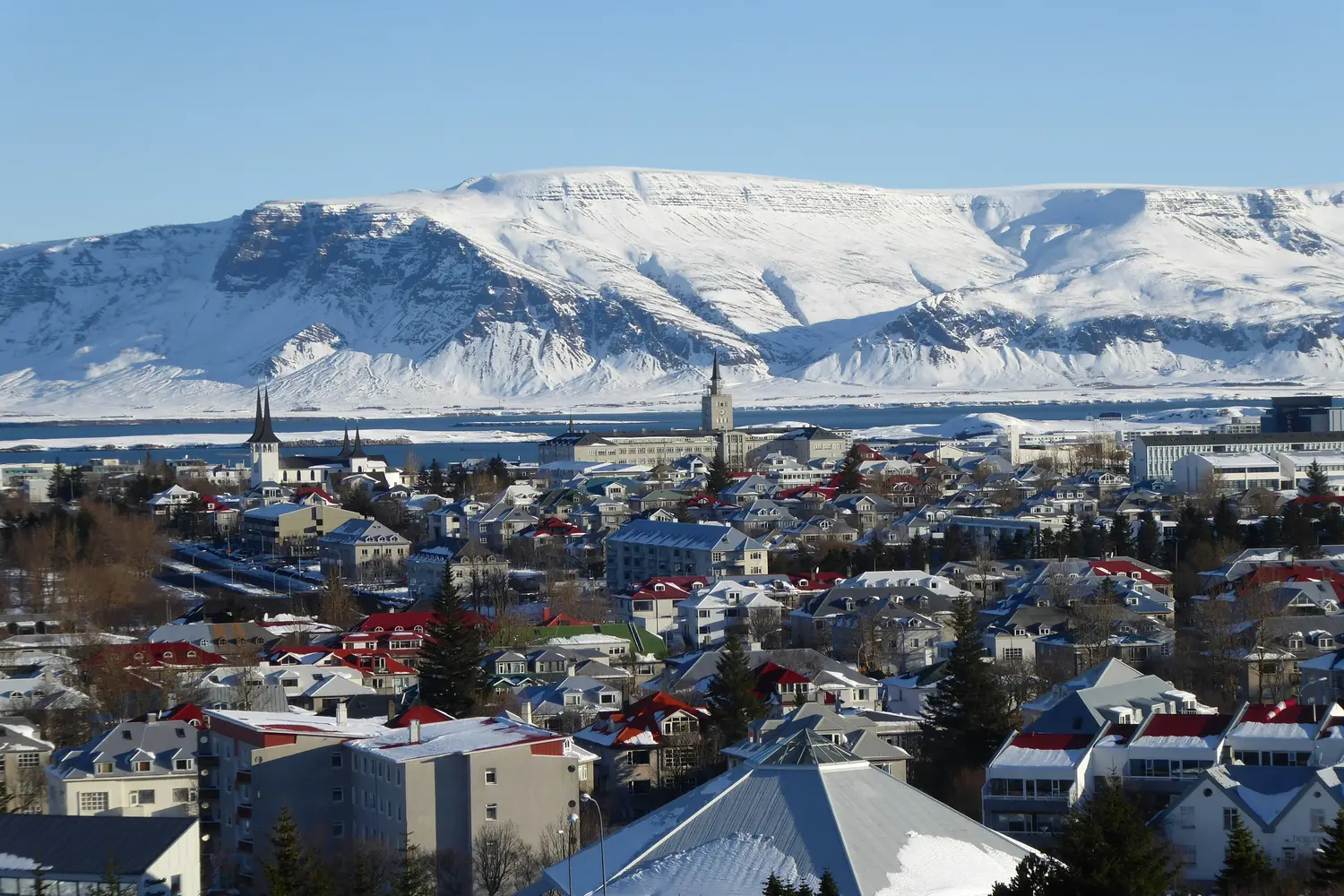
Reykjavik, Best for Christmas Markets and City Atmosphere
Why visit in December: Reykjavik fills with Christmas lights, craft markets near Ingolfstorg Square, and live performances throughout December, making it the natural base for any winter trip.
The city works well as a starting point for day trips in every direction and has the country’s highest concentration of accommodation, restaurants, and cultural venues.
Best experiences and activities: The harbor area hosts a weekend Christmas market with local food and crafts. Hallgrímskirkja church serves as the backdrop for outdoor events, and the city’s geothermal pools, museums, and restaurant scene all run at full capacity in December.
Seasonal considerations: Book accommodation at least six to eight weeks ahead for the Christmas and New Year period. Outside that window, prices and crowd levels are both more manageable.
Read more: If a city-based winter holiday appeals more than remote landscapes, New York in December offers holiday markets and festive events across five boroughs. Read our blog 👉 New York in December: Weather, Christmas Events and Tips
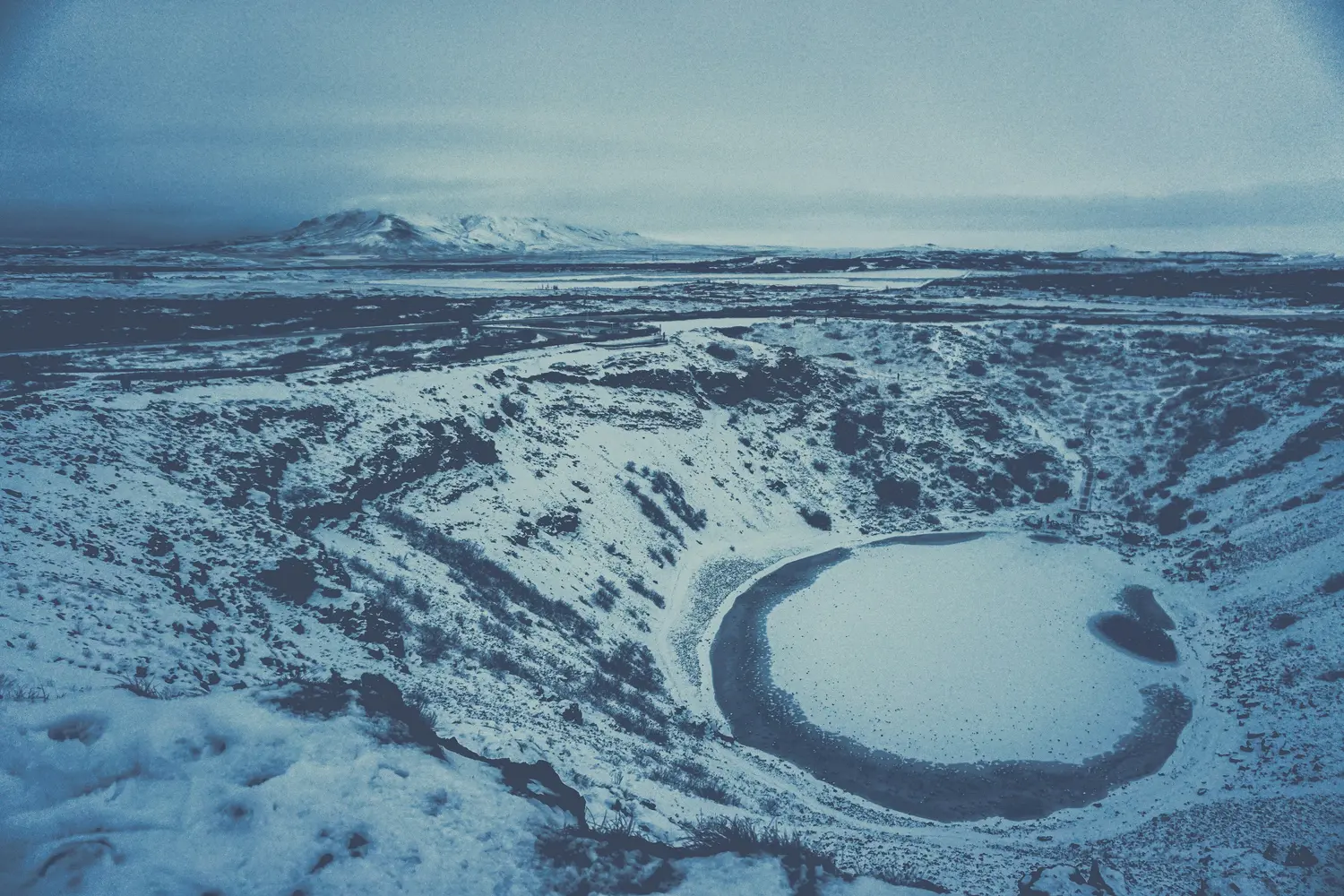
The Golden Circle, Best for Snow-Covered Landscapes
Why visit in December: Thingvellir National Park, Geysir, and Gullfoss waterfall all look significantly different under December snow, and visitor numbers are a fraction of the summer peak.
The route’s proximity to Reykjavik makes it the easiest full-day trip from the capital.
Best experiences and activities: Geysir erupts every eight to ten minutes regardless of season. Gullfoss takes on a colder, more austere character when ice forms on the surrounding rock faces, and Thingvellir’s rift valley looks particularly stark in low December light.
Seasonal considerations: A four-wheel-drive with winter tires is strongly recommended. Ice on the roads between sites is common in the early morning and after dark, and the route can become hazardous during storms.
South Coast, Best for Waterfalls, Black Sand Beaches, and Coastal Scenery
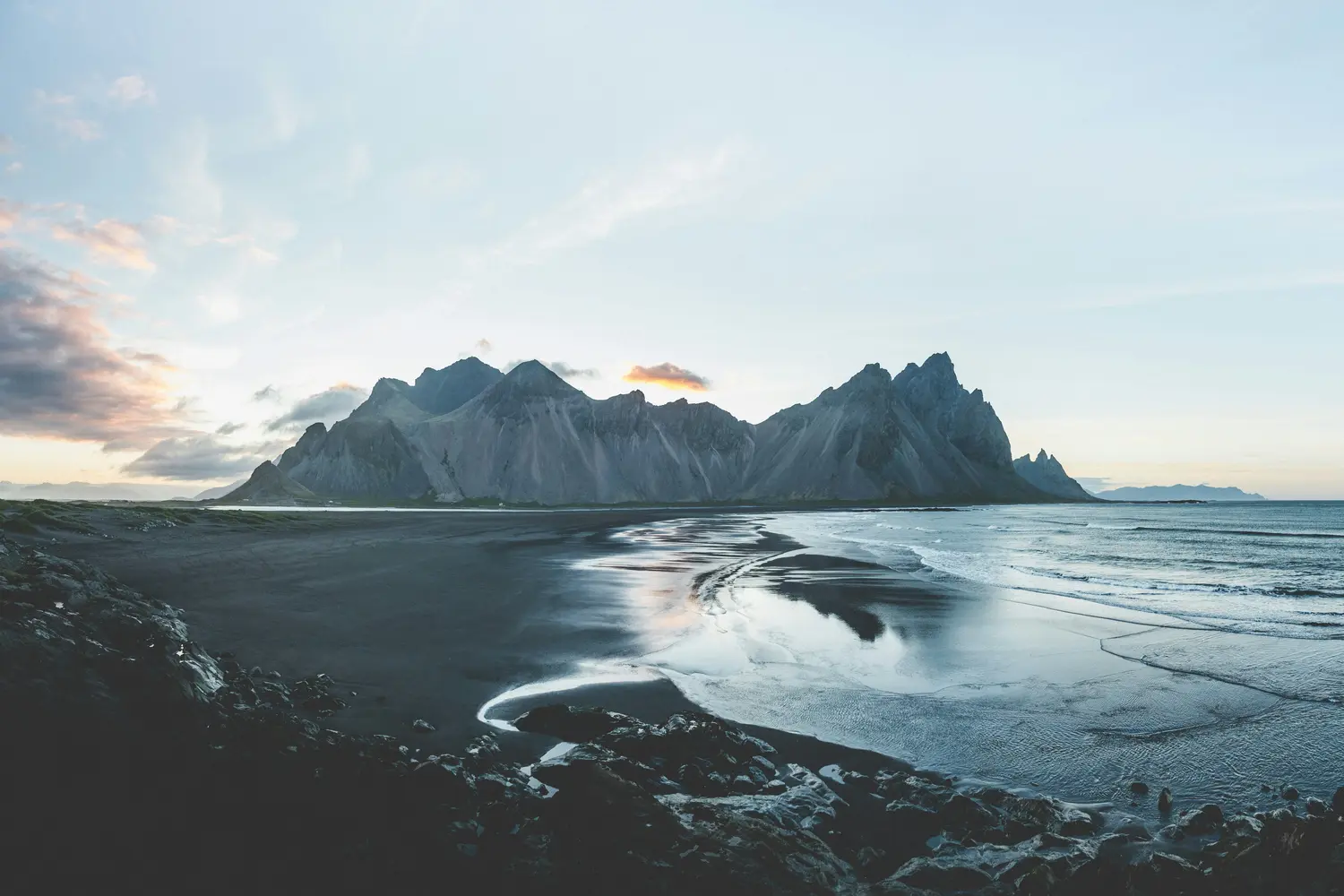
Why visit in December: The stretch of road between Reykjavik and Vík passes black sand beaches, sea cliffs, waterfalls, and coastal towns at regular intervals.
It is a strong choice for the best family vacations with teens who want a range of dramatic sights within a single day’s drive.
Traveling to Iceland in December along this route means planning activities tightly within the available daylight window.
Best experiences and activities: Seljalandsfoss, Skogafoss, Reynisfjara black sand beach, and Vík’s basalt sea stacks are the main draws along this stretch. Each site looks different under winter conditions, and the low December light catches the waterfalls at angles absent in summer.
Seasonal considerations: Allow four to five hours of driving time for the full route from Reykjavik to Vík and back. Coastal winds at Reynisfjara can be dangerously strong in December, and the beach’s sneaker waves carry a real risk year-round.
Read more: For travelers who want dramatic scenery without the cold, Costa Rica in December offers rainforest. To learn more about it, read our blog 👉 Costa Rica in December: Weather, Events, Things to Do & More
Akureyri and the North, Best for Aurora Hunting and Northern Atmosphere
Why visit in December: Akureyri puts on one of Iceland’s most elaborate Christmas light displays and sits in a long fjord that acts as a partial windbreak.
The surrounding region offers darker skies than Reykjavik for aurora viewing, with a greater chance of clear nights than the cloudier south coast.
Best experiences and activities: The town’s Christmas street decorations are detailed enough to draw domestic visitors from Reykjavik. Lake Mývatn, roughly an hour east, adds geothermal pools and lava fields to the itinerary and is worth combining into the same trip.
Seasonal considerations: The drive from Reykjavik takes approximately four and a half hours. Domestic flights from Reykjavik’s internal airport take around 45 minutes and are worth considering given the limited December daylight.
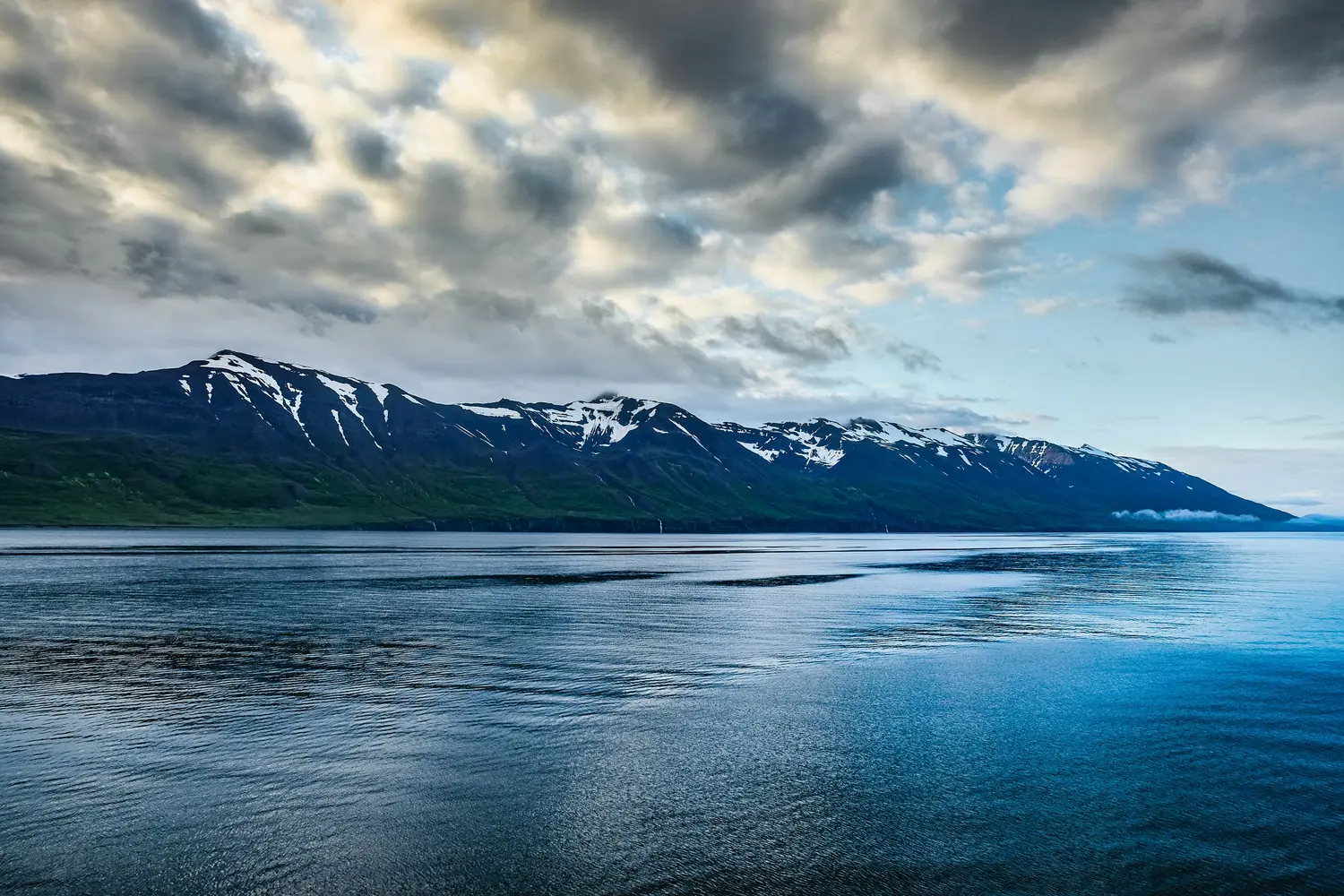
Jokulsarlon and Skaftafell -Best for Glacier Lagoon Views and Ice Cave Access
Why visit in December: Jokulsarlon glacier lagoon is at its most dramatic in winter, when ice blocks calve from the Breidamerkurjokull glacier and drift toward the sea under low December light.
The surrounding Skaftafell area of Vatnajokull National Park is the main access point for the blue ice caves that are only stable enough to enter in winter.
Best experiences and activities: Guided ice cave tours run daily from the Jokulsarlon area and typically last two to three hours. Diamond Beach, where ice blocks wash ashore on black sand, sits right at the lagoon’s outlet and is accessible year-round.
Seasonal considerations: The drive from Reykjavik to Jokulsarlon is roughly 375 kilometres; allow around four hours each way in good December conditions. Book ice cave tours well in advance, as spaces fill fast and weather cancellations are common.
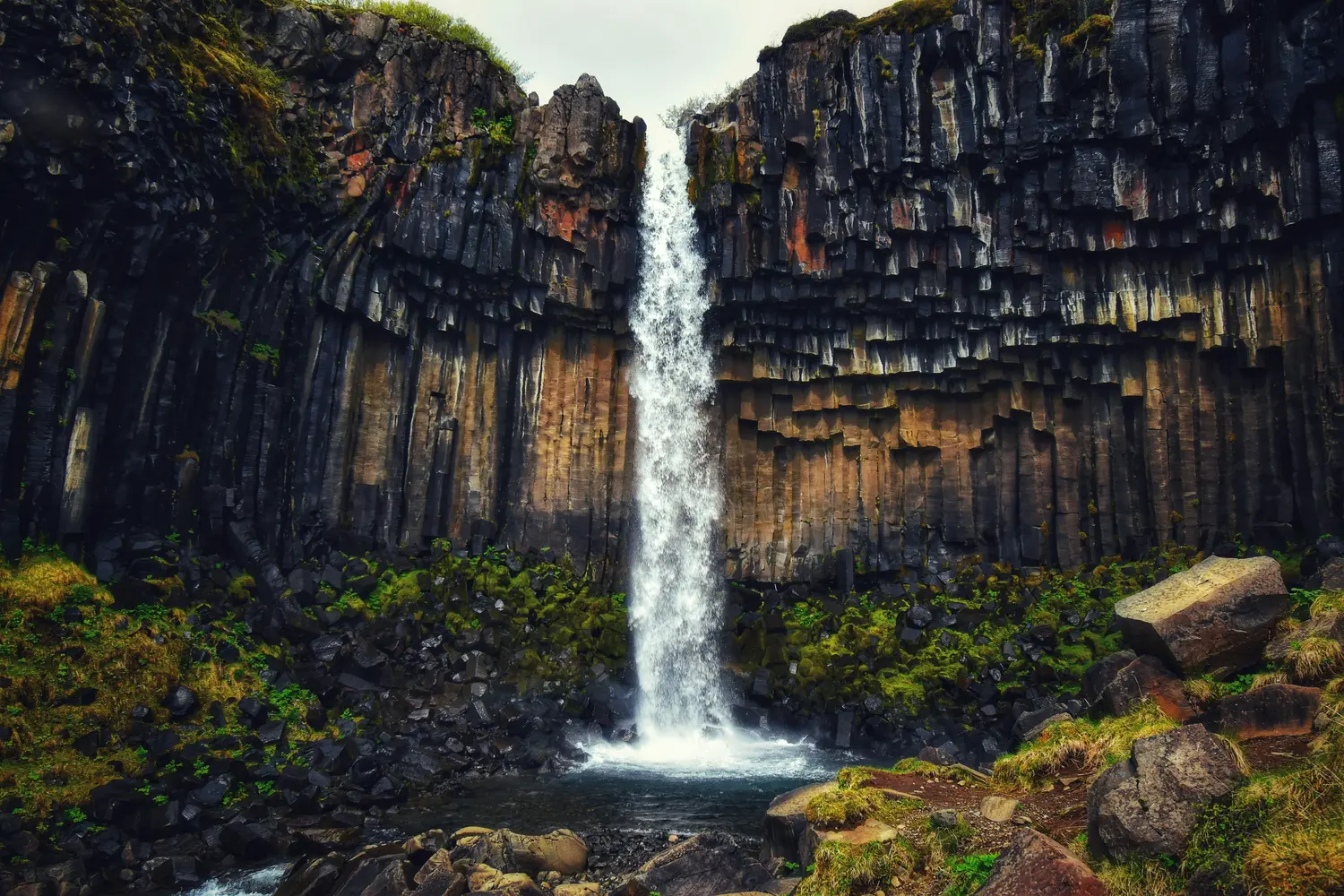
Lake Mývatn - Best for Geothermal Landscapes and Dark Skies
Why visit in December: Lake Mývatn sits in one of Iceland’s most geothermally active areas and in December offers natural hot baths, ancient lava formations, and extremely dark skies for aurora viewing with almost no other visitors around.
The surrounding terrain looks completely different under snow than at any other time of year.
Best experiences and activities: The Mývatn Nature Baths offer geothermal bathing with far fewer visitors than Reykjavik’s larger facilities. Dimmuborgir lava formations and the Hverfjall crater are both accessible for short winter walks, and the surrounding hills give unobstructed aurora views on clear nights.
Seasonal considerations: Mývatn is typically reached via Akureyri, roughly an hour’s drive east. Some walking paths around the lake become icy in December and require care.
An overnight in Akureyri or Mývatn itself makes the most of the region rather than attempting it as a day trip from Reykjavik.
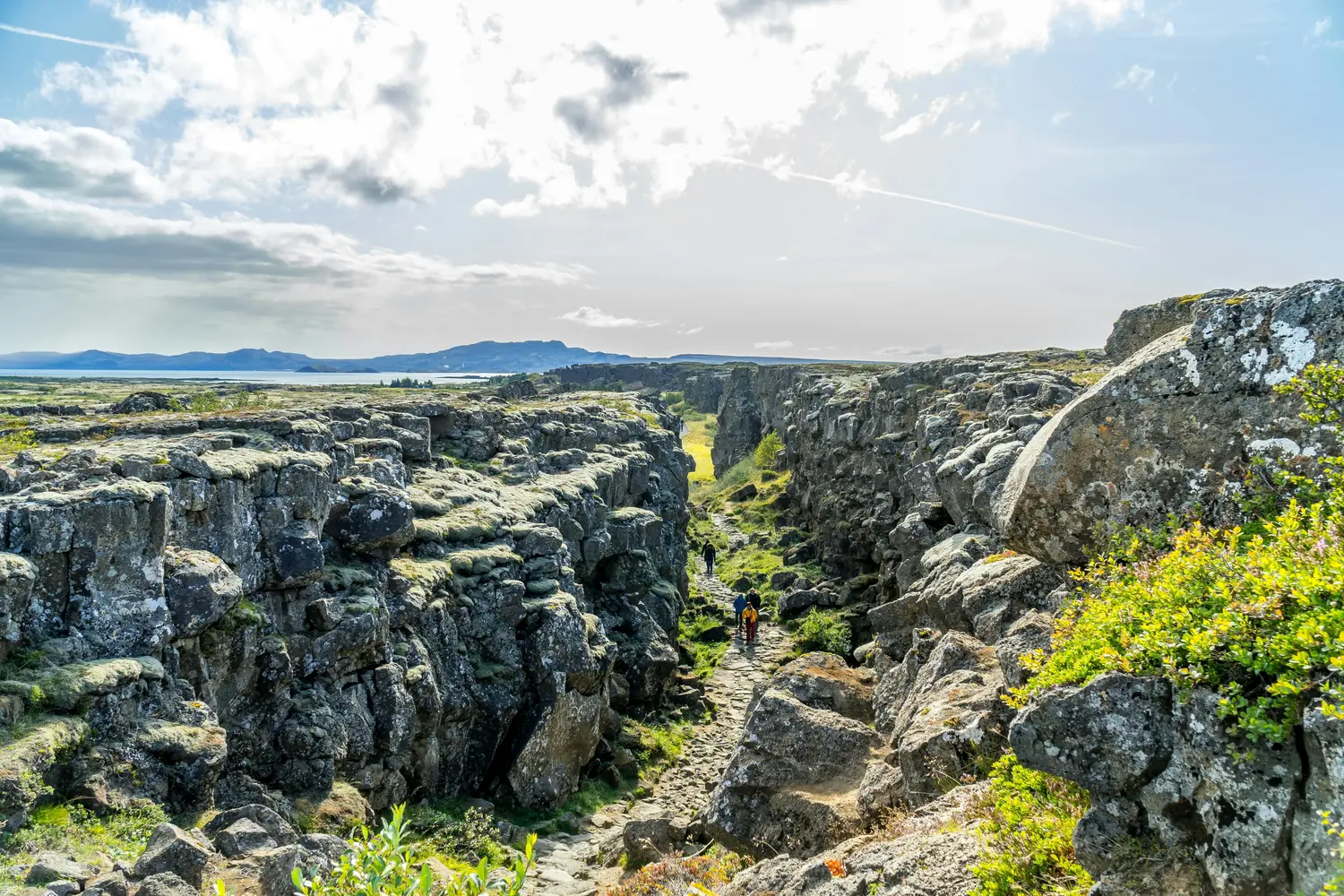
Snæfellsnes Peninsula - Best for Glacier Views and Western Iceland Scenery
Why visit in December: The Snæfellsnes Peninsula sits about two hours west of Reykjavik and offers a compressed version of Iceland’s main landscapes: glacier, lava fields, fishing villages, and dramatic coastline, all within a single circuit.
December snow on the Snæfellsjökull glacier cap makes the peninsula look entirely different from its summer version.
Best experiences and activities: Kirkjufell mountain near Grundarfjordur is one of Iceland’s most photographed peaks and works well for aurora photography on clear nights.
Snæfellsjökull National Park covers the glacier and surrounding coastline, with marked walking routes accessible in good conditions.
Seasonal considerations: Road conditions on the peninsula can deteriorate quickly in December. The road around the full western tip is accessible for most of the month but should be attempted only in a four-wheel-drive with winter tires. Check everything before heading out.
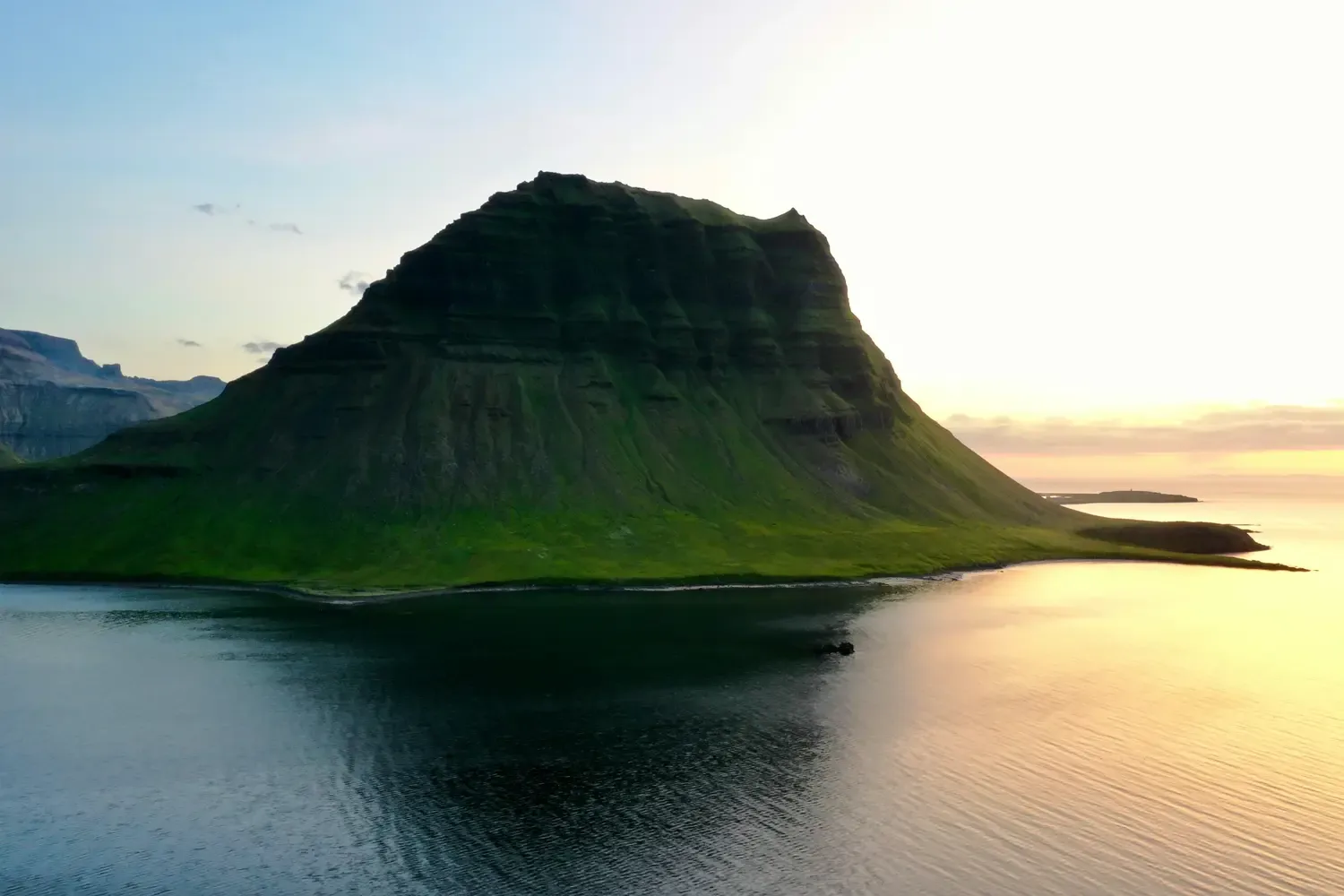
Husavik - Best for Winter Whale Watching and Quiet Northern Village Life
Why visit in December: Husavik, on Iceland’s north coast, is the country’s whale-watching capital and runs tours year-round.
December brings reliable sightings of humpback and minke whales feeding in the bay, and the town itself has a quieter, more local atmosphere than Reykjavik or Akureyri in winter.
Best experiences and activities: Traditional wooden schooner tours last approximately two to three hours. The Husavik Whale Museum is one of the most detailed in Europe and runs year-round. The harbor area and surrounding hills also offer good conditions for aurora sightings on clear nights.
Seasonal considerations: Husavik is roughly an hour and a half east of Akureyri by road. December tours run subject to sea conditions, and rough weather can cancel departures on short notice, so building a buffer day into any whale watching itinerary is advisable.
Dress in full thermal layers for time on the open water.
Events and Festivals in Iceland in December
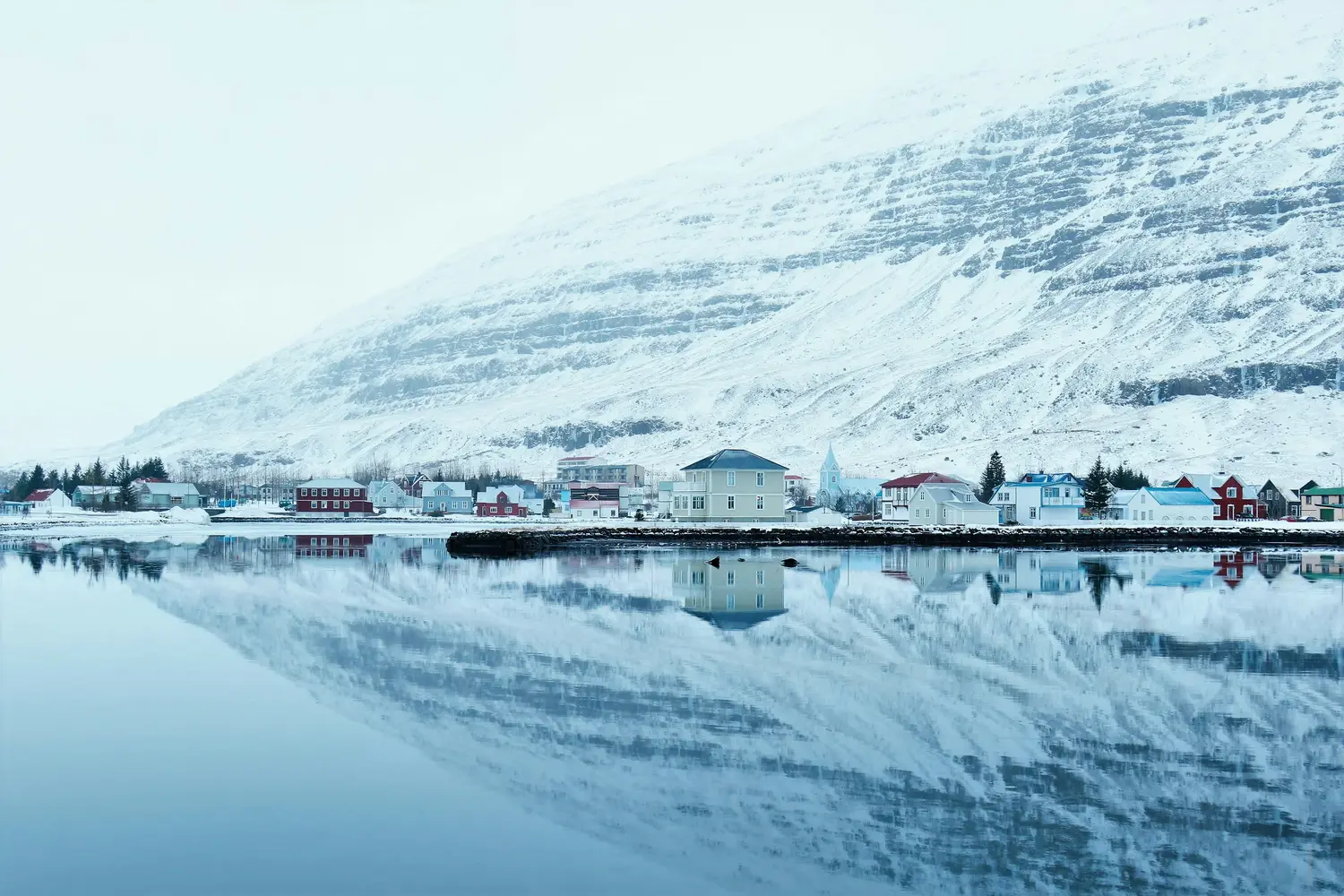
Iceland treats December as a month-long celebration rather than a concentrated holiday week.
The Christmas traditions here go back centuries and differ from most European equivalents in several ways. On the 23rd of December, known as St. Thorlak's Day, Icelanders traditionally eat fermented skate and complete their Christmas shopping in the evening.
Iceland also has 13 Yule Lads, who leave small gifts in children's shoes on 13 consecutive nights leading up to Christmas Eve.
Read more: Japan takes an equally distinctive approach to December celebrations, with illumination festivals and winter markets. Read our blog 👉 Japan in December: Weather, Events, Best Places, Tips & More
Iceland is one of the best destinations to visit at Christmas for travelers seeking something outside the standard European market circuit.
Reykjavik's holiday market near Ingolfstorg Square runs through most of December, with smaller events in Akureyri, Selfoss, and Husavik throughout the month.
New Year's Eve in Iceland is worth planning a trip around. Bonfires are lit at nightfall, followed by a spontaneous nationwide fireworks display that residents fund and launch themselves, one of the most communal New Year celebrations in northern Europe.
A Christmas vacation in December in Iceland also coincides with classical concerts, folk performances, and theater productions at venues throughout Reykjavik.
Best Things to Do in Iceland in December
There is no shortage of things to do in Iceland in December once you accept that many of the best experiences happen outdoors in the cold and after dark.
December nights are ideal for aurora borealis hunting. The KP index forecast is available for free from Icelandic meteorological sources online, and heading 30 minutes outside Reykjavik removes most city light pollution.
Give yourself multiple evenings, since cloud cover can block views for several consecutive nights.
Crystal blue ice caves inside Vatnajokull glacier are only stable enough to enter safely in winter. Guided tours run daily from the Jokulsarlon area and typically last two to three hours. Booking in advance is important, as spaces fill fast in December.
Public geothermal pools, known locally as sundlaug, stay open year-round and form part of daily Icelandic life rather than tourist infrastructure. Entry runs approximately 8 to 12 USD at most public pools.
Whale watching from Husavik runs year-round, with winter months bringing humpback and minke whales close to shore.
Crowds and Travel Costs in Iceland in December
December is one of Iceland's quieter visitor months outside the Christmas and New Year window, when domestic travel and international arrivals spike together.
Flights to Reykjavik generally cost less in early and mid-December than at any point in summer, though prices for the holiday week return to peak-season levels.
Is December a good time to visit Iceland from a budget standpoint? The first three weeks of the month offer the best combination of lower prices and enough daylight for sightseeing.
Accommodation in Reykjavik runs approximately 100 to 200 USD per night for mid-range hotels during most of December, with rates rising sharply for the holiday period.
Northern lights tours cost approximately 60 to 100 USD per person for a three-hour evening trip. Glacier cave tours start at approximately 100 USD per person for a guided half-day experience.
What to Pack for Iceland in December
Your Iceland packing list for December starts with three clothing layers and builds outward from there.
The base layer should be moisture-wicking, and lightweight merino wool is a widely used choice because it stays warm even when damp. The mid-layer provides insulation and can be a fleece or a down jacket depending on how cold you run.
The outer layer must be both waterproof and windproof, since Iceland's weather can shift from gentle snow to sideways rain within the same hour.
Your Iceland packing list should also include waterproof ankle boots, wool socks in quantity, a neck gaiter or balaclava, insulated gloves, and hand warmers for extended outdoor time.
Sunscreen matters even in December because low-angle sunlight reflecting off snow can cause burns, and UV-protective sunglasses are equally important.
Pack at least one spare camera battery and a portable power bank; cold temperatures drain both faster than most travelers expect.
Practical Travel Tips for Visiting Iceland in December
Iceland in December requires a few logistical steps that most European winter destinations do not call for.
Book your rental car well in advance. December is busier for car hire than visitor numbers suggest, and winter-equipped four-wheel-drive vehicles book out faster than standard cars. For any travel beyond Reykjavik, a four-wheel-drive with snow tires is the minimum sensible option.
Road conditions update in real time at road.is. Download the 112 Iceland safety app before departure; it shares your GPS location with rescue services in an emergency, and note that Iceland operates as a cashless country where cards cover nearly every transaction.
Purchase travel insurance covering winter sports, medical evacuation, and trip cancellation before your departure. Remote locations and rapidly shifting conditions increase the chance of a rescue situation, and costs without coverage can be high.
Staying Connected in Iceland
Staying online matters more in Iceland than in most destinations, since remote roads, fast-changing weather, and aurora tracking all depend on reliable data.
Jetpac offers an eSIM for Iceland that connects you to local mobile networks across Reykjavik, the Ring Road, and all major attraction areas.
As the best eSIM for Iceland travelers, Jetpac covers 200+ destinations worldwide and provides 24/7 support for any issue that comes up on the road. When comparing eSIM Iceland options, Jetpac stands out for transparent pricing and a 100% money-back guarantee.
On eligible plans, WhatsApp, Google Maps, and Uber stay active even after your data runs out, keeping you connected for the moments that matter most.
Pick up your eSIM for Iceland before departure at jetpacglobal.com, and find the eSIM Iceland plan that fits your trip length and data needs.
FAQs
Is Iceland expensive to visit?
Iceland ranks among the more expensive destinations in Europe, with accommodation, dining, and guided tours all running above most continental averages. Visiting outside Christmas week and self-catering some meals can reduce costs noticeably.
Is December a safe time to drive the Ring Road?
The Ring Road is accessible in December, but a four-wheel-drive vehicle with winter tires is strongly recommended. Check road.is for real-time closures and ice alerts before every drive.
Are the northern lights visible every night?
No, aurora visibility depends on clear skies and solar activity, and December's long nights give you more viewing windows than in summer. Cloud cover can persist for several days, so building flexibility into your plans improves the chances of a clear sighting.
How many daylight hours does Iceland have in December?
Reykjavik sees approximately four to five hours of daylight in December, with sunrise around 11 a.m. and sunset around 3 p.m. near the winter solstice.
Do I need travel insurance for Iceland?
Coverage for medical evacuation, winter sports, and trip cancellation is strongly recommended for Iceland. Remote landscapes and unpredictable weather can lead to rescue situations with high costs.
What currency does Iceland use?
Iceland uses the Icelandic króna (ISK). Cards and contactless payments work nearly everywhere, and most travelers carry little to no cash.
Disclaimer
The information in this blog was accurate at the time of writing and is based on available weather, tourism, and official travel guidance. Weather conditions, road closures, tour availability, prices, event schedules, and other details may change after publication. Jetpac is not responsible for any changes to this information after publication.
Get connected as soon as you land with a Jetpac travel eSIM.