Is it Safe to Travel to Italy Right Now? 2026 Safety & Middle East Conflict Update
Italy is safe to visit in 2026 despite Middle East tensions. No government advises against travel, and Italy has ruled out joining any conflict. Daily life runs normally, though travelers should know about rail disruptions, protest risks, and updated entry rules before booking.
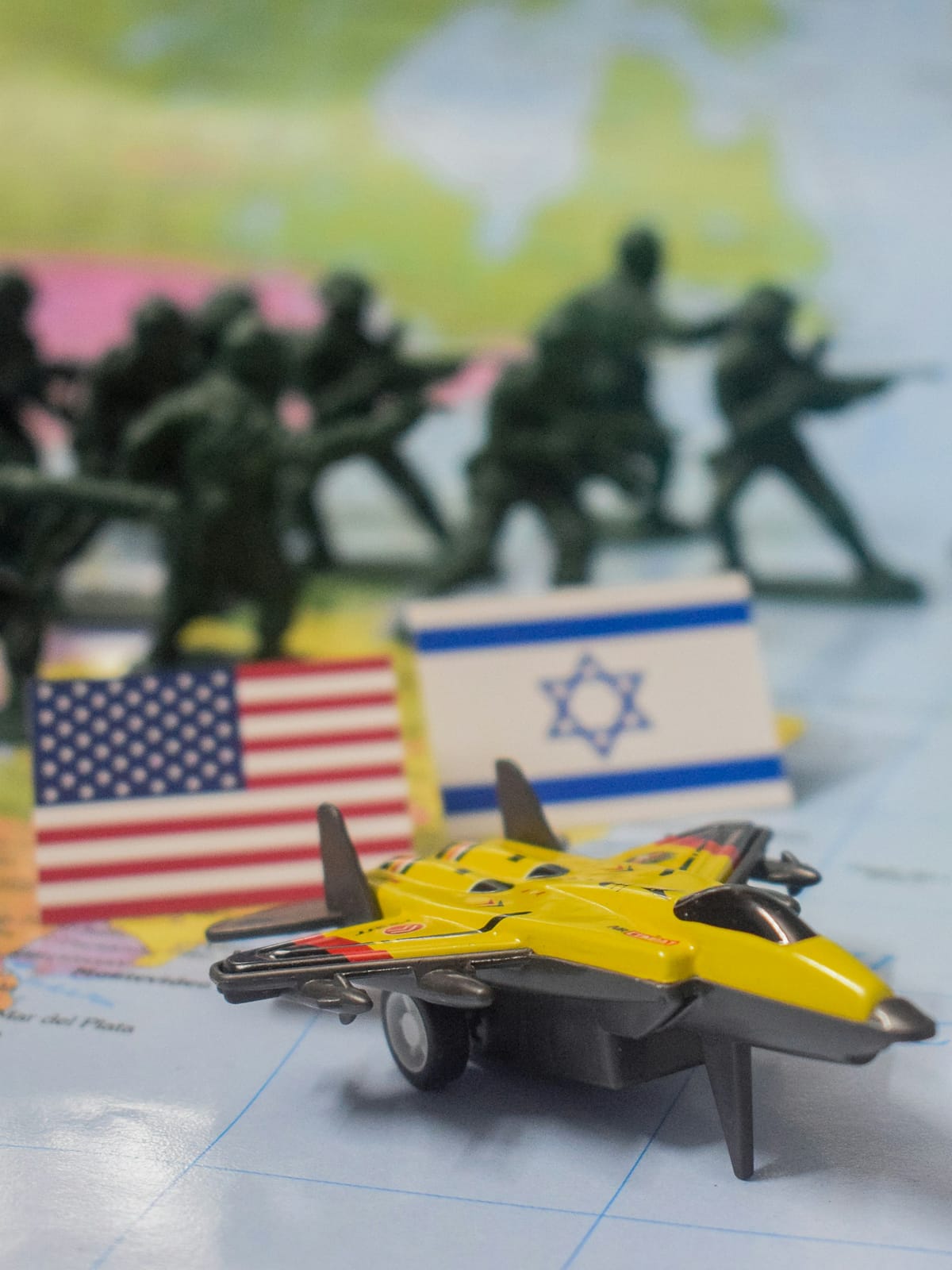
Italy is safe to visit in 2026. Travelers asking whether it is safe to travel to Italy during Israel war are right to seek clarity. They will find a country that has explicitly ruled out military participation, where Rome, Florence, Venice, and Milan are fully open, and where the biggest practical disruptions this year have come not from geopolitics but from anarchist rail sabotage during the Winter Olympics. That distinction matters. The Italy travel warning from the US State Department addresses terrorism and civil unrest, not conflict on Italian soil, and every American traveling from the USA deserves to understand exactly what that means before booking.
One thing that has become clear this year is how quickly rail disruptions, protest alerts, and security updates emerge in Italy, which is why having a Jetpac eSIM active from the moment you land means Italy's IT-alert emergency broadcasts and US Embassy Rome alerts reach your phone automatically, without hunting for a SIM card after an overnight transatlantic flight.

The 2026 Verdict: Is Italy Safe to Visit Right Now?
Italy is safe to visit. No major Western government advises its citizens to avoid Italy or reconsider travel as of March this year.
The current Italy travel advisory from the US State Department is Level 2: Exercise Increased Caution, raised from Level 1 in 2025, specifically due to terrorism and civil unrest risk. This is not an Italy travel warning against visiting. France, Germany, the UK, and most of Western Europe carry the same rating. Level 2 means: stay alert in crowded spaces, avoid demonstrations, and monitor local news.
For any traveler asking if it is safe to travel to Italy during Israel war escalations, the Italian government has answered directly.
The Italian Supreme Defence Council and Prime Minister Giorgia Meloni officially ruled out Italy's participation in the conflict. Italy is not at war and does not intend to enter one. Italy's foreign ministry warnings about the Middle East apply to Italians traveling to Iran, Iraq, and Lebanon, not to visitors traveling to Italy.
The US Embassy in Rome issued a Worldwide Caution on February 28 following US military operations in Iran, advising Americans everywhere to exercise increased caution and monitor embassy alerts.
Italy's advisory level remains unchanged at Level 2. No Italy-specific escalation has been issued.
Security in Major Cities: Rome, Milan, and Beyond
Italy's travel restrictions cover entry procedures and security awareness. There are no movement restrictions within Italy. Every major tourist destination is open.
Is it safe in Italy for an American? Yes. The US State Department does not identify Americans as specifically targeted. The practical security picture across Italian cities breaks down as follows:
Rome: Petty crime is concentrated at Rome Termini station, metro lines A and B, and crowded piazzas, including Campo de' Fiori and Piazza Navona. Italian authorities maintain heightened security at the Colosseum, Vatican, and major transport hubs. Areas near the US Embassy on Via Veneto and the Israeli Embassy on Via Michele Mercati have had increased police presence since late 2025.
Milan: The Milano Cortina Olympic Winter Games ran from February 6 to 22. The Paralympic Winter Games took place from March 6 to 15. The heightened security posture introduced for both events, including additional police and military presence at transport hubs and reinforced venue security, has continued beyond the closing ceremonies.
Florence, Venice, Naples: Standard big-city precautions apply. Pickpocketing is concentrated at Florence Santa Maria Novella station, Venice's Piazzale Roma and vaporetto stops, and Naples Centrale. Secure bags, use hotel safes, and stay alert in crowds.
Emergency contacts verified from official sources:
- Emergency services (Police, Ambulance, Fire): 112
- US Embassy Rome: +39 06-46741
- Full emergency contact list: it.usembassy.gov/u-s-citizen-services/emergencies/
Managing Protests and Civil Unrest
Travel advice for Italy from the US State Department is consistent: demonstrations are frequent, unpredictable, and should be avoided. The US Embassy in Rome issued demonstration alerts on January 4, 5, 10, 29, and February 3 and 6.
The protest landscape in Italy is shaped by three distinct drivers, each generating its own geography of risk:
- Anti-war and Middle East demonstrations: Concentrated near embassies, government buildings, and university campuses in Rome and Milan. These have increased in frequency since early this year.
- Anti-Olympics protests: The most volatile demonstrations of the year occurred around Olympic venues and the Olympic Village in Milan in February. A march on February 7 turned violent when a smaller group broke away and clashed with police.
- Labour and cost-of-living protests: Concentrated around transport hubs and government ministries, occasionally triggering the rail strikes that compound travel disruption.
If you encounter any protest, leave the area immediately and calmly. Do not film confrontations at close range. Monitor the US Embassy Rome's X account (@USEmbassyRome) and enroll in STEP at mytravel.state.gov before departure for real-time alerts sent directly to you.
Flights and Airspace: The Logistical Puzzle
Italy's airspace is fully open. There are no flight bans, no Italy travel restrictions on air travel from the USA, and no disruption to transatlantic routes. The logistical story this year is rail, not air.
February 7, 2026-Opening day of the Winter Olympics: Anarchist groups carried out three coordinated sabotage incidents near Bologna and Pesaro. Electrical cables were severed near Bologna, a fire was set at an electrical cabin in Pesaro, and a rudimentary incendiary device was neutralized on a switch of the Bologna-Padova line.
High-speed services were diverted to conventional lines, causing delays of up to 150 minutes across the network. Approximately 40,000 passengers were affected. An anarchist group claimed responsibility on February 9. (Source: Reuters, February 9; Wikipedia, Italian rail sabotage of this year; ANSA.)
February 14, 2026: A second wave of arson attacks damaged signal-control cables on the Rome-Naples and Rome-Florence high-speed corridors. RFI confirmed two separate incidents on the outskirts of Rome, with a third under investigation between Capena and Gallese.
Trains were forced to crawl at reduced speed until full inspections were completed. Delays reached 90 minutes at Rome Termini. Transport Minister Matteo Salvini condemned the acts as "heinous criminal acts against workers and against Italy." Italy's DIGOS anti-terrorism unit is leading the criminal investigation.
February 27-28: A separate national rail strike suspended all long-distance services outside guaranteed windows of 06:00 to 09:00 and 18:00 to 21:00.
None of these disruptions applies to flights. Air connections between the USA and Italy are operating normally.
Practical advice for rail travel in Italy:
- Check Trenitalia (trenitalia.com) and Italo (italotreno.it) before every travel day, both offer penalty-free ticket changes during the sabotage incidents.
- Allow significant buffer time at Rome Termini, Milan Centrale, and Florence Santa Maria Novella.
- Keep FlixBus (flixbus.it) or Itabus (itabus.it) as a backup for key intercity routes.
- An Italy eSIM keeps you connected for live Trenitalia updates while in transit, so you know about delays before you reach the station.
Travel Insurance and "Act of War" Clauses
This section exists in this blog for a specific reason. Many standard US travel insurance policies contain "act of war" exclusions that can void medical, cancellation, and evacuation coverage. With the Middle East conflict escalating, some insurers have been applying broad interpretations of these clauses.
The key fact: Italy is not a party to any war. Italian leadership has officially ruled out military participation. Standard act of war exclusions do not apply to Italy.
However, the broader Middle East situation creates enough uncertainty that the following checks matter before purchasing any policy for an Italy trip:
- Terrorism coverage: Confirm explicitly. Italy's Level 2 advisory cites terrorism as a stated risk, making this the most relevant coverage gap to check.
- Civil unrest coverage: Demonstration-related disruptions are a documented Italy travel warning risk this year. Confirm whether the trip interruption caused by civil unrest is covered.
- Medical evacuation: US Medicare and Medicaid do not cover costs abroad. Medical evacuation coverage is essential.
- Act of war definition: Read the exact policy language. Some policies use language broad enough to be triggered by the regional conflict, even for countries uninvolved. Request written clarification from your insurer before departure if any ambiguity exists.
Fact-Checking Common Travel Myths About Italy
Myth: Italy is about to enter the war.
Reality: People asking if it is safe to travel to Italy during Israel war concerns is completely reasonable, and Italy's own government has answered it directly.
The Italian Supreme Defence Council and Prime Minister Giorgia Meloni have officially ruled out participation. Italy is pulling troops back from the broader Middle East region, not deploying them. Italian officials have stated clearly: Italy is not at war and does not intend to enter one. (Source: Italian government, March of this year.)
Myth: Public transit has been shut down.
Reality: Italy's rail network was targeted by anarchist sabotage during the Winter Olympics, not by conflict-related actors, and not by any Italy travel restrictions. The attacks caused delays of up to 150 minutes on February 7 and up to 90 minutes on February 14. Services were disrupted, not shut down. Both incidents were resolved within hours. Check trenitalia.com before every travel day and allow extra buffer time at major hubs.
Myth: Americans and Israelis are being targeted in Italy.
Reality: The US State Department does not identify Americans as specifically targeted in Italy. There is no specific, credible threat against American or Israeli tourists inside Italy as of March of this year. Italian security services have increased their presence around Israeli diplomatic premises and Jewish community sites as a precautionary measure. Italy remains broadly welcoming to all international visitors.
Essential Crisis Tech Checklist
Why an eSIM for Italy is the practical choice right now:
Italy's emergency alert system works completely differently from other European countries, and this difference matters directly for your connectivity choice.
- Instant activation: A Jetpac eSIM installs on your phone before departure and activates the moment your flight lands at Rome Fiumicino or Milan Malpensa. No phone shop, no SIM tray, no coverage gap during the first hours in-country.
- Redundancy: Keep your US home SIM active for bank two-factor authentication while running Italian data through Jetpac on the same dual-SIM phone simultaneously.
Must-have apps and systems for Italy:
- IT-alert: Italy's official civil protection emergency broadcast system, operated by the Department of Civil Protection (protezionecivile.gov.it). IT-alert is not an app. It requires no download. It is a cell broadcast system that automatically pushes emergency alerts to every mobile phone connected to an Italian carrier network within a geographic area.
To receive IT-alert messages, your phone must be switched on and connected to an Italian network. A Jetpac eSIM provides exactly that connection from the moment you land.
- STEP: Enroll at mytravel.state.gov before departure. Receive US Embassy Rome alerts for demonstrations, security incidents, and emergencies directly to your phone during your stay.
- Trenitalia app: Essential for real-time strike and disruption updates before every travel day.
- WhatsApp or Telegram: For real-time communication with family back home.
- VPN: For accessing US-based banking and news platforms if networks become congested.
Connectivity as a safety net:
- Cross-border rerouting: Italy eSIM plans from Jetpac cover Italy and all neighboring countries, including France, Switzerland, Austria, Slovenia, and Greece, under one plan. If disruptions push you across a border unexpectedly, data continues without any SIM swap.
- VOIP calls to the USA: $1.99 for 5 minutes via the Jetpac app. No separate international plan needed.
- The IT-alert window: The first hours after landing are when you are most geographically unfamiliar and most dependent on alerts. A eSIM closes the gap between stepping off the plane and being fully covered by Italy's emergency broadcast network.
Your 2026 Italy Safety Checklist
- Passport valid for at least 3 months beyond departure from Italy.
- STEP enrollment completed at mytravel.state.gov before leaving the USA.
- Travel insurance verified: terrorism coverage confirmed, civil unrest covered, act of war clause reviewed, and medical evacuation included.
- US Embassy Rome saved: +39 06-46741.
- Trenitalia and Italo apps downloaded for real-time disruption updates.
- Jetpac eSIM is installed and activated before boarding, so IT-alert broadcasts are received automatically from the moment you land.
- Passport accessible at all times, EES biometric registration applies at the external border entry from April 10.
- Avoid all demonstrations and leave any protest area immediately if encountered.
- Check the current advisory at travel.state.gov within 48 hours of departure.
- Italy travel restrictions at external air borders include EES registration on first entry, and allow extra time at passport control.
Stay Connected in Italy: The IT-alert Reason
Italy has a civil protection emergency system that no other country in Europe operates in the same way. IT-alert, run by the Department of Civil Protection (protezionecivile.gov.it), does not require an app. It does not require registration. It broadcasts automatically to every phone connected to an Italian carrier network in the affected area, in the same way an SMS arrives without any action from the recipient.
The only condition for receiving it is being connected to an Italian network. That is the specific reason a Jetpac eSIM matters in Italy right now: not just for maps and messaging, but because the country's primary emergency communication system requires an active Italian carrier connection. Travelers arriving without one miss this coverage entirely for as long as it takes to find a phone shop and buy a SIM.
The best eSIM for Italy installs before departure and activates on landing. Purchasing Italy eSIM plans before departure, activating on landing, connects you automatically to the strongest available Italian carrier. No queues, no SIM swaps, no daily roaming bill.
📡 Share Data Across Every Device in Your Group: One Jetpac plan covers every phone and laptop traveling with you across Italy, with no hotspot restrictions and no per-device charges, whether you are navigating Rome or catching a connection in Milan.
🗺️ Google Maps and WhatsApp Stay On After Data Runs Out: When your data balance hits zero mid-journey, Google Maps and WhatsApp keep running so you are never stranded between cities or out of contact with family.
⚡ Switches Automatically Between Italian Carriers: From the high-speed rail corridors of the north to the coastal roads of the Amalfi Coast and the remote Dolomite valleys, Jetpac connects to whichever Italian carrier has the strongest signal at every point, without you touching a setting.
💸 Replaces $10 to $15 Daily Roaming Per Device: A family of four on a standard US carrier roaming pays up to $60 a day just for data. Jetpac replaces that with plans up to 70% cheaper than traditional roaming.
📞 Call the USA for $1.99 per 5 Minutes: Built directly into the Jetpac app, no separate international calling plan required, and no expensive per-minute hotel phone charges.
✅ Full Refund If It Does Not Work: Every Jetpac plan comes with a 100% money-back guarantee and round-the-clock support via WhatsApp and email, so if anything goes wrong at any point during your Italy trip, help is always available.
FAQs
Why is it not safe to travel to Italy right now?
Italy is safe to visit. Is it safe to travel to Italy during Israel war concerns specifically? The current Italy travel warning from the US State Department is Level 2: Exercise Increased Caution due to terrorism and civil unrest, not conflict.
Italy is not at war, its airspace is open, and tourism is running normally across Rome, Florence, Venice, and beyond. The practical disruption this year has been rail delays from anarchist sabotage during the Winter Olympics, not safety threats to tourists. Always check travel.state.gov before departure.
Is Italy allied with Israel?
Italy is a NATO member and maintains full diplomatic and trade relations with Israel. Italy also formally recognized Palestine as an independent state in May 2024. In the current conflict, Italy has explicitly ruled out military participation and is focused on diplomacy. Italy is not a military ally to any party in the current fighting.
Which countries are on high alert for travel?
High alert means Level 3 or Level 4. As of March 2026, the US State Department has issued its highest warnings for active conflict zones and politically unstable regions. Level 4 Do Not Travel countries include Russia, North Korea, Iran, Iraq, Haiti, and Yemen. Level 3 Reconsider Travel countries include Colombia, Egypt, Guatemala, and Jamaica, among others. Italy is Level 2 and is not in either category
Are American tourists welcomed in Italy?
Yes. Is it safe in Italy for an American? Fully. The US State Department does not identify Americans as specifically targeted. Italy ranked among the top five most visited countries in the world in 2024 and remains one of the most welcoming destinations for international visitors. Standard precautions around petty theft and demonstration avoidance apply.
Does Italy recognize Israel or Palestine?
Italy maintains full diplomatic and trade relations with Israel. Italy formally recognized Palestine as an independent state in May 2024, joining Spain, Norway, Ireland, and several other European nations. Italy's official position is diplomatic engagement with both parties, not alignment with either side militarily.
Why does Italy have a travel warning?
Travel advice for Italy from every major Western government is consistent: Italy is safe to visit with awareness. Italy's Level 2 advisory reflects terrorism risk and civil unrest, not conflict. The US State Department cites the possibility of attacks targeting crowded tourist areas, religious sites, transport hubs, and major events. This reflects a broader European security trend, not a specific Italy-only threat.
What I wish I knew before going to Italy?
Rail is the planning challenge, not safety. The February sabotage incidents caused multi-hour delays at Rome Termini, Milan Centrale, and Florence Santa Maria Novella. Check Trenitalia before every travel day. Download the app. Have a bus backup for key routes. Also: EES biometric registration applies on first entry from April 10, so allow extra time at passport control on arrival. And activate a Jetpac eSIM before boarding so IT-alert emergency broadcasts reach your phone automatically from the moment you land.
Which countries have a Level 3 travel warning from the USA?
Level 3 specifically means the State Department recommends reconsidering travel due to serious safety risks that fall short of outright danger. Current Level 3 countries include Colombia, Egypt, Guatemala, and Jamaica. Italy is Level 2, which means exercise increased caution, a significantly lower concern than Level 3.
Where should Americans not travel right now?
The State Department advises do not travel (Level 4) to countries including Russia, North Korea, Iran, Iraq, Haiti, and Yemen. Italy is fully open to Americans from the USA right now.
Which is the least safe country for Americans to travel to?
Countries at Level 4 present the highest documented risk. These include Russia, North Korea, Iran, Iraq, and Yemen. Italy at Level 2 is among the safer international destinations available.
What is the safest country for Americans to visit?
Countries at Level 1 include Japan, Iceland, Switzerland, and New Zealand, among others. Italy at Level 2 sits one level above and remains well within normal parameters for international travel.
Disclaimer
This blog draws on official government sources, including the US Department of State travel advisory for Italy (travel.state.gov), US Embassy Rome security alerts (it.usembassy.gov, February of this year), the Italian Department of Civil Protection IT-alert system (protezionecivile.gov.it), Reuters (February 9), ANSA, RFI official statements, and the Wikipedia article on the Italian rail sabotage. Safety conditions change. Always verify the current Italy travel advisory at travel.state.gov before departure. Jetpac is not responsible for changes after publication.