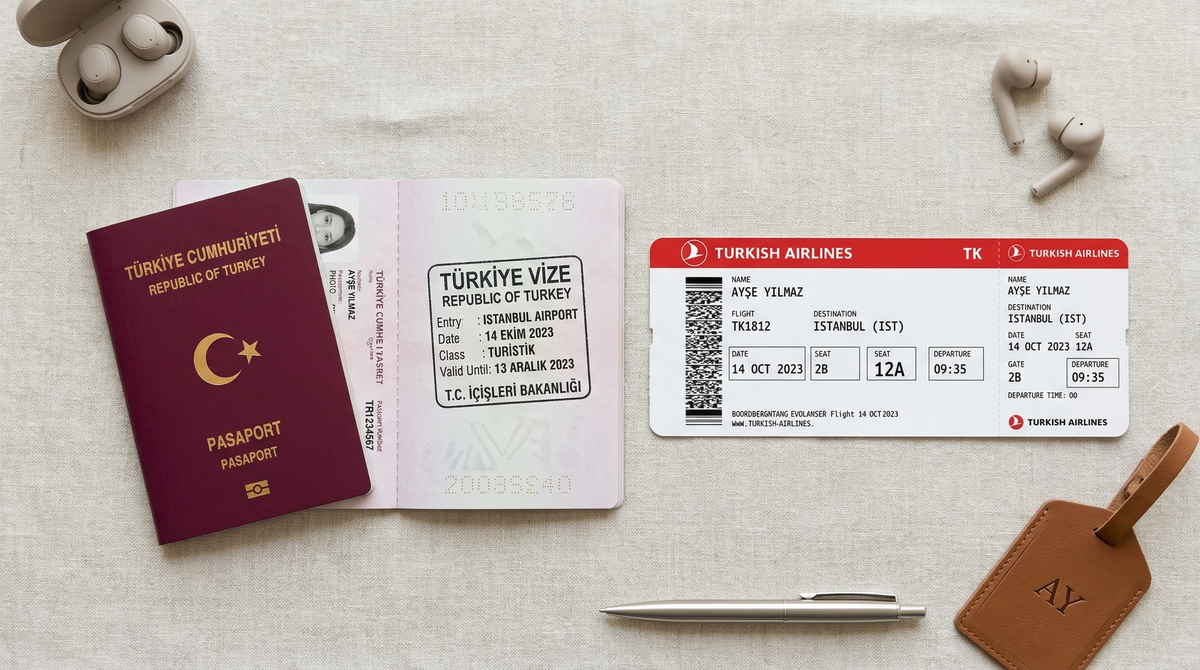
The headlines about the Middle East conflict are making travelers nervous about Turkey, and in one specific part of the country, that nervousness is justified. Istanbul, Cappadocia, Antalya, and the Aegean coast are open and operating normally. The southeast is a different story entirely. With US-Israel military operations active since February 28, 2026, an Iranian ballistic missile was intercepted over Turkish airspace, and the US Consulate in Adana is suspending services. The travel advice for Turkey in 2026 is more nuanced than any single headline suggests.
This blog breaks it down clearly.
Turkey Crisis Timeline 2026
Key events - Turkey 2026
Feb 28
US-Israel operations begin
Mar 4
Missile enters Turkish airspace
Mar 8
State Dept updates advisory
Mar 9
Consulate Adana closes
Mar 15
Anti-US rally in Istanbul
The Big Question: Is Turkey Safe Right Now?
Is Turkey Safe Right Now
ℹ️
Situation as of March 18, 2026
Verify the latest developments before making any travel decisions.
Is Turkey safe right now?
✓
Most of Turkey - Yes
Istanbul, Cappadocia, Antalya, Izmir, and the Aegean coast are open and operating normally. Flights are running. Hotels are open. Cruise ships are docking at Galataport Istanbul and Kusadasi on schedule.
✕
Southeast Turkey - No
The southeast is a different story entirely. The Level 4: Do Not Travel designation remains in effect across 22 provinces. On March 9, non-emergency personnel were ordered to leave the US Consulate General Adana and all consular services were suspended.
The key question
Turkey is not Dubai. There is no mandatory departure order, no closed embassy in Ankara or Istanbul, and no citywide shelter-in-place guidance. The key question for any traveler from the US is not whether Turkey is safe. It is where you are going in Turkey.
What changed in 2026
On March 8, 2026, the US State Department renewed the Turkey travel advisory, updating the southeast risk area to reflect new conflict-related threats.
On March 9, non-emergency personnel were ordered to leave the Consulate General Adana and all consular services were suspended.
On March 4, an Iranian ballistic missile entered Turkish airspace and was intercepted by NATO air defenses. Debris fell near Gaziantep - a direct physical spillover of the regional conflict.
The southeast Level 4 advisory this year is tied to the regional conflict triggered on February 28, not the domestic conflict that drove previous years' risk ratings.
Turkey Government Advisories
Official Travel Advisories: What the Governments Say
🇺🇸
United States
Two-tier advisory
Nationwide
Level 2 - Exercise Increased Caution
Southeast Turkey
Level 4 - Do Not Travel
The US Embassy Ankara and US Consulate General Istanbul remain open and fully operational. Consulate General Adana has suspended all routine consular services and non-emergency personnel have been ordered to depart. Americans in the southeast are strongly encouraged to leave now.
The State Department flags heightened anti-US and anti-Western sentiment across Turkey following the February 28 operations. Travelers are advised to keep a low profile and avoid locations publicly associated with the United States or Israel.
An anti-US rally was confirmed outside the US Consulate Istanbul on March 15, 2026. Protesters carried signs reading "Leave NATO, close the bases."
🇬🇧
United Kingdom
Heightened Caution
The Foreign, Commonwealth and Development Office (FCDO) advises against all travel within 10km of the Syrian border and against all but essential travel to Sirnak and Hakkari provinces.
Exercise heightened caution nationwide given elevated anti-Western sentiment.
🇦🇺
Australia
High Degree of Caution
Smartraveller advises exercise a high degree of caution nationwide. Notes retaliatory strikes occurring in the wider region and flags airspace disruptions as possible with little warning.
🇨🇦
Canada
High Degree of Caution
Exercise a high degree of caution nationwide. Specific warning for the southeast border region.
Turkey Regional Safety Breakdown
Regional safety breakdown
Where to go and where to avoid - as of March 18, 2026
Green zone - safe to visit
Yellow zone - vigilance required
Red zone - strictly avoid
🏙️
Istanbul
Fully operational. Flights, hotels, tourism, and public transport are all normal. Anti-US protests have occurred but remained peaceful and localized.
Keep a low profile and avoid political gatherings.
🎈
Cappadocia
No disruption. Hot air balloon operations, cave hotels, and Goreme National Park are all operating. One of the furthest points from the southeast conflict zone.
🏖️
Antalya and the Turkish Riviera
Beach resorts, hotels, and international tourism infrastructure are all functioning. No disruption to flights at Antalya Airport.
⛵
Izmir and the Aegean Coast
Fully operational. No elevated risk beyond the national Level 2 baseline.
🚢
Bodrum
Normal operations. International flights and ferry connections with Greek islands are functioning.
🏛️
Pamukkale, Ephesus, Troy
All archaeological and heritage sites open. No disruption.
Yellow zone - Vigilance Required
🏛️
Ankara
Capital city, fully functional. The US Embassy is open. Periodic protests related to the ongoing political situation have occurred.
Avoid political gatherings and demonstrations.
⚠️
Hatay Province (Antakya)
Included in the Level 4 southeast zone. Still recovering from the 2023 earthquake.
⚠️
Gaziantep
Listed in the Level 4 zone. Iranian missile debris fell near here on March 4.
Avoid regardless of tourist appeal.
Red zone - Strictly Avoid
All 22 southeastern provinces under Level 4: Do Not Travel. The US government cannot provide consular assistance in this region, with Consulate Adana closed. If your itinerary includes any of these provinces, cancel or reroute before traveling.
Adana
Adiyaman
Batman
Bingol
Bitlis
Diyarbakir
Elazig
Gaziantep
Hakkari
Hatay
Icel
Kilis
Kahramanmaras
Malatya
Mardin
Mus
Osmaniye
Siirt
Sanliurfa
Sirnak
Tunceli
Van
Turkey Emergency Contacts
New 2026 Risks - Turkey
New 2026 Risks - What is Different This Year
The single biggest shift in 2026 is that the conflict has physically entered Turkish airspace. Here is what that means for travelers.
1
An Iranian missile entered Turkish airspace
On March 4, 2026, North Atlantic Treaty Organization (NATO) air defenses intercepted a ballistic missile that had entered Turkish airspace. Debris fell near Gaziantep. This is a direct spillover of the conflict triggered on February 28 and is the primary reason for the southeast risk update.
Turkey is a NATO member and its air defense infrastructure is actively engaged.
2
Anti-US sentiment is measurably elevated
The State Department explicitly flagged heightened anti-US and anti-Western sentiment following US participation in strikes against Iran. An anti-US rally took place outside the US Consulate in Istanbul on March 15.
Avoid US-branded clothing, speaking loudly in English in politically charged areas, and proximity to US or Israeli-affiliated locations.
3
Domestic protests have been ongoing since 2025
The arrest of Istanbul Mayor Ekrem Imamoglu in March 2025 triggered widespread protests across Istanbul, Ankara, and Izmir that have continued into 2026 in periodic waves. These gatherings can turn unpredictable.
Avoid all demonstrations regardless of their stated purpose.
4
Arbitrary detention risk remains
Turkish authorities can detain individuals, including US citizens, on terrorism-related charges with limited evidence. Criticising the Turkish government, including on social media, has led to arrests of foreigners.
Do not post anything about Turkish politics, the military, or the current regional conflict while in Turkey.
5
Turkish Airlines Middle East suspensions
Turkish Airlines suspended flights to Iran until at least March 20, and to Iraq, Syria, Lebanon, and Jordan through mid-March. If your onward connection from Istanbul involves any of these destinations, verify status directly before traveling.
Iran - suspended until Mar 20
Iraq - suspended
Syria - suspended
Lebanon - suspended
Jordan - suspended
Read More - Dubai Blog
Turkey Logistics and Infrastructure
Logistics and Infrastructure: Is Everything Still Running?
Flights and airspace
Istanbul Airport
Operational
As of March 18, 2026, Istanbul Airport is operational but experiencing disruption. This is significantly better than the immediate post-February 28 period but worse than normal baseline operations.
Verify with your airline before traveling to the airport. Allow extra time in Istanbul for potential delays on onward connections.
ℹ️
Key difference from Dubai
Turkey travel restrictions in 2026 do not include any closure of Istanbul Airport or ban on incoming international flights. Landing permissions at Dubai International Airport (DXB) remain suspended. This is a critical distinction.
Turkish Airlines rebooking waiver
1
Free rebooking or full refund for tickets issued on or before February 28, 2026.
2
Applies to travel between February 28 and March 31, 2026.
3
Applies to affected Middle East routes only. Contact Turkish Airlines directly to apply.
4
Deadline to act: May 10, 2026.
Do not wait. Contact Turkish Airlines before this deadline.
Public safety and security
Turkish security forces maintain a strong presence in major tourist areas. The Istanbul Metro, Grand Bazaar, Sultanahmet, and Taksim Square are all operating with heightened security checks.
Expect additional bag checks and ID requests at major transport hubs. Emergency services are fully functional.
Turkish Emergency Services (ambulance, fire, police)
112
Turkey Myths vs Reality
Separating Fact from Clickbait
False
Turkey is a NATO member and is not a party to the current US-Israel-Iran conflict. Turkish airspace was crossed by an Iranian missile on March 4, which NATO forces intercepted. Turkey has not declared war, entered the conflict, or closed its borders.
Claim
Istanbul is dangerous right now.
Misleading
Istanbul is under a national Level 2 advisory - the same level it has held for most of the past five years. The southeast risk update does not apply to Istanbul. Anti-US protests have occurred but remained peaceful and localized.
Claim
All Turkish Airlines flights are suspended.
False
Turkish Airlines suspended specific Middle East routes. Flights from the US to Istanbul and onward to European, Central Asian, and most other destinations are operating with delays.
Claim
Turkey travel warning means do not visit.
Incorrect
The Turkey travel warning is a nationwide Level 2: Exercise Increased Caution - not Level 3 or 4. Level 2 is the same advisory level as France, Germany, and the United Kingdom. It means be aware, not stay home.
Claim
Americans will be targeted in Turkey.
Overstated
Elevated anti-US sentiment is real and State Department confirmed. Avoiding political gatherings, maintaining a low profile, and not advertising American identity in politically charged areas is a sensible precaution - not a reason to cancel a trip to Istanbul or Pamukkale.
Turkey Safety Checklist 2026
Turkey Safety Checklist 2026
Progress
0 of 14 completed
Documentation
✓
Passport valid, accessible, and stored securely
✓
Travel insurance policy reviewed for war exclusion clauses
✓
Hotel address and booking reference saved offline
✓
Airline booking reference saved offline and written on paper
✓
Travel insurance policy number and emergency claims line saved
Emergency registration
✓
Enrolled in Smart Traveler Enrollment Program (STEP) at
step.state.gov
✓
Turkish Emergency Services saved -
112
✓
Airline emergency contact saved
✓
Disaster and Emergency Management Authority (AFAD) app downloaded
Must-Have Apps for Turkey Travelers 2026
Must-have Apps for Turkey Travelers in 2026
💬
WhatsApp and Telegram
Real-time family updates and airline coordination over data. More reliable than voice calls during network congestion.
🇺🇸
STEP app / travel.state.gov
Official US Embassy alerts direct to your phone. Register before you travel, not after you arrive. Enroll at
travel.state.gov.
🚨
AFAD
Turkey's Disaster and Emergency Management Authority app. Official Turkish government alerts for civil defense warnings and regional emergencies.
Download before departure - not after you land.
✈️
Your airline's app
Real-time gate and flight status at Istanbul Airport. Essential given the current delay volumes.
🗺️
Google Maps offline
Download Istanbul, Cappadocia, Antalya, and any regions you are visiting before departure.
Works without data in an emergency. Download before you need it.
🔒
VPN
Maintains access to international news if local networks throttle specific platforms. Turkey has a history of social media restrictions during sensitive political periods. A practical precaution.
Why Jetpac Works - Turkey
Why Connectivity is a Safety Tool in Turkey Right Now
A Turkey eSIM installed before departure means you have working data the moment your plane touches the tarmac at Istanbul. No store visit, no kiosk, no searching for a SIM card in an unfamiliar airport while monitoring flight status and embassy alerts simultaneously. For travelers navigating Turkey's current environment, a Jetpac
eSIM for Turkey plan is a practical safety layer, not a travel accessory.
Why Jetpac works when you need connectivity most
💬
Essential apps stay on after data runs out
WhatsApp, Google Maps, and Uber keep working even after you hit your limit, so you can message family, navigate, and get a ride without interruption.
📞
In-app voice calls
Calls start at USD 1.99 for five minutes, useful when a quick call solves what ten messages cannot - especially when coordinating with airlines or embassy contacts.
📶
Unlimited hotspot sharing
Share your connection with a laptop or travel partner without extra steps. Useful for downloading boarding passes, rebooking flights, or accessing embassy documents on the go.
🌍
One eSIM, Turkey and beyond
A single
Turkey eSIM covers Turkey and
200+ destinations on one plan. If your onward routing changes due to Turkish Airlines suspensions, your connectivity does not change with it.
⚡
Activates before you land
QR code install before departure. No store visit, no kiosk, no delay on arrival. Working data the moment your plane touches the tarmac at Istanbul.
📡
Multi-network switching
Automatically connects to the strongest available local network. Useful in a country where coverage varies significantly between Istanbul and rural regions.
💰
70% cheaper than standard roaming
Significantly less than activating your home carrier's
international roaming
- often more than 70% cheaper - so you keep more of your travel budget where it belongs.
🧾
Prepaid pricing, no bill shock
You pay upfront. No surprise roaming charges if your trip extends unexpectedly or crosses a border.
🛟
24/7 support via WhatsApp and email
Help is available around the clock, in any time zone, when you need a quick fix and cannot afford to wait.
ℹ️
To ensure your eSIM works seamlessly, set it up and activate it before your trip. If you are already in Turkey, use a VPN to activate your eSIM, as local restrictions may affect app access.
Practical Safety Tips - Turkey 2026
14 Practical Safety Tips for Turkey 2026 Travelers
Before you travel
Check
travel.state.gov for the latest Turkey travel advisory the day before departure.
Verify your airline's flight status directly before going to the airport.
Ensure travel insurance explicitly covers the current advisory zone. Verify war exclusion clauses before assuming anything.
Download AFAD, Google Maps offline, and your airline app before leaving home.
In Istanbul and tourist zones
Keep a low profile. Avoid US-branded clothing in politically charged areas.
Avoid all demonstrations and political gatherings.
Do not photograph military installations, police operations, or protest activity.
Do not post opinions about Turkish politics, the military, or the regional conflict on social media while in Turkey.
If you are near the southeast
Do not enter any of the 22 Level 4 provinces under any circumstances.
If already there - contact the US Embassy Ankara immediately at
+90 312 294 0000.
Identify overland exit routes toward western Turkey and Istanbul, or toward Georgia in the north.
If your flight is disrupted at Istanbul
Contact your airline directly via their app or international number before going to a desk. Queues at Istanbul Airport are significantly longer than normal.
Turkish Airlines waiver applies to affected Middle East routes. Act before May 10, 2026.
FAQs
Is it safe to travel to Turkey during the Israeli war?
For tourist destinations, yes, for the southeast, no. Istanbul, Cappadocia, Antalya, and the Aegean coast remain under Level 2: Exercise Increased Caution and are operating normally. The southeast is Level 4: Do Not Travel following Iranian missile activity in Turkish airspace on March 4. Turkey is a NATO member and is not a party to the conflict, but the regional spillover has reached its borders.
Is it safe to fly to Turkey right now with the war?
Yes, for most routes. Istanbul Airport is operational with delays but no closure. Flights from the US to Istanbul are running. Turkish Airlines suspended specific Middle East routes, including to Iran, Iraq, Syria, Lebanon, and Jordan. Verify your specific route with your airline before traveling. The situation is materially different from Dubai, where landing permissions at DXB remain suspended. For anyone asking whether it is safe to travel to Turkey during the Israeli war by air, the answer is yes via Istanbul for most standard routes.
Is it safe for Americans to visit Turkey right now?
It depends on where. Istanbul, Cappadocia, Antalya, Izmir, and the Aegean coast are under Level 2: Exercise Increased Caution, the same level as many Western European countries. The southeast is Level 4: Do Not Travel. For Americans asking whether it is safe in Turkey for Americans right now: yes for tourist zones, no for the southeast. Keep a low profile, given the elevated anti-US sentiment confirmed by the State Department.
Which part of Turkey is safe for tourists?
Istanbul, Cappadocia, Antalya, Izmir, Bodrum, Ephesus, Pamukkale, and the entire Aegean and Mediterranean coast are safe and fully operational. Avoid all 22 southeastern provinces listed under the Level 4 advisory, particularly Gaziantep, Diyarbakir, Hatay, Adana, and any province bordering Syria or Iraq.
What are the risks of going to Turkey?
In tourist zones: elevated anti-US sentiment, risk of encountering protests, terrorism risk at tourist sites and transport hubs, and arbitrary detention risk for anything perceived as criticism of the Turkish government, including on social media. In the southeast: direct spillover risk from the regional conflict, Iranian missile activity in Turkish airspace, and no US consular support with Adana closed.
What countries are on high alert for travel?
As of March 18, 2026, the UAE, including Dubai, is Level 3 with active conflict, mandatory US departure, and a closed US Embassy. Southeast Turkey is Level 4. Iran, Iraq, and Syria are Level 4. Lebanon and Israel are Level 3. Turkey nationally is Level 2. Check travel.state.gov for the full and current list.
Disclaimer
This blog is based on official government advisories, verified news sources, and publicly available information as of March 18, 2026. The security situation in Turkey and the wider Middle East is evolving. Always verify the latest guidance at travel.state.gov and tr.usembassy.gov before making any travel decision. Jetpac is not responsible for network variations or outcomes related to travel decisions made based on this content.