Is Jamaica Safe for Tourists? 2026 Travel Advisory & Safety Tips
Jamaica is safe for most American tourists when the trip stays rooted in resort areas, licensed transport, and sensible local awareness. From Negril and Ocho Rios to Montego Bay, beaches, roads, weather, and mobile data all matter, and good planning makes it easier to enjoy.
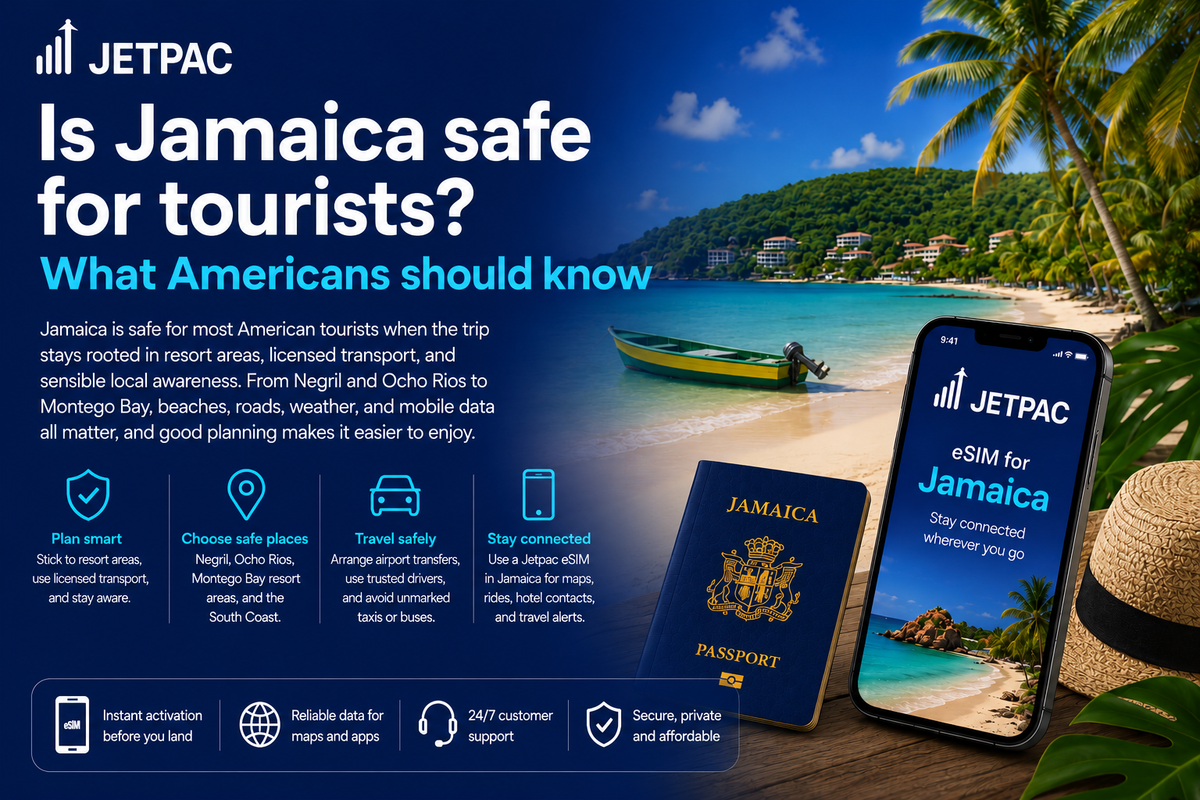
Jamaica draws American travelers for beaches, resorts, waterfalls, food, music, and warm island culture. For most visitors, is Jamaica safe for tourists in 2026? With the right preparation and resort-based planning, many Americans do visit safely, though the U.S. State Department currently urges caution, using licensed transport, and avoiding higher-risk neighborhoods.
Travelers from the USA should also set up reliable mobile data before arrival, and a Jetpac eSIM Jamaica plan can help with maps, airport transfers, hotel contacts, and travel alerts.
Is Jamaica safe for tourists in 2026?
The practical answer is that Jamaica is not equally safe everywhere. Tourist zones usually feel very different from the urban areas that drive many crime warnings.
Key points for travelers:
- Most vacations happen in resort zones such as Negril, Ocho Rios, Montego Bay, and the South Coast
- Crime risks are higher in specific neighborhoods, not across every tourist area
- Resorts, guided tours, and hotel-arranged transfers reduce many common risks
- Visitors should avoid isolated places, late-night wandering, and unlicensed taxis
- Travel insurance is strongly recommended
The current official Jamaica travel advisory from the U.S. State Department lists Jamaica at Level 3: Reconsider Travel due to crime, health, and natural disaster risks.
Why does Jamaica have a safety reputation?
Jamaica's reputation comes mainly from violent crime in parts of Kingston, Montego Bay, and other non-tourist communities. These concerns are real, but they do not describe every beach town, resort corridor, or guided excursion.
- National crime data can make the whole island sound unsafe
- Most visitors do not spend time in the highest-risk neighborhoods
- Resort areas have stronger tourism security and visitor infrastructure
- Independent exploring requires more caution than resort-based travel
- Safety depends heavily on location and transport choices
Entry basics Americans should know
U.S. citizens must present a valid passport when leaving or re-entering the United States. Travelers sometimes ask, "Is Jamaica part of the U.S.?" It is not. Jamaica is an independent country with its own laws, currency, entry rules, and emergency systems. Travelers from the USA should prepare for international travel and verify current entry requirements before booking.
Important Emergency Numbers in Jamaica
| Service | Number |
|---|---|
| Police | 119 |
| Ambulance | 110 |
| Fire | 110 |
| Tourist Assistance | Contact your hotel or local tourist police |
| U.S. Embassy Kingston | Save before departure |
Current advisory explained
Jamaica's current U.S. State Department travel advisory sits at Level 3: Reconsider Travel, which means the State Department advises Americans to reconsider whether to travel there at all due to crime levels.
What Level 3 means:
- Travelers should seriously weigh the risks before booking
- Travel is not prohibited, but is strongly cautioned against
- Some areas carry a higher risk
- U.S. travelers should review local restrictions
- Conditions can change, especially during hurricane season
Areas tourists should avoid or approach carefully
When looking for whether it is safe to travel in Jamaica, the honest answer depends on location choices and whether transport is arranged through trusted operators. If you are asking if it is safe to travel to Jamaica, the safest approach is to stay near established tourism zones and book activities through verified providers.
Be more careful in:
- Some parts of Kingston
- Non-tourist areas of Montego Bay
- Isolated beaches or roads after dark
- Remote places without arranged transport
- Nightlife areas when leaving alone
Jamaica Travel Safety Checklist
✔ Check the latest travel advisory.
✔ Book airport transfers before arrival.
✔ Stay in established resort areas.
✔ Purchase travel insurance.
✔ Keep valuables secure.
✔ Use licensed taxis.
✔ Monitor weather forecasts during hurricane season.
✔ Install a Jamaica eSIM before departure.
Safer places to stay
Most first-time visitors choose places with strong resort infrastructure, easy transfers, and familiar tourism services. Arranging accommodation and transport before you travel to Jamaica reduces the most common risks.
Negril: Known for Seven Mile Beach and sunsets. Good for couples and relaxed beach trips. Use arranged transport after dark.
Ocho Rios: Good for families and excursions. Close to Dunn's River Falls and nature tours. Book activities through trusted providers.
Montego Bay resort areas: Convenient for airport access. Good for short trips. Stay within tourist corridors and use arranged excursions.
South Coast resorts: Quieter and better for slow resort stays. Transport should be planned.
Is Jamaica Safe? Destination-by-Destination Guide
| Destination | Safety | Best For | Safety Tips |
|---|---|---|---|
| Negril | ✅ Generally safe | Couples, beaches | Use licensed taxis after dark. |
| Ocho Rios | ✅ Generally safe | Families, cruise visitors | Book excursions through reputable operators. |
| Montego Bay Resort Zone | ⚠️ Exercise caution | Resorts, nightlife | Stay within tourist areas, especially at night. |
| Kingston | ⚠️ Higher caution | Culture, museums | Visit with local guidance and avoid high-risk neighborhoods. |
| South Coast | ✅ Generally safe | Relaxed holidays | Arrange transport in advance. |
Is It Safe to Leave an All-Inclusive Resort?
Yes, many visitors safely explore Jamaica beyond their resort, but planning is important.
For the safest experience:
- Book excursions through your hotel or reputable operators.
- Travel during daylight hours where possible.
- Use licensed JUTA taxis or private transfers.
- Avoid isolated beaches and unfamiliar neighborhoods.
- Ask your hotel staff if there are any local areas you should avoid.
Most travelers who plan excursions in advance visit attractions such as Dunn's River Falls, Rick's Cafe, Blue Hole, and Martha Brae River without incident.
Transportation safety
Transportation is one of the most important safety decisions in Jamaica.
Safer options: Hotel airport transfers, licensed JUTA taxis, resort shuttle services, reputable private drivers, and guided tour transportation.
Avoid: Unmarked cars, rides from strangers, hitchhiking, and public minibuses if you are unfamiliar with the route.
A working Jamaica eSIM helps you contact drivers, share your live location, and check hotel directions without depending on public Wi-Fi.
Airport arrival tip:
Arrange transportation before landing.
Ignore unofficial taxi solicitations inside the airport.
Confirm your driver's name and vehicle details in advance.
Money and payment tips
- Carry small amounts of Jamaican dollars for tips and small purchases
- Credit cards are widely accepted at resorts, hotels, and larger restaurants
- Use ATMs inside banks, hotels, or secure locations
- Avoid displaying cash or expensive jewelry
For anyone planning what to pack for a Jamaica trip, include a backup card, small cash, sunscreen, insect repellent, medication, and copies of key documents.
Common Scams Tourists Should Watch For
The most common issues tourists encounter include:
- Taxi drivers charging inflated fares.
- Unlicensed tour guides.
- Beach vendors demanding payment after offering "free" items.
- Currency exchange scams.
- Overpriced souvenirs.
- Card skimming at unofficial ATMs.
Always agree on prices before accepting services and use official tour operators whenever possible.
Solo travelers and families
Many Americans wonder whether Jamaica is safe enough for a solo or family trip before committing to a booking. Both groups can have smooth trips, but they should plan more carefully than large resort groups.
Solo travelers: Choose well-reviewed accommodations, avoid isolated nightlife, use arranged transport, and share your plans with someone at home.
Families: Choose resorts with strong reviews, confirm child-friendly beaches and pools, book transfers before arrival, and carry basic medicine and sun protection.
The question of is Jamaica safe for tourists planning solo or family stays is answered most clearly by how well the itinerary avoids unplanned situations.
Health and weather
Jamaica is warm year-round, and hurricane season generally runs from June through November. Healthcare and emergency response may not match U.S. standards in many areas.
- Buy travel insurance with medical coverage
- Bring prescription medicine in its original packaging
- Use sunscreen and insect repellent
- Monitor weather alerts during storm season
When is the best time to visit Jamaica? Most prefer the drier winter and spring months, while summer and fall require more weather awareness.
Is It Safe to Visit During Hurricane Season?
Jamaica's hurricane season runs from June to November, with the greatest likelihood of tropical storms between August and October.
Traveling during this period doesn't necessarily mean you'll experience severe weather, but travelers should:
- Purchase travel insurance.
- Monitor National Hurricane Center forecasts.
- Keep airline notifications enabled.
- Build flexibility into their itinerary.
Most resorts have hurricane preparedness procedures, but flight delays and cancellations are possible during major storms.
Also Read
Is It Safe to Travel to Costa Rica Right Now?
Costa Rica is another popular warm-weather choice for Americans, compared to safety, nature, and adventure travel. This guide covers current risks, safer areas, and practical tips for a well-planned visit.
Is It Safe to Travel to Colombia in 2026?
Colombia has become a major destination for culture, cities, food, and nature travel, but safety varies significantly by region. This guide offers a clear breakdown of tourist risks and smarter planning choices.
Is It Safe to Travel to Mexico Right Now?
Mexico remains one of the top choices for American travelers, but safety differs widely by state and city. This guide covers current guidance, safer regions, and practical tips for a well-planned trip.
Is It Safe to Walk Around Jamaica at Night?
Popular resort areas remain active after sunset, but visitors should take extra precautions.
Avoid:
- Walking alone on quiet streets.
- Accepting rides from strangers.
- Carrying large amounts of cash.
- Visiting unfamiliar neighborhoods after dark.
Instead, use licensed taxis or hotel transport when travelling in the evening.
Staying connected in Jamaica
The answer to the question, Will my phone work in Jamaica depends on your carrier, device, and roaming setup. For most travelers, mobile data from the airport onward makes every part of the trip easier: confirming transfers, using maps, contacting hotels, checking weather alerts, and accessing booking details.
Reliable mobile data helps you book licensed taxis, navigate unfamiliar roads, monitor weather updates, receive airline notifications, and contact your hotel or emergency services if plans change.
Installing a Jamaica eSIM before departure means you'll have access to Google Maps, WhatsApp, and travel updates immediately after landing without relying on airport Wi-Fi.
Bottom line
So, is Jamaica safe for tourists in 2026? With careful planning, resort-based stays, and sensible precautions, many Americans travel there without incident. The Level 3 advisory means extra preparation is essential before departure, arrange transport carefully, stay within established resort areas, and take sensible precautions throughout. If you plan wisely, stay aware, and keep reliable connectivity, traveling to Jamaica can feel both enjoyable and manageable.
Sources Used
This guide is based on information from official government travel advisories and trusted travel resources, including:
- U.S. Department of State – Jamaica Travel Advisory
- U.S. Embassy Jamaica
- Government of Canada – Travel Advice and Advisories
- UK Foreign, Commonwealth & Development Office (FCDO)
- Australian Government Smartraveller
- Jamaica Tourist Board
- Jamaica Constabulary Force
- National Hurricane Center (weather information)
- Reuters (where applicable)
Note: Travel advisories, weather conditions, and local safety guidance may change. Always verify the latest information with official sources before traveling.
FAQs
Do Americans need a visa for Jamaica?
U.S. tourists generally do not need a visa for short leisure visits, but they should travel with a valid passport and proof of onward or return travel. Confirm current entry requirements before departure.
Can tourists leave their resort in Jamaica?
Yes, but planned excursions through verified providers are safer than independent wandering. Travel during the day, use licensed transport, and ask hotel staff which areas are appropriate.
Are taxis safe in Jamaica?
Licensed JUTA taxis and hotel-arranged transfers are the safest choices. Avoid unmarked cars and agree on pricing before the ride begins.
Should tourists use cash or cards in Jamaica?
Cards work at hotels, resorts, and larger businesses. Carry small amounts of Jamaican dollars for tips, small vendors, and backup situations.
What emergency number should tourists call in Jamaica?
Call 119 for police and 110 for fire or ambulance. Save your hotel, tour operator, travel insurer, and U.S. Embassy contact details before leaving your accommodation.
Is it safe to walk around outside resorts in Jamaica?
Inside resort grounds and along established tourist corridors, yes. At night or in unfamiliar areas, use arranged transport rather than walking independently.
Disclaimer
Travel advisories, entry rules, transport options, weather conditions, health guidance, attraction access, and local regulations can change. Travelers should verify the latest information with official government sources, airlines, hotels, and tour operators before booking or departure.