Thailand Travel Guide: Itinerary, Costs, Transport, Tips & More
Plan a 2026 trip to Thailand, including destination ideas, 3- to 14-day itineraries, estimated costs, seasonal advice, entry requirements, and tips for getting around.

Thailand draws millions of first-time and repeat visitors each year for good reason. This Thailand travel guide covers where to go, what it costs, how to get around, and what to expect from local food and culture.
The sections below include entry rules, itinerary ideas, accommodation types, packing essentials, and practical tips to help you plan your visit confidently in 2026.
Whether you have one week or two, Thailand rewards visitors who arrive prepared. The sections that follow cover everything from northern temple towns to southern beach islands, with no filler in between.

Thailand at a Glance
| Detail | Information |
|---|---|
| Location | Southeast Asia |
| Currency | Thai Baht (THB); 1 USD is approximately 35 THB |
| Language | Thai; English is widely spoken in tourist areas |
| Time Zone | UTC+7 (Indochina Time) |
| Electricity | 220V, 50Hz; Type A, B, and C plugs |
| Typical Trip Length | 7 to 14 days |
| Emergency Numbers | 191 (Police), 1669 (Ambulance), 1155 (Tourist Police) |
| Major Airports | Bangkok (BKK/DMK), Chiang Mai (CNX), Phuket (HKT), Koh Samui (USM) |
| Visa | 30- or 60-day exemption for most Western passports |
Source: Tourism Authority of Thailand.
Prices may change. Confirm current rates before travel.
Why Visit Thailand?
Thailand combines affordability, variety, and a strong tourist network that makes first trips genuinely easy to plan. Northern mountains, ancient walled cities, and tropical reefs are all reachable within a standard two-week holiday.
When you plan a trip to Thailand, you can pair culture-heavy cities with island time within a single itinerary without ever feeling rushed.
Street food ranges from $0.50 to $3 USD per dish, domestic transport is cheap, and most destinations have clear English signage. Any reliable Thailand travel guide will note that few destinations deliver this combination at this price point.
Best Places to Visit in Thailand
The best places to visit in Thailand span ancient walled cities in the north to coral-ringed islands in the south. Here is what each main area offers.
Top Cities
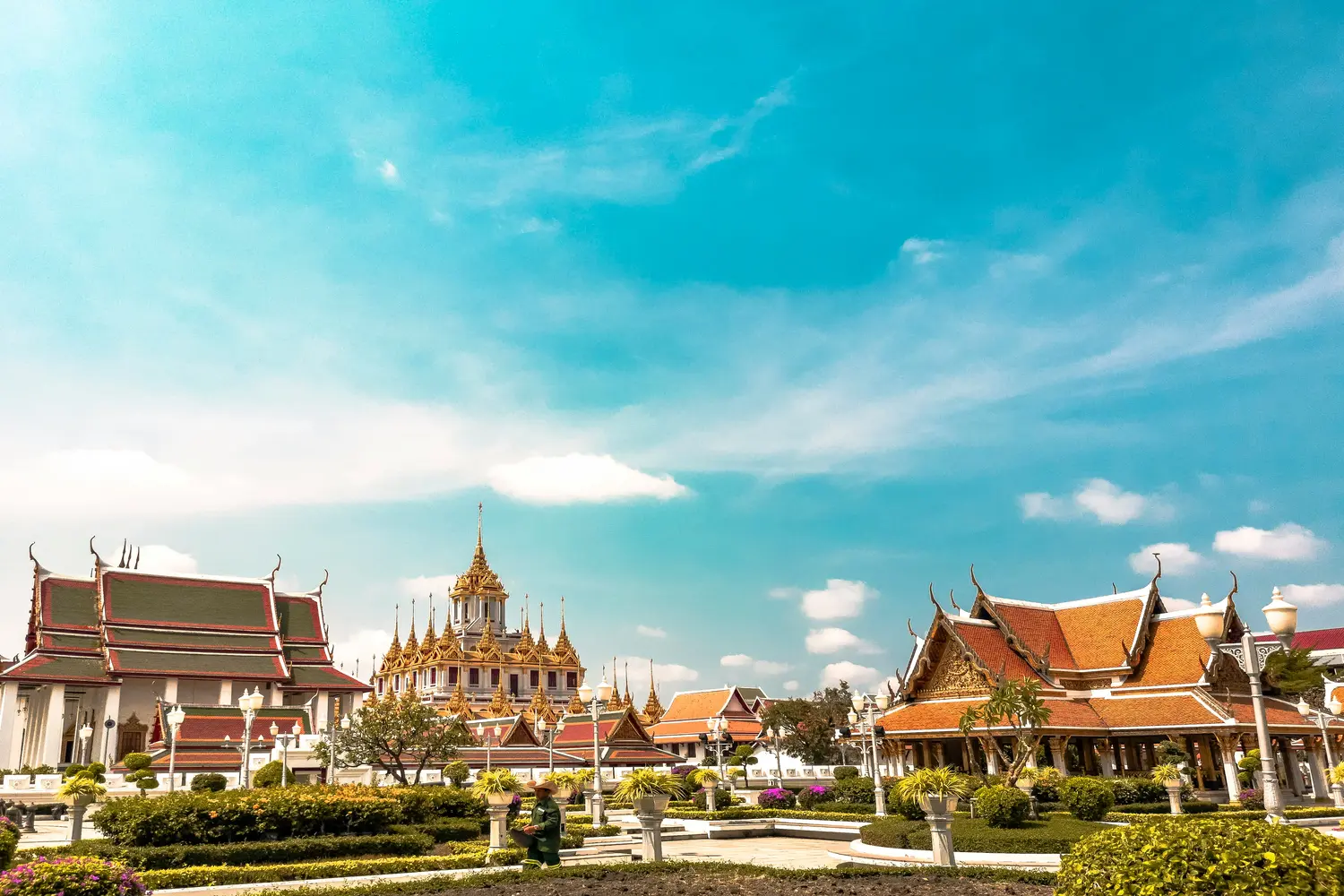
Bangkok - Best for Grand Temples, Street Food, and City Logistics
Thailand’s most visited city holds the Grand Palace, Wat Pho, and Chatuchak Weekend Market within a compact central area. The BTS Skytrain and river ferries keep it navigable without a taxi.
- Why visit: Grand Palace, Wat Pho, Chinatown (Yaowarat), Chatuchak Market
- Things to do: Ride the Chao Phraya ferry, eat at Sukhumvit street stalls, visit Wat Arun at sunset
- How to go: Fly to Suvarnabhumi Airport; taxi to the city center costs approximately 10-12 USD
- Practical tip: Use the BTS or MRT for central sights to avoid gridlock
Chiang Mai - Best for Temples, Trekking, and Night Markets
Northern Thailand’s cultural city sits in a mountain valley with hundreds of temples inside the old moat district.
- Why visit: Doi Suthep Temple, Elephant Nature Park, Sunday Night Market
- Things to do: Take a cooking class, trek in Doi Inthanon, attend a Muay Thai event
- How to go: Fly from Bangkok (approximately 20-50 USD one-way) or overnight train (approximately 15-30 USD)
- Practical tip: Book elephant sanctuaries weeks in advance; well-regarded centres book out early
Phuket - Best for Beaches, Water Sports, and Island Access
Thailand’s largest island has distinct zones from quiet bay beaches in the north to the busy Patong strip. It is the main hub for Andaman Sea island-hopping.
- Why visit: Big Buddha, Phang Nga Bay, Phuket Old Town, Kata and Surin beaches
- Things to do: Snorkel at Coral Island, day trip to Koh Phi Phi, kayak Phang Nga Bay
- How to go: Fly from Bangkok (approximately 20-60 USD one-way)
- Practical tip: Agree on taxi fares before entering; metered cabs are rare outside the airport
Pattaya - Best for Watersports and Day Trips from Bangkok
Located two hours by road from the capital, this coastal city has marine activity centres, water parks, and ferry links to offshore islands.
- Why visit: Nong Nooch Tropical Garden, Coral Island, Sanctuary of Truth
- Things to do: Diving, wakeboarding, Floating Market visit
- How to go: Bus from Bangkok’s Eastern Bus Terminal (approximately 3-5 USD)
- Practical tip: Book accommodation away from Walking Street for quieter nights

Regions
Northern Thailand - Best for Mountains and Cultural Diversity
Chiang Rai, Pai, and Mae Hong Son make up the highland north with the highest concentration of hill tribe communities and cool-season trekking routes.
- Why visit: White Temple (Wat Rong Khun), Golden Triangle, hill tribe villages
- How to go: Fly to Chiang Rai from Bangkok (approximately 30-70 USD) or bus from Chiang Mai
- Practical tip: Hire a licensed trekking guide through operators based in Chiang Mai
Southern Thailand - Best for Islands, Diving, and Limestone Coasts
The peninsula is divided between the Andaman Sea (west) and Gulf of Thailand (east), each with its own distinct dry season and island character.
- Why visit: Krabi limestone cliffs, Koh Tao diving, Khao Sok National Park
- How to go: Fly to Phuket or Koh Samui from Bangkok (approximately 20-80 USD)
- Practical tip: Check which coast is in the dry season during your travel dates before booking flights
Central Thailand - Best for Ancient Capitals and River Plains
Three former Thai capitals sit within day-trip distance of Bangkok by train. The flat landscape makes cycling a practical way to cover temple ruins.
- Why visit: Ayutthaya ruins, Sukhothai Historical Park, Kanchanaburi War Cemetery
- How to go: Train from Hua Lamphong Station (approximately 2-3 USD to Ayutthaya)
- Practical tip: Rent a bicycle at both Ayutthaya and Sukhothai entrances for approximately $2 USD per day
Attractions
Grand Palace and Wat Phra Kaew - Best for Royal History and Temple Architecture
The complex holds the revered Emerald Buddha and the most elaborate temple architecture in the country. Entry is approximately $15 USD. The dress code strictly requires covered shoulders and knees.
Wat Phra That Doi Suthep - Best for Mountain Temple Views
A golden mountaintop temple at 1,676 metres with panoramic views over the valley below. Take a shared songthaew from the mountain base for approximately $2 USD.
Ayutthaya Historical Park - Best for UNESCO Ruins
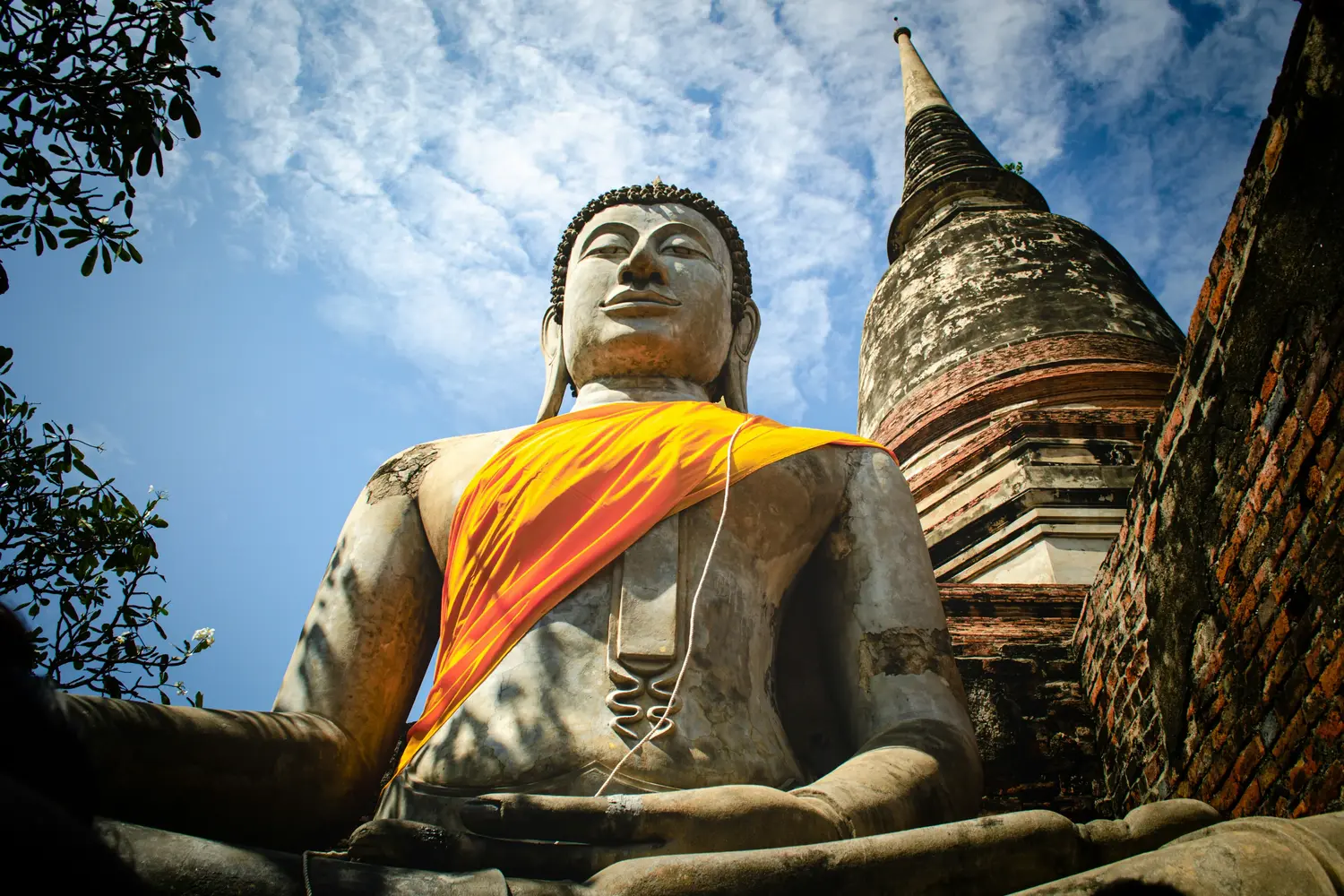
A UNESCO World Heritage Site with ruined temple complexes spread across a river island, one hour from Bangkok by train. Rent a bicycle at the entrance for approximately $2 USD.
Khao Yai National Park - Best for Wildlife and Jungle Trails
Thailand’s first national park holds wild elephants, hornbills, and gibbons. Entry is approximately $12 USD; a guided day tour is recommended for the best wildlife sightings.

Natural Destinations
Erawan National Park - Best for Emerald Waterfalls and Swimming
A seven-tiered turquoise waterfall system in Kanchanaburi Province. Entry is approximately $3 USD. Arrive early on weekdays to reach the upper tiers without crowds.
Doi Inthanon National Park - Best for Highland Forests and Birdwatching
Thailand’s highest peak (2,565 metres) in Chiang Mai Province has cloud forests, twin royal chedis, and over 300 bird species. Bring warm layers for the summit.
Beaches, Mountains, and Islands
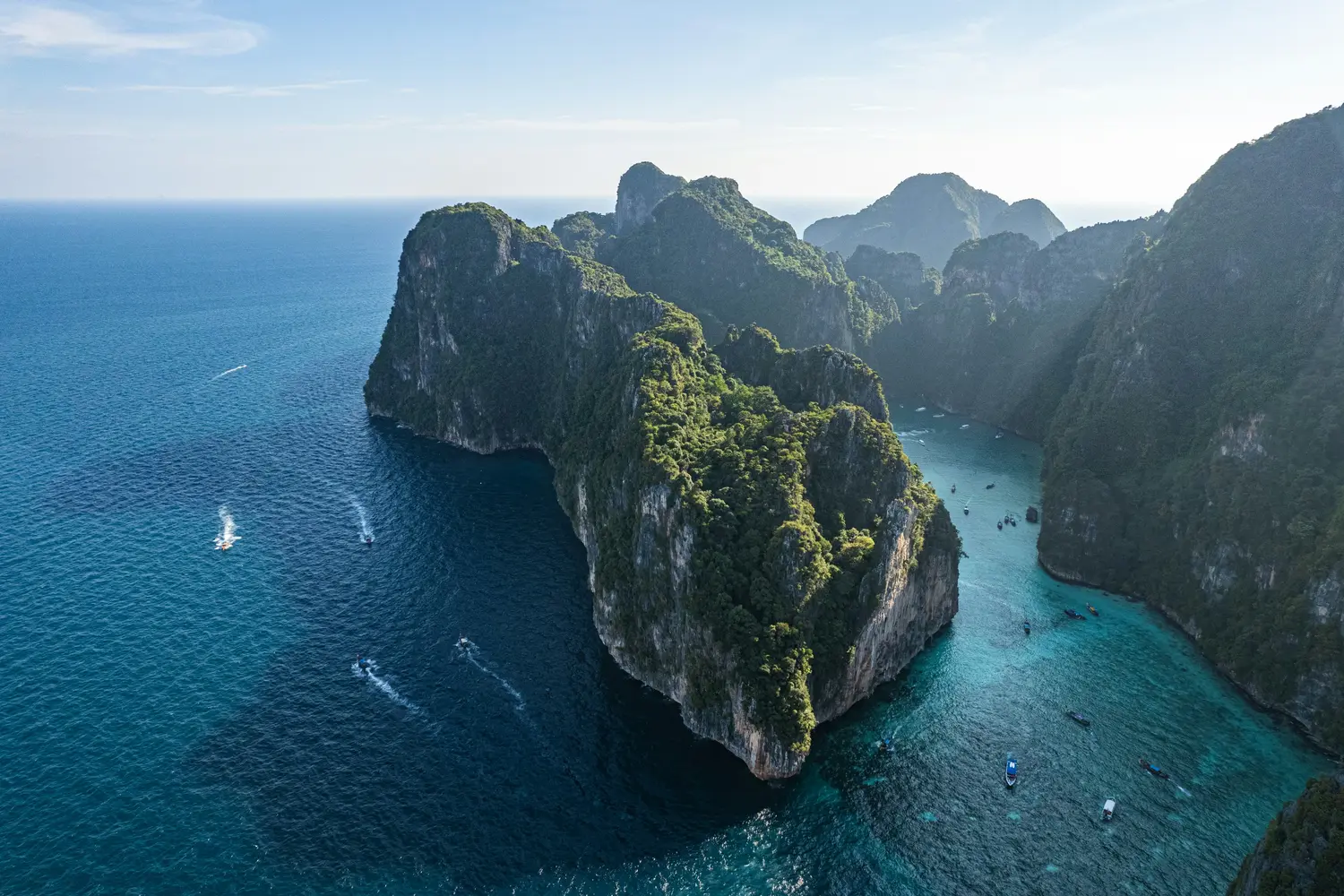
Koh Phi Phi - Best for Dramatic Cliffs and Snorkelling
Famous for limestone cliffs and turquoise shallows. Maya Bay now operates timed visitor entry to protect the reef. Staying overnight gives access after the day-trip crowd departs.
Koh Samui - Best for Gulf Coast Beaches and Island Hopping
Thailand’s second-largest island offers long sandy bays, coconut-lined roads, and ferry connections to Koh Phangan and Koh Tao.
Pai - Best for Mountain Scenery and a Slower Pace
A small mountain town three hours from Chiang Mai with hot springs, waterfalls, and scenic valley views.
Read More: Thailand’s history and geography have produced remarkable traditions and cultural quirks beyond its famous temples and beaches. Read our blog 👉30 Fun Facts About Thailand That May Surprise You
Things to Do in Thailand
Thailand offers a full range of things to do in Thailand, from sunrise temple visits and jungle treks to cooking schools and island-hopping routes built for a week of diving.
The best places to visit in Thailand for activities include Chiang Mai for outdoor and cultural experiences, the southern coast for water sports, and Bangkok for food tours and nightlife.
Thailand itineraries often build around combinations of these activity types, moving from culture-focused days in the north to beach time in the south.
- Sightseeing: Grand Palace, Ayutthaya Historical Park, Sukhothai temples
- Outdoor: Diving in Koh Tao, trekking in Chiang Rai, sea kayaking in Krabi
- Cultural: Cooking classes, temple ceremonies, traditional Muay Thai matches
- Food: Night markets in Chiang Mai and Bangkok, floating market visits
- Family: Water parks in Pattaya, theme parks and aquariums in Bangkok
- Free: Lumpini Park, temple courtyards, Chatuchak Market browsing
With so many things to do in Thailand spread across diverse regions, most first-timers find seven days barely covers the main highlights.
Read More: Many travellers check whether their phones are compatible with Thai networks before they land. Read our blog 👉 Will My Phone Work in Thailand? Everything You Need to Know
Best Time to Visit Thailand
Thailand has three seasons. The cool period runs from November to February, hot from March to May, and rainy from June to October. The cool season is the most popular for travel, with low humidity and clear skies across most regions.
Understanding the monsoon calendar is the starting point when deciding the best time to visit Thailand for your preferred activities and destinations.
| Season | Months | Conditions | Best For |
|---|---|---|---|
| Cool | November to February | 20-30°C, dry | Most destinations |
| Hot | March to May | 30-40°C, dry | Beaches; avoid Bangkok streets |
| Rainy | June to October | Humid, afternoon showers | Discounts; north is relatively dry |
Source: Thai Meteorological Department. Weather patterns vary. Check regional forecasts before departure.
The 2026 Songkran festival (Thai New Year) falls in mid-April; expect busy travel days and full hotels throughout the country during this period.
How Many Days Do You Need?
Choosing trip length before you plan a trip to Thailand shapes which destinations you can realistically include. Here is a quick breakdown of how many days do you need in Thailand for each type of trip.
3 to 5 Days
Best for: Bangkok with a one-day trip, or a transit extension
- Day 1 to 2: Grand Palace, Wat Pho, Chinatown street food, Chao Phraya River ferry
- Day 3: Day trip to Ayutthaya Historical Park by train (approximately $3 USD return)
- Day 4 to 5: Either a second Bangkok day or a short flight to Chiang Mai
Three to five days cover Bangkok’s main sights at a comfortable pace. It is not enough to reach the islands or northern highlands properly.
7 Days
Best for: Bangkok, Chiang Mai, and a brief beach stop
- Day 1 to 2: Bangkok - temples, markets, and street food
- Day 3 to 4: Chiang Mai - Doi Suthep Temple, cooking class, Night Bazaar
- Day 5 to 7: One southern island (Koh Samui or Koh Lanta)
Seven days is the most popular trip length for first visits, covering both the cultural north and the beach south.
10 Days
Best for: Three distinct regions without rushing
- Day 1 to 2: Bangkok
- Day 3 to 5: Chiang Mai plus a day trip to Chiang Rai or Doi Inthanon National Park
- Day 6 to 10: Two island destinations with ferry connections between them
Ten days gives each zone enough time to feel like a proper stay rather than a stopover.
14 Days
Best for: A thorough north-to-south route with flex days built in
- Day 1 to 3: Bangkok with an Ayutthaya day trip
- Day 4 to 7: Chiang Mai, Chiang Rai, and a highland trek
- Day 8 to 11: Krabi or Koh Phi Phi
- Day 12 to 14: Koh Samui with a final night back in Bangkok before the flight out
Two weeks allows time for cooking classes, day trips, and genuine downtime on the islands rather than moving every two nights.
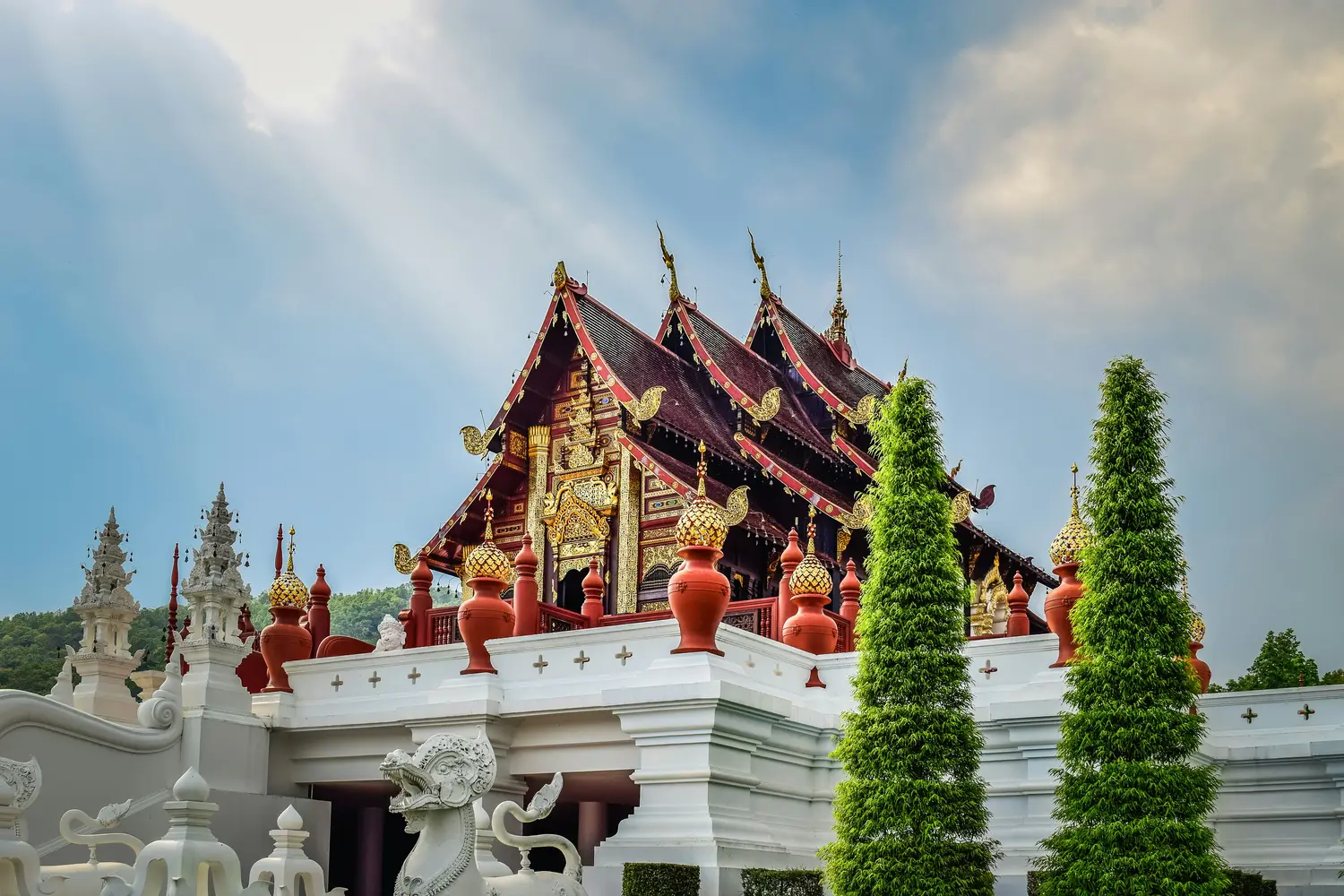
Thailand Itinerary Ideas
A Thailand travel itinerary works best when it moves in one direction rather than doubling back across the country. The Bangkok-Chiang Mai-south corridor covers the country’s most distinct experiences with minimal wasted travel time.
Planning your Thailand travel itinerary around the three-zone structure gives each destination enough days to feel like a stay rather than a stopover.
3-Day Thailand Travel Itinerary
Best for: Layover extensions and Bangkok first-timers
- Day 1: Grand Palace, Wat Pho, afternoon rest, Chinatown night market
- Day 2: Chatuchak Weekend Market, Wat Arun by river boat, rooftop sunset
- Day 3: Day trip to Damnoen Saduak Floating Market; return for a final Bangkok evening
5-Day Itinerary
Best for: Culture-focused trips without island time
- Day 1 to 2: Bangkok - Grand Palace, Chatuchak, Chinatown
- Day 3: Fly or take overnight train to Chiang Mai; walk the old moat district on arrival
- Day 4: Doi Suthep Temple in the morning; Thai cooking class in the afternoon
- Day 5: Chiang Mai Night Bazaar; return flight to Bangkok in the evening
7-Day Itinerary
Best for: First-timers wanting culture and beach in a single trip
- Day 1 to 2: Bangkok - Grand Palace, street food, river ferry
- Day 3 to 4: Chiang Mai - temples, cooking class, Elephant Nature Park visit
- Day 5 to 7: Koh Samui or Koh Lanta - beach days, snorkelling, island ferry
10-Day Itinerary
Best for: Travellers who want more than highlights
- Day 1 to 2: Bangkok - Grand Palace, Chatuchak, Chinatown
- Day 3 to 5: Chiang Mai - Doi Suthep, cooking class, Chiang Rai day trip with White Temple
- Day 6 to 8: Krabi - Railay Beach, Phang Nga Bay kayaking, Tiger Cave Temple
- Day 9 to 10: Koh Phi Phi - snorkel, slow morning, ferry to Phuket for the flight out
First-Time Visitor Itinerary
If you have never been before, focus on the best places to visit in Thailand that give the most contrast - temple culture, mountain towns, and sea in a single trip.
- Day 1 to 2: Bangkok - Grand Palace, Wat Pho, Chinatown food walk
- Day 3 to 4: Chiang Mai - Doi Suthep, cooking class, Night Bazaar
- Day 5 to 8: Phuket or Koh Samui - beach, Big Buddha, day trip to Koh Phi Phi or Koh Phangan
- Day 9 (optional): Return to Bangkok for an Ayutthaya day trip or final evening shopping
Thailand Travel Cost and Budget
The Thailand travel cost depends heavily on accommodation choices and how often you eat at street stalls versus restaurants.
| Category | Budget | Mid-Range | Luxury |
|---|---|---|---|
| Accommodation (per night) | 5-20 USD | 30-80 USD | $100+ USD |
| Meals (per day) | 5-10 USD | 15-30 USD | $50+ USD |
| Bangkok to Chiang Mai | 15-30 USD (bus/train) | 20-60 USD (flight) | $60+ USD |
| Attraction Entry | 0-3 USD | 5-15 USD | Up to $50 USD |
| Daily Budget (approx.) | 30-50 USD | 70-120 USD | $150+ USD |
Source: Numbeo Cost of Living - Thailand
These are approximate as of 2026. Prices may change. Confirm current rates before travel.
ATMs charge approximately $6 USD per foreign withdrawal. Carry small baht notes for street food stalls and tuk-tuks, as many vendors do not accept cards.
Read More: A local SIM card is one of the most cost-effective travel purchases you can make for a Thailand trip. Read our blog 👉 SIM Card for Thailand: Best Options, Costs and Setup Guide
Visa and Entry Requirements
Most Western passport holders qualify for a 30- or 60-day visa exemption for tourism as of 2026. Thailand’s official immigration information is available via the Immigration Bureau.
- Passport: Valid for at least six months beyond your departure date
- Visa on Arrival: Available for 65+ nationalities; approximately $35 USD fee
- Entry rules: Proof of onward travel and accommodation may be requested at the border
- Length of stay: 30 or 60 days depending on passport; extendable by 30 days at a local office
- Customs: Bring documentation for personal medication; some items are restricted at entry
Confirm current visa conditions on the official Thai government website before booking.
How to Get Around Thailand
Getting around in Thailand is straightforward once you understand which transport mode covers which route.
- Trains: Comfortable for the Bangkok-Chiang Mai route and south toward the islands; overnight trains save accommodation costs
- Domestic Flights: AirAsia, Nok Air, and Thai Lion Air connect all major cities from approximately 20-60 USD one-way; the best way to travel to Thailand’s distant southern islands from Bangkok is a budget airline plus a local ferry
- Buses: Long-distance VIP coaches are reliable for all major routes and cheaper than flights
- Ferries: Essential for island travel on both coasts; book in advance during peak season
- Tuk-Tuks and Songthaews: Local three-wheeled taxis and shared red pickup trucks for short urban distances
- Rideshare: Grab works in Bangkok, Chiang Mai, and Phuket for metered fares
- Metro: Bangkok’s BTS Skytrain and MRT subway cover the central city efficiently
Getting around in Thailand is most cost-effective when you combine budget airlines for long distances with ground transport within cities.
The best way to travel to Thailand from Europe, North America, and Australia is via direct or one-stop international flight into Bangkok’s Suvarnabhumi Airport.
Where to Stay in Thailand
Thailand covers every accommodation budget, from guesthouses at approximately $5 USD per night to five-star beach resorts.
Best Areas
- Bangkok: Sukhumvit (central transport links), Silom (business travellers), Khao San Road (backpackers)
- Chiang Mai: Old City (walking distance to temples), Nimman Road (cafes and boutiques)
- Phuket: Patong (nightlife), Kata and Karon (families), Surin (quieter, upscale)
- Islands: Beachfront bungalows on Koh Lanta and Koh Phangan; resorts on Koh Samui
Mid-range hotels run approximately 30-80 USD per night. Luxury properties on Phuket and Koh Samui average approximately $150+ USD per night.
Food and Culture
Food
Thai cuisine balances sour, sweet, salty, and spicy in a single dish. Must-try dishes include Pad Thai, Tom Yum soup, Som Tum (green papaya salad), and Mango Sticky Rice.
Street food stalls typically charge 0.50-2 USD per dish. Night markets offer the widest variety at the lowest prices and are open most evenings in every major city.
Culture and Etiquette
- Remove shoes before entering temples and many homes
- Dress modestly at temple sites; cover shoulders and knees
- Do not point feet toward Buddha images or at people
- Avoid raising your voice in public; a calm manner is respected
- Tipping is not mandatory, but 20-50 Baht is appreciated at sit-down restaurants
Travel Tips for Thailand
Following the right Thailand travel tips before you arrive saves both money and common first-timer frustrations.
- Book Chiang Mai cooking schools, Elephant Nature Park, and popular island tours well in advance
- Exchange currency at banks or authorised booths; airport counters offer poor rates
- Always carry small change for street food and tuk-tuks
- Confirm temple opening hours before visiting; some close on Buddhist holidays
- Avoid tour operators who approach you near the Grand Palace or on Khao San Road
- If you plan a trip to Thailand during peak season (December to February), book accommodation at least two months ahead
Thailand travel tips from experienced travellers consistently highlight the same handful of practical points. Timing, flexibility, and cash management make the biggest difference to daily comfort.
What to Pack for Thailand
A smart packing list for Thailand covers both beach and temple visits.
Thailand packing list essentials cover these categories. :
- Clothing: Light cotton or linen tops; a light jacket for cold-season evenings and air-conditioned transport
- Temple wear: A sarong or scarf to cover shoulders and knees for site visits
- Shoes: Slip-ons for easy temple removal; sandals for beach zones
- Sun protection: High-SPF sunscreen, a hat, and UV-protection sunglasses
- Medication: Prescription documentation, anti-diarrhoea tablets, antihistamines, and anti-nausea pills for mountain roads
- Tech: Universal adapter (Type A/B/C) and a portable power bank for long travel days
- Day bag: Small backpack with a zipper for markets and crowded areas
- Travel documents: Printed hotel confirmations, return flight printout, and travel insurance policy
Staying Connected with Jetpac eSIM
Wi-Fi is available in hotels, cafes, and airports across Thailand. Coverage becomes patchy in national parks and on smaller islands, where staying connected requires a local SIM or eSIM.
An eSIM Thailand option eliminates the need to swap physical SIM cards on arrival. Jetpac’s eSIM for Thailand activates before you land and is compatible with most unlocked smartphones, covering Bangkok, Chiang Mai, Phuket, and all major island destinations. Plans start from approximately $5 USD.
For maps, translation apps, and booking platforms, having mobile data throughout the trip matters. If connectivity drops, 7-Eleven stores across the country sell affordable SIM top-ups.
An active eSIM Thailand setup covers all major tourist regions from the airport onward. Visit jetpacglobal.com to compare plans and activate before departure.
Useful Travel Apps and Resources
Grab is the most used rideshare app in Thailand and works reliably in Bangkok, Chiang Mai, and Phuket. Google Maps covers most destinations accurately, though it occasionally misses village roads in the highlands.
Planning how to get internet in Thailand before you arrive ensures you are not hunting for a SIM card after a long international flight.
Other useful apps include Google Translate (Thai support with offline mode), Wise for currency exchange, and Klook for pre-booking activities at a discount.
When comparing connectivity providers, the best eSIM for Thailand will offer consistent 4G coverage, a data allowance suited to your trip length, and the ability to activate before you land.
Other resources worth bookmarking include the Tourism Authority of Thailand app for local event listings, Agoda for regional hotel pricing comparisons, and XE for live baht rate tracking.
Read More: Vietnam is a natural next stop for travellers already exploring Southeast Asia from Thailand. Read our blog 👉 Vietnam Travel Guide: Itinerary, Costs, Transport, Tips & More
Safety and Emergencies
Every responsible Thailand travel guide notes that the country is beginner-friendly, but common tourist scams are worth knowing before you arrive.
Common scams include tuk-tuk drivers claiming major temples are closed for a “special holiday” before steering you to a gem shop, and jet ski operators claiming pre-existing damage.
Only use authorised jet ski operators near beach towns and always photograph rental vehicles before accepting them.
For genuine emergencies, call 191 (Police) or 1155 (Tourist Police). Hospital care in Bangkok, Chiang Mai, and Phuket is internationally accredited. Keep a copy of your passport and travel insurance number in a separate bag from your original documents.
Read More: Solo female travellers often want specific advice beyond general safety tips for visiting Thailand. Read our blog 👉 is Thailand safe for solo female travellers?
FAQs
What should I know before traveling to Thailand?
This Thailand travel guide covers entry rules, packing, local etiquette, and connectivity to prepare you for arrival. Carry cash, dress modestly for temples, and arrange travel insurance before you book.
How many days are enough to visit Thailand?
Seven to ten days suits most first-timers, covering Bangkok, Chiang Mai, and one island. Two weeks allows for a relaxed pace with fewer long travel days.
What should I book in advance for Thailand?
Book flights, accommodation in Bangkok and popular islands, Chiang Mai cooking schools, and Elephant Nature Park visits well ahead. Full-moon period accommodation on Koh Phangan sells out months early.
Do I need to rent a car in Thailand?
Car hire is not necessary for most visitors. Domestic flights, overnight buses, trains, and scooter hire cover all the main routes comfortably.
Can I use credit cards and ATMs in Thailand?
ATMs are widely available in 2026, though each foreign withdrawal costs approximately $6 USD in fees. Major hotels and malls accept Visa and Mastercard.
Do I need to speak Thai in Thailand?
English is spoken in hotels, airports, and most tourist restaurants. Learning a few phrases such as “khob khun” (thank you) is appreciated and often warmly reciprocated.
Does my phone work in Thailand, and do I need an eSIM?
Most modern smartphones support Thai 4G and 5G networks. An eSIM or local SIM card is the most affordable alternative to international roaming for data.
What are the most common tourist mistakes or scams to avoid in Thailand?
Common scams include tuk-tuk drivers offering “closed today” stories near temples and jet ski damage disputes near beach towns. Always verify temple hours directly and photograph any hired vehicle before accepting it.
Disclaimer
The information was accurate at the time of writing. Visa requirements, prices, exchange rates, transport fares, seasonal conditions and other travel details may change after publication. Always check official Thai government and relevant service websites for the latest information before travelling. Jetpac is not responsible for any changes to the information after publication.
Get connected as soon as you land with a Jetpac travel eSIM.