Traveling to Japan from the US: What to Know Before You Go
US citizens can generally visit Japan visa-free for up to 90 days with a valid passport and an onward or return ticket. Visit Japan Web is optional, but arrival declarations are required. Before flying, check medicine restrictions, flight options, travel costs, train routes, and mobile data.

Traveling to Japan from US airports is generally straightforward for American vacationers, as US passport holders can generally visit visa-free for up to 90 days for tourism, with a passport valid for the entire stay and proof of onward or return travel.
You must complete immigration and customs declarations, but the Visit Japan Web service is optional.
Before flying, check medication restrictions, the address of your first accommodation, and seasonal transport conditions. This guide covers entry documents, flights, costs, payments, trains, packing, and mobile internet.
It applies to US citizens traveling on US passports; residents holding other nationalities must check their own visa rules. Verify official requirements again before departure.

Quick Answer: What Do You Need to Travel to Japan from the US?
For people traveling to Japan from US cities on vacation, a Japan visa for US citizens is generally unnecessary. The essentials are a valid passport with one blank page, arrangements to depart within your permitted stay, the applicable arrival procedures, and a customs declaration.
The online Visit Japan Web service can make the paperwork easier but is not an electronic travel authorization.
Traveling to Japan from US Airports: Essential Requirements at a Glance
Japan Entry Requirements & Essential Travel Info for US Citizens
| Requirement | What US travelers need to know |
|---|---|
| Passport | Valid throughout the trip, with one blank page for an entry stamp |
| Tourist visa | Not required for eligible US passport holders on short tourist stays |
| Electronic travel authorization | No separate pre-travel ETA required for an ordinary visa-exempt visit |
| Permitted stay | Up to 90 days, subject to admission by Japanese immigration |
| Arrival information | Immigration and customs declarations required; Visit Japan Web is an optional digital method |
| Onward travel | Have a confirmed return or onward ticket within the permitted period |
| Currency | Japanese yen (JPY) |
| Time difference | Japan is 13–17 hours ahead of the contiguous US, depending on time zone and daylight saving time |
| Electricity | Common Type A and B outlets, 100 volts, 50/60 hertz depending on region |
| Emergency numbers | Police: 110; fire or ambulance: 119 |
These Japan entry requirements for US citizens cover ordinary tourism only. Working, studying for an extended period, or traveling on a different passport may involve a different process.
Read more: Once you’ve checked the entry basics, use Japan Travel Guide for First-Timers: Itinerary, Costs, Transport & Tips to plan your first stay.
Do US Citizens Need a Visa to Visit Japan?
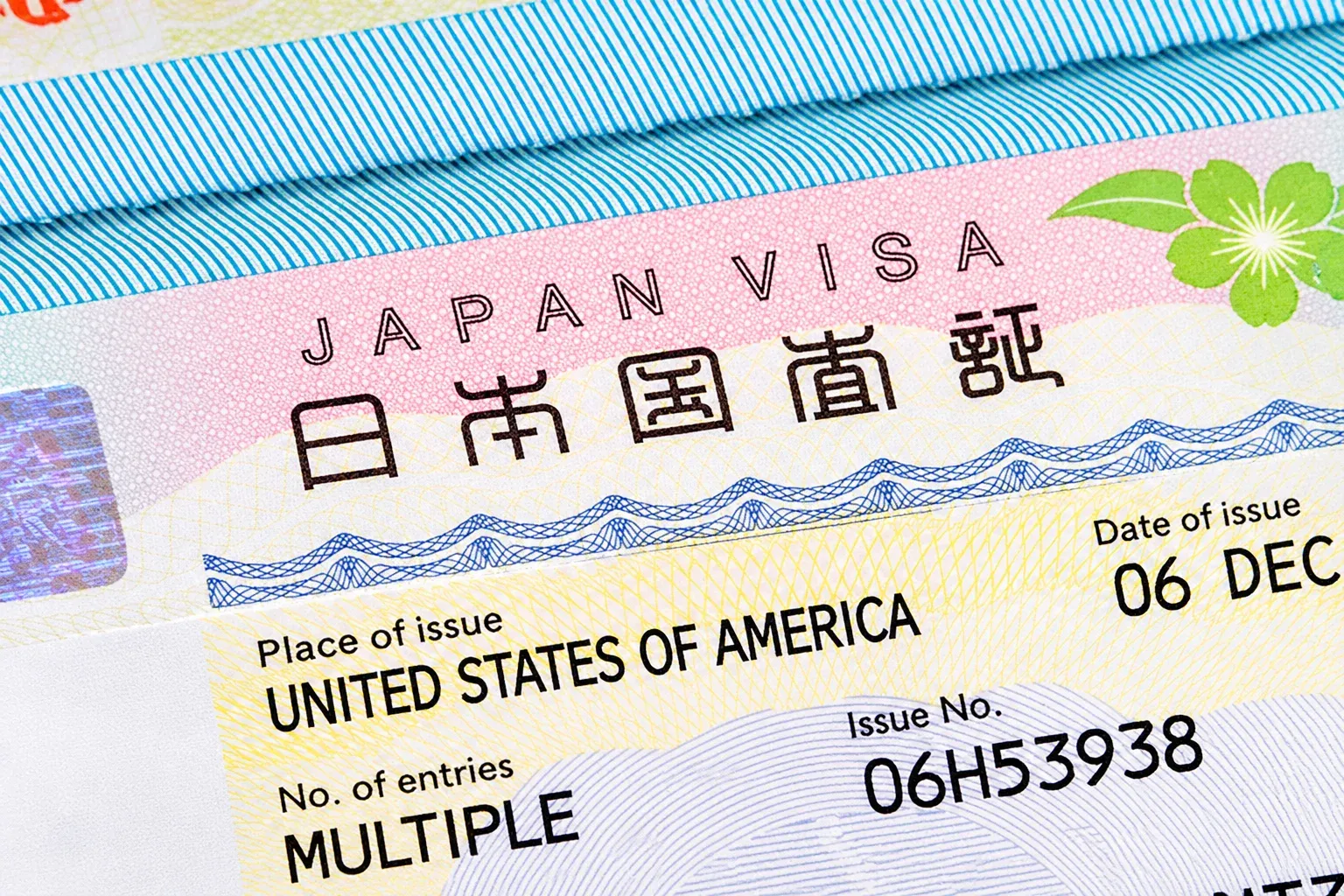
No. Eligible Americans visiting for tourism or other permitted non-remunerated activities for up to 90 days are generally visa-exempt. A Japan travel visa is not needed for that standard visit.
Visa exemption allows eligible visitors to request admission without obtaining a visa beforehand; it does not guarantee admission or authorize paid work in Japan.
If you're wondering, "do you need a visa to travel to Japan", check the purpose and length of your trip first. A Japan visa for US citizens becomes relevant for work, longer studies, extended residence, and other activities outside the short-stay exemption.
How to Apply for a Japan Visa, If Required
If a Japan travel visa is required, first identify the appropriate category, such as work, study, or another long-term status. Start with the Japanese embassy or consulate responsible for your US residence.
Some eligible short-stay applicants of non-exempt nationalities can use Japan's eVISA system, but not every visa category is available online.
A Japan travel visa application may require a passport, completed forms, a photograph, an itinerary, financial evidence, and, for some long-term stays, a Certificate of Eligibility, depending on the visa category.
Required documentation varies by category and consulate. Document requirements and processing vary by status and consulate, so apply early rather than assuming an airport-issued visa is available.
Do You Need an Electronic Travel Authorization?
Japan does not currently require a separate electronic travel authorization (ETA) for US citizens using the standard tourist visa exemption. Visit Japan Web is not a visa or travel authorization.
Its purpose is to prepare entry and customs declarations, and travelers can use the applicable non-digital procedures instead.
For an official explanation, consult the Japanese consulate's visa pages and the government-operated Visit Japan Web service. Avoid paying third-party websites that advertise a mandatory online tourist authorization.
What Are the Passport and Japan Entry Requirements for US Citizens?
#1. Passport Validity and Blank Pages
Your US passport must be valid for the duration of the trip; Japan does not normally require six extra months of validity. One blank passport page is required for an entry stamp.
Emergency passports and dual-nationality cases can involve additional checks, so confirm the rules with your airline and Japanese consulate if either applies.
#2. Proof of Return or Onward Travel
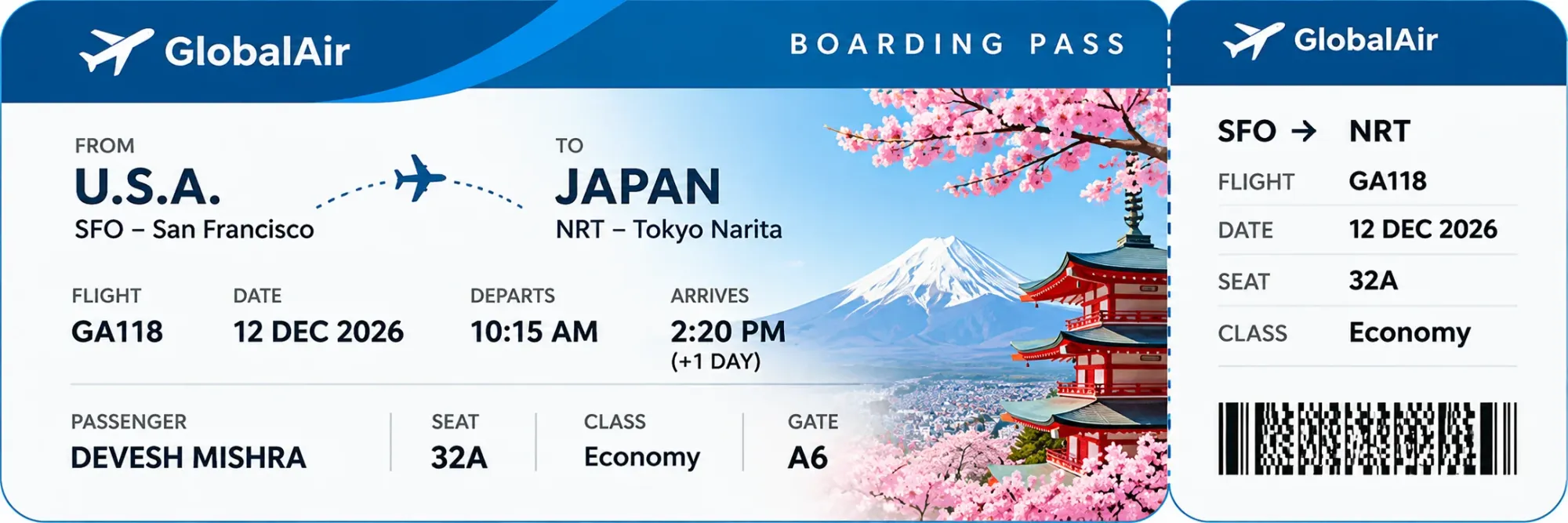
Have your departure booking readily available. Immigration officers can request evidence of onward travel and your plans in Japan; you should also be able to provide your accommodation address and explain how you will fund the visit.
A common question is "Do I need a hotel booked before entering Japan?". A prepaid hotel booking for every night is not a universal requirement for visa-exempt tourists, but you should have an address for your first stay and be prepared to explain your accommodation arrangements.
A confirmed booking makes the arrival process easier.
#3. Digital Arrival Cards and Customs Forms
All arriving travelers must complete immigration procedures and submit the required customs declaration. Visit Japan Web allows you to register your flight and lodging information, complete declarations, and display a two-dimensional code at supported airport counters and kiosks.
The government service is free and generally optional; travelers can use the applicable paper or in-person procedures instead.
Register through the official Digital Agency website, ideally before travel, and save a copy of your accommodation information offline. Completing the forms does not guarantee entry.
#4. Customs, Medicines, and Restricted Items
Japan restricts certain medicines that are commonly prescribed in the US. Adderall and other amphetamine-containing medicines can be prohibited even with a US prescription.
Some other controlled medicines require advance approval, and quantity rules depend on the exact substance. Check ingredients with Japan's Ministry of Health, Labour and Welfare before packing.
Declare items as required, including certain foods, plants, animal products, and restricted goods. Japan Customs also requires a separate declaration for cash and specified payment instruments exceeding ¥1 million or its equivalent.
Alcohol and tobacco duty-free allowances depend on age and quantity. Do not pack cannabis or assume a US prescription overrides Japanese law.
What Are the Best Flights from the US to Japan?
Flying to Japan is simplest from major nonstop gateways such as Los Angeles, San Francisco, Seattle, Chicago, and New York, although routes change by airline and season.
West Coast nonstop flights to Tokyo commonly take about 10–12 hours; East Coast nonstops often take about 13–15 hours, depending on routing and winds. Connections add time.
Major Japan Arrival Airports & Transfer Guide
| Arrival airport | Best starting point | Transfer consideration |
|---|---|---|
| Tokyo Haneda (HND) | Tokyo and nearby cities | Generally closer to central Tokyo |
| Tokyo Narita (NRT) | Tokyo and onward rail connections | Longer transfer to the city center |
| Kansai International (KIX) | Osaka, Kyoto, Nara | Convenient for the Kansai region |
| Chubu Centrair (NGO) | Nagoya and central Japan | Useful for a central-Japan itinerary |
When connecting to Japan via another country, compare total door-to-door time, transit-document rules, baggage rechecking, and any required airport change.
A cheaper ticket may cost more in transfers or overnight stays. Choose your arrival airport based on where the trip begins, not just the airfare.
Read more: Still deciding where to land? Pick the places you most want to see from 15 Best Places to Visit in Japan: Cities, Nature & Hidden Gems, then choose the airport that fits your route.
When Is the Best Time to Travel to Japan from the US?
The Best Time to Visit Japan from US departure cities depends mainly on the activities you want, not your origin airport. Spring offers cherry blossoms but often higher demand, autumn brings foliage and pleasant sightseeing, and winter suits ski resorts and hot springs.
Summer has festivals but can be hot and humid, with rainy-season or typhoon disruptions varying by region and month.
Japan Seasonal Travel & Weather Overview
| Season | Good for | Watch for |
|---|---|---|
| Spring, March–May | Cherry blossoms, city sightseeing | Crowds, Golden Week demand |
| Summer, June–August | Festivals, alpine areas | Heat, humidity, regional rain |
| Autumn, September–November | Foliage, walking | Peak foliage bookings, typhoon risk early in season |
| Winter, December–February | Skiing, hot springs, snowy views | Snow disruptions, New Year closures |
Early January, Golden Week, and the Obon travel period can increase domestic demand. Research local conditions rather than relying on one nationwide forecast.
Read more: If a festival or a hot spring stay could sway your travel dates, find more ideas in Best Unique Things to Do in Japan That You Need to Know.
How Much Does It Cost to Travel to Japan from the US?
Japan travel costs depend heavily on your departure city, trip length, hotel preferences, and how frequently you take long-distance trains. These illustrative planning ranges in United States dollars (USD) are not live quotes for November 2026 or guaranteed future fares.
Japan Trip Expense Breakdown & Cost Assumptions
| Expense | Broad planning range | Assumption |
|---|---|---|
| Round-trip economy flight | $600–1,500+ | US mainland to Japan; season, booking and route vary substantially |
| Budget accommodation | $45–90 per night | Basic business hotel or guesthouse, per room |
| Mid-range accommodation | $100–220 per night | Standard private hotel room; peak dates cost more |
| Food and drinks | $20–50 per person/day | Mix of casual meals and some sit-down dining |
| Urban transportation | $5–15 per person/day | Trains and buses within one city |
| Attractions | $0–40+ per person/day | Free sites mixed with paid activities |
| Travel insurance and mobile data | Varies | Compare policy coverage and duration |
A simple Japan Travel Cost estimate for a seven-day trip should include flights plus accommodation, daily expenses, airport transfers, and any intercity train tickets. Ski passes and premium experiences are extra.
A visa-exempt tourist visit does not require a visa application fee. Japan’s international tourist departure tax is generally ¥3,000 per departing passenger under the rules effective July 2026, usually collected through the ticket, with exemptions and transitional provisions.
For better value, avoid unnecessary one-night city changes, compare rail passes with individual fares, and look at hotels one or two transit stops from busy visitor districts.
Things to Know Before Traveling to Japan
Currency and Payments
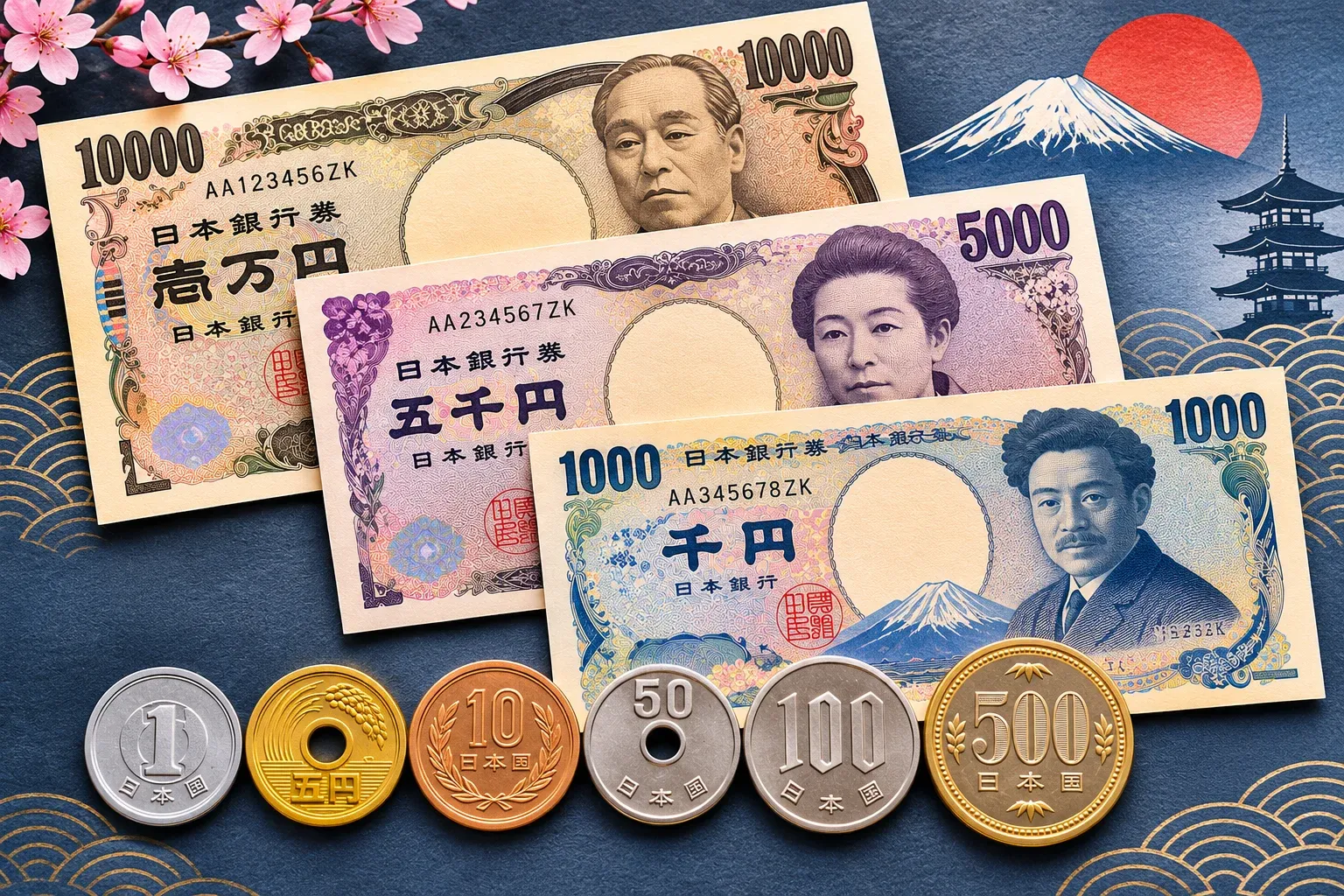
Japan uses the yen. International cards work at many hotels and stores, but some neighborhood restaurants, temples, and rural businesses still favor cash. Automated teller machines (ATMs) at major convenience-store chains can accept many foreign cards; check withdrawal and foreign transaction fees.
When a card terminal offers to charge in USD rather than yen, compare rates and fees before accepting dynamic currency conversion.
Japan introduced a refund-based tax-free shopping process on November 1, 2026. At participating shops, eligible visitors pay tax-inclusive prices and receive a refund after customs confirms that the qualifying goods are being taken out of Japan within 90 days of purchase.
Follow the seller's instructions and allow extra departure time if claiming a refund.
Language and Communication
Japanese is the primary language. English-language signs are common on major transport routes, but spoken English is less consistent in smaller towns. Download offline Japanese translation and map data.
Google Maps and a reliable railway schedule app are useful contenders for the Best Travel app for Japan, depending on the journey.
Time Difference and Jet Lag
When you travel from the US to Japan, crossing the date line can shift your calendar day. Japan uses Japan Standard Time, nine hours ahead of Coordinated Universal Time (UTC+9), year-round. It is 16–17 hours ahead of Los Angeles and 13–14 hours ahead of New York, depending on daylight saving time.
Flights from the US to Japan cross the International Date Line westward, so the local arrival date is often the following calendar day. Leave the first evening flexible and adjust sleep gradually.
Electricity, Plugs, and Voltage
Japan uses 100-volt electricity at 50 or 60 hertz depending on the region, primarily with two-flat-pin Type A outlets. Many US chargers marked 100–240V work without a voltage converter, although a plug adapter may still be useful. Devices rated only for 120V may need special attention; a plug adapter does not change voltage.
Local Customs, Laws, and Tipping
Tipping is not usually expected. Speak quietly on trains, remove shoes where requested, follow shrine etiquette, and ask before photographing people or private premises. Public trash bins can be limited. Laws concerning drugs and controlled substances are stricter than many visitors expect.
For current Japan travel tips, consult official tourism and safety guidance, especially if your trip includes remote mountains, heavy snow, or typhoon-prone periods.
How Do You Get Around Japan After Arriving?
Japan Transportation options are extensive in major cities, but the most suitable choice depends on your route. Rail and metro services cover Tokyo and Osaka; intercity Shinkansen bullet trains connect many major centers, while buses, ferries, and domestic flights reach other areas.
Getting Around Japan: Transportation Options & Tips
| Option | Best use | Consideration |
|---|---|---|
| Airport rail or bus | Arrival transfers | Check the last departure for late landings |
| Metro and local trains | City sightseeing | Suica, PASMO and other prepaid integrated circuit (IC) cards work on participating networks |
| Shinkansen | Major intercity routes | Compare individual tickets with passes |
| Taxi | Luggage or late-night transfers | More expensive than trains |
| Domestic flights and ferries | Distant islands and longer routes | Weather and connection times matter |
| Rental car | Rural destinations | Driving is on the left; parking and tolls add costs |
For Japan transportation beyond major cities in Japan, check bus frequency and final departures. If renting a car, tourists with US licenses generally need a valid International Driving Permit (IDP) issued before departure by an authorized US organization, along with their driver's license. Do not rely on a generic online permit.
Read more: See how many stops and train journeys you can comfortably fit into your stay with Japan Travel Itinerary Guide: How to Plan Your Trip for 2, 7, 10, or 14 Days.
What Should You Pack When Traveling to Japan from the US?
Your Japan Packing List should reflect the season rather than a generic year-round outfit. Take comfortable walking shoes, weather-appropriate layers, and lighter luggage if you expect frequent train transfers.
- Passport, onward ticket, first accommodation details, and insurance documents.
- Card, some yen, charging cable, power bank, and compatible adapter.
- Medicines in original packaging and any import approval required.
- Winter: insulated jacket and traction-ready footwear for snowy destinations.
- Summer: breathable clothing, sun protection, and compact rain gear.
- Spring or autumn: layers for changing temperatures.
Keep your Japan Packing List with flight and rail bookings, and save essential documents offline.
What Should You Arrange Before Leaving the US?
1–3 Months Before Departure
Check passport validity and visa eligibility; choose flights and first accommodation; compare insurance; reserve popular hotels, trains, or seasonal experiences when needed. If your medicines might be restricted, start checking import permissions now. Families traveling to Japan from US airports should also confirm airline rules for children and baggage.
2–4 Weeks Before Departure
Review official advisories, health guidance, and customs rules. Confirm payment-card fees, download transport apps, and compare roaming with a local SIM or travel eSIM. Travelers researching things to know before traveling to Japan should prioritize medication legality and whether their itinerary needs advance bookings.
1–3 Days Before Departure
Recheck flight times and baggage rules, save your first accommodation's address, complete arrival declarations through Visit Japan Web if using it, and download tickets and maps for offline access. Verify the latest official entry conditions before leaving.
Read more: If T-Mobile is your home carrier, check what your plan includes before paying for a separate data option in Does T-Mobile Work in Japan? Roaming, Costs, and Alternatives.
Stay Connected in Japan with Jetpac
Maps, translation, rail alerts, digital tickets, and hotel reservations often require mobile data immediately after arrival. US carrier roaming can be convenient but may carry daily charges; local prepaid SIMs may require collection, while travel eSIMs can usually be installed in advance on compatible unlocked devices.
Jetpac offers Japan data packages, and travelers can compare its eligibility terms with other providers rather than choosing only by headline price.
When evaluating the Best eSIM for Japan Travel, compare network access, total cost, and practical benefits rather than relying on marketing labels.
Jetpac advertises continued use of supported essential apps on eligible plans of at least 3 GB after standard data runs out, along with optional in-app calls, subject to plan terms.
A data-only eSIM does not automatically provide a Japanese number, traditional cellular texting, or ordinary carrier voice service.
Before purchasing an eSIM Japan plan, confirm device compatibility and coverage for any rural or island stops. More detailed comparisons belong in the dedicated Japan eSIM guide rather than repeating product claims here.
FAQs
How Long Is the Flight from the US to Japan?
A nonstop West Coast flight to Tokyo often takes roughly 10–12 hours; East Coast nonstops may take about 13–15 hours. Connections add time, and schedules vary with wind and airline routing.
Can I Use My US Phone in Japan?
Usually, yes, through your carrier's roaming service or a compatible unlocked device with a local SIM or travel eSIM. Check network compatibility and plan terms before departure.
Do I Need Travel Insurance to Visit Japan?
Insurance is generally not mandatory for ordinary US tourist visits, but medical and travel-disruption coverage is recommended, particularly for skiing or outdoor activities.
Is Japan Safe for American Tourists?
Japan is generally considered a low-risk destination for visitors, but ordinary precautions, natural-hazard preparedness, and compliance with strict local drug laws remain important. Check the latest US State Department advisory.
Do You Need a Visa to Visit Japan as a US Citizen?
US citizens normally don't need a visa for a tourist stay of up to 90 days. Longer stays, paid work, and some other activities require an appropriate visa or residence status.
What Should You Know Before Flying to Japan for the First Time?
Check whether you need a visa for your nationality, confirm onward travel, verify medicine rules, and save arrival instructions offline. These are essential first-trip preparations. Planning travel from the US to Japan also means accounting for the date change and your arrival airport transfer.
Is Japan Safe for American Tourists Traveling Alone?
Many people travel independently in Japan. Use normal city precautions, follow weather warnings, and share your plans when hiking or visiting remote areas.
How Many Days in Japan Is Enough?
Seven to ten days suits a first trip focused on Tokyo, Kyoto, and Osaka. Allow 12–14 days for a slower pace or extra regions. When traveling to Japan from US cities, allow for substantial flight time, so avoid an overly compressed itinerary.
Disclaimer
This blog is for educational purposes only. Entry, visa, customs, medication, transport, tax, and telecommunications rules can change. Prices are planning estimates, not guaranteed quotations. Travelers should confirm requirements directly with Japanese authorities, airlines, and service providers before booking or departing. Jetpac features, prices, and eligibility are subject to terms. Jetpac is not responsible for inaccuracies, disruptions, losses, or travel decisions based on this content.
Get connected as soon as you land with a Jetpac travel eSIM.