Traveling to Germany from the USA: What You Must Know
Traveling to Germany holds together when you understand the entry rules and the daily rhythm before you land. From passport checks and new biometric borders to cash-only cafés, rail delays, and Frankfurt to Berlin routes, the country runs smoothly when you meet it on its terms.

Traveling to Germany is one of the most rewarding international trips Americans can make. Medieval cities, UNESCO-listed old towns, world-class museums, and one of Europe's most extensive rail networks come together in a single destination that consistently delivers. Whether you are heading from the USA for the first time or planning a return visit, there are things to know before going to Germany that will shape the quality of every leg of your journey.
This blog covers entry requirements, safety, costs, practical tips, and the key destinations that reward first-time and returning visitors alike. Before you fly, install a Jetpac Germany eSIM on your phone so maps, transit apps, and train bookings are live from the moment you land.

Travel requirements to Germany from the US
Travel requirements to Germany from the US in 2026 are manageable for US citizens, but two new EU systems are reshaping border entry in ways that matter before you fly.
Passport Validity: Your passport must remain valid for at least three months beyond your intended stay in the Schengen Area. The US State Department recommends six months of remaining validity as a practical buffer. Your passport must also have at least two blank pages and must have been issued within the past ten years.
Visa-Free Access: US citizens do not need a visa for stays of up to 90 days within any 180-day Schengen period. This limit applies across the entire Schengen Area combined, not Germany alone. The rule applies whether you enter by air or by land. Green card holders should note that visa-free access depends on citizenship, not US residency status.
Entry/Exit System (EES): When traveling to Germany from the US, note that the EU's biometric Entry/Exit System entered phased rollout in October 2025, with full mandatory implementation on April 10, 2026. At German airports and land borders, expect fingerprint and facial image registration on first entry. No advance registration or fee is required; the process takes place at the border itself.
ETIAS: The EU's Electronic Travel Information and Authorisation System (ETIAS) is scheduled for the second half of 2026 at €20 per person. It is not yet in force. Verify current status at travel.state.gov before departure.
Travel Insurance: It is not mandatory for US citizens traveling visa-free, but strongly recommended by both the US and German governments for medical coverage and trip protection.
Driving: A valid US driver's license is recognised in Germany for up to six months. No international driving permit is required for short tourist stays.
Always verify current travel requirements to Germany from the US at travel.state.gov before departure, as entry rules can and do change.
Is it safe to go to Germany?
Is it safe to go to Germany as an American tourist? Yes. Germany holds a US State Department Level 2 advisory (Exercise Increased Caution), the same classification applied to France and the United Kingdom. This reflects general terrorism awareness, not active conflict or threats directed at American visitors. Germany is statistically one of the safest tourist destinations in Europe.
Standard precautions apply: stay alert in crowded areas such as major train stations, Christmas markets, and large outdoor events where pickpocketing is common. Keep a certified copy of your passport stored separately from the original.
Monitor updates from the US Embassy in Berlin at de.usembassy.gov throughout your trip, and consider registering your travel with the State Department's STEP programme before departure.
Things to know before going to Germany
Things to know before going to Germany extend well beyond the entry checklist. These practical realities define the daily experience:
Rail Travel: DB Navigator is the essential app for all train journeys. Book ICE high-speed seats at bahn.de at least two weeks ahead for summer travel. Delays and strikes are common; check live service updates each morning before you travel.
Cash: Germany remains a predominantly cash economy. Many restaurants, beer gardens, markets, and smaller shops do not accept cards. Carry euros at all times. ATMs are widely available at airports and in city centres.
Sunday Closures: Most retail shops close on Sundays by law. Supermarkets, boutiques, and non-essential retail are shut. Plan grocery shopping and essential purchases for weekdays or Saturday.
Language: English is widely spoken in major tourist cities. In smaller towns and rural areas, basic German phrases go a long way.
Tipping: Service charges are not included in German restaurant bills. Rounding up or adding 10% is standard. Cash tips are preferred over card tipping.
Plug Type: Germany uses Type F plugs (230V, 50Hz). US travelers need a plug adapter and may need a voltage converter for older devices.
Read More: Planning what to do once you arrive? This blog covers 18 Unmissable Things to Do in Germany for First-Timers. It covers Things to Do in Germany across every region, from iconic landmarks to local experiences that most visitors never find.
What does traveling to Germany from the US Cost?
Travel to Germany from the US at mid-range typically costs $150 to $250 per person per day, covering accommodation, food, and local transport. Budget travelers manage on $80 to $120 per day. Berlin and Frankfurt run the highest; Bamberg, Regensburg, and Trier sit significantly below the national average. Germany uses the euro. A pint of beer costs €4 to €6 in most cities. Munich's beer halls and Oktoberfest venues are more expensive. ATMs are widely available, but carrying some euros on arrival saves time at quieter entry points.
Read More: Germany's history and culture run deeper than most visitors expect. The 15 Fun Facts About Germany You Didn't Know covers Fun Facts About Germany that put every city, tradition, and habit into sharper context before you arrive.
Key Destinations: Where to Focus Your Trip
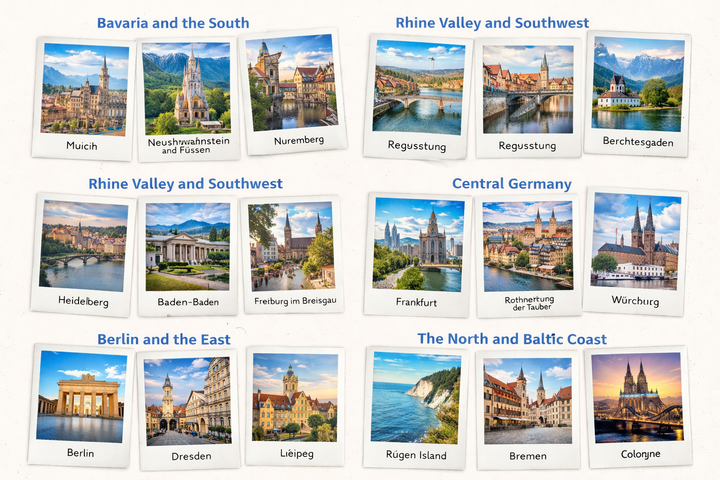
Americans traveling to Germany for the first time tend to underestimate how well the country rewards a focused itinerary over a rushed multi-city sprint. Traveling to Germany from the US typically routes through Frankfurt Airport, making it a natural first stop and a genuinely worthwhile city in its own right.
Frankfurt: The restored Römerberg medieval square sits beneath one of Europe's most striking modern skylines. The Museum Embankment (Museumsufer) lines the south bank of the Main River with 12 museums within walking distance. The Sachsenhausen district serves Ebbelwoi (apple wine) and Handkäse mit Musik in traditional taverns away from tourist restaurants.
Cologne: The UNESCO-listed Cathedral (Dom) is free to enter. Tower access costs €6; arrive by 9 am to avoid peak queues that build between 11 am and 3 pm. The Belgisches Viertel neighbourhood and the Rhine promenade reward an extra day. Cologne Carnival, the largest street carnival in Germany, runs the full week before Ash Wednesday.
Nuremberg: The Documentation Centre at the Nazi Party Rally Grounds is one of Europe's most important historical sites. Book timed entry in advance and allow two to three hours. The Christkindlesmarkt Christmas market, the most famous in Germany, runs from late November through December 24.
Bamberg: A UNESCO-listed medieval old town that escaped wartime destruction almost entirely intact. Nine working breweries serve Rauchbier, a smoked beer unique to the city, produced at Schlenkerla and Spezial. The self-guided brewery trail takes a full afternoon.
Berlin: Museum Island, the Brandenburg Gate, the East Side Gallery, and the Memorial to the Murdered Jews of Europe anchor one of Europe's most dynamic cities. For the USA travelers, Berlin provides some of the most affordable hotel rates of any major German city.
Trier: Germany's oldest city, founded by the Romans around 16 BC. The Porta Nigra, Roman amphitheatre, and Imperial Baths form the densest collection of Roman monuments north of the Alps. The Moselle wine region is 20 minutes away by car.
Timing: May, June, and September offer the best combination of weather, festival calendar, and manageable crowds. July and August peak at every destination. December is exceptional for Christmas markets across every city on this list. For the USA travelers who want a practical starting point, a seven-to-ten-day itinerary covering two to three cities is the standard recommendation.
Stay Connected in Germany: Jetpac eSIM
Traveling to Germany from the US means navigating DB Navigator for train times, booking timed entry for Nuremberg Castle and Sanssouci Palace, checking live rail disruption alerts, and finding your way through Bamberg's medieval lanes, all from your phone.
Germany eSIM plans from Jetpac install before you leave from the USA and activate automatically when your flight lands, connecting to Germany's strongest available carrier across every city on this list.
An eSIM for Germany means no SIM card queue at Frankfurt Airport, no daily roaming charges, and a single flat prepaid rate covering the entire trip. For Americans, standard US carrier roaming in Germany typically runs $10 to $15 per device per day. A travel eSIM replaces that entirely, at a fraction of the cost.
📡 Unrestricted Hotspot Sharing: One Jetpac plan connects every device in your group, no per-device fees.
🗺️ Google Maps and WhatsApp Stay On After Data Runs Out: Navigation and messaging keep working even at zero balance, so no one misses a connection.
⚡ Automatic Network Switching: Jetpac locks onto the strongest available German carrier at every location, from Frankfurt's dense 5G to Trier's Moselle Valley rural coverage.
💸 Up to 70% Cheaper Than US Carrier Roaming: One flat prepaid cost covers the entire trip.
📞 Calls for $1.99 per 5 Minutes: Built directly into the Jetpac app. No separate calling plan required.
✅ 100% Money-Back Guarantee: 24/7 support via WhatsApp and email throughout your Germany trip.
FAQs
What is required to enter Germany from the US?
A valid US passport, no visa for stays up to 90 days. From April 10, 2026, EES biometric registration applies at the border on first entry. No fee or advance registration required. Verify current requirements at travel.state.gov before departure.
What I wish I knew before going to Germany?
Cash is essential as many places do not accept cards. Most shops close on Sundays. Download DB Navigator before you fly for real-time train updates. Tipping is expected but modest, typically rounding up the bill rather than a fixed percentage.
Which is the best month to go to Germany?
May, June, and September offer the best balance of good weather, manageable crowds, and lower prices than peak summer. July and August are the warmest but most crowded months. December is ideal for Christmas markets.
Is ETIAS mandatory for US citizens?
Not yet. ETIAS launches Q4 2026 with a transitional period before full enforcement. The fee is €20, and applications will be submitted at travel-europe.europa.eu. Check the current status at travel.state.gov before booking.
What do I need to travel from the US to Germany?
A valid US passport, no visa for stays up to 90 days, and EES biometric registration at the border from April 10, 2026. Travel insurance is strongly recommended. Enroll in STEP at mytravel.state.gov before departure.
Disclaimer
Entry requirements are based on confirmed 2026 information from the US Embassy in Germany, travel.state.gov, and the European External Action Service. Always verify current requirements before departure. Jetpac is not responsible for changes after publication.