
Transportation in Spain: How to Get Around (2026 Guide)
Compare ways to get around Spain, including high-speed trains, buses, ferries, domestic flights and city transport, with costs, journey times and booking tips.

Spain’s AVE high-speed rail, ALSA intercity buses, and metro systems in five major cities make transportation in Spain practical and affordable for most visitors.
Domestic flights and overnight ferries cover the Balearic and Canary Islands, where the mainland rail network ends.
How you get around Spain depends on your itinerary, budget, and whether you stay on major city circuits or head into rural areas.
The Madrid-Barcelona-Seville corridor runs entirely on rail and bus. Rural Extremadura, the Pyrenees, and island interiors are the exceptions where a rental car becomes genuinely useful.
 Get Jetpac Spain eSIM Now
Quick Answer: What Is the Best Way to Get Around Spain?
Getting Around |
Best Option |
Typical Cost |
Between major cities |
AVE/Iryo/Ouigo high-speed train |
Approx. USD 5-100 per journey |
Within a city |
Metro or local bus |
Approx. USD 1.60-2.60 per trip |
To/from the airport |
Train, Aerobus, or taxi |
Approx. USD 2-50 depending on city |
To rural areas or small towns |
Rental car or ALSA regional bus |
Approx. USD 25-60/day car; USD 13-22 bus |
Train Travel in Spain
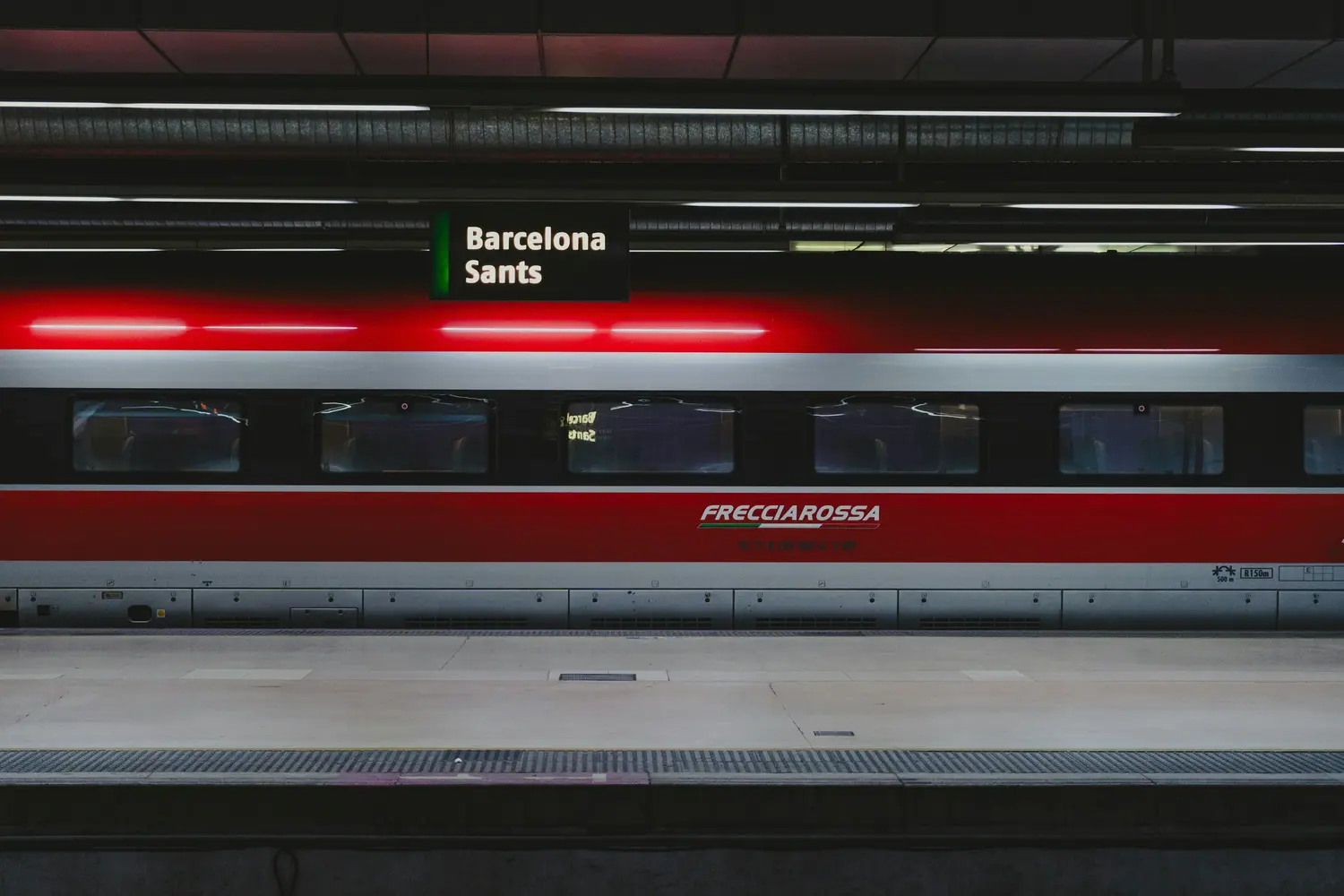
What it is/when to use it: Rail transport in Spain is the fastest option between major cities. Renfe operates the national AVE network; private operators Iryo and Ouigo compete on the same high-speed routes with lower base fares introduced since 2022.
Typical cost: Approximately USD 5-100 per journey depending on operator, route, and advance purchase. Ouigo and Renfe’s AVLO budget fares start from approximately USD 5-30; standard flexible AVE fares run approximately USD 30-100.
How to book: Renfe at renfe.com; Iryo at iryo.eu; Ouigo at ouigo.com/es. Comparing all three before purchasing consistently returns the lowest available fare.
Insider tip: Iryo and Ouigo tickets are non-refundable by default; Renfe flexible fares allow changes at a premium. Decide which matters more to your trip before selecting an operator.
How long does it take: Madrid to Barcelona takes about 2 hours 30 minutes; Madrid to Seville takes about 2 hours 30 minutes; Madrid to Valencia takes about 1 hour 35 minutes.
Car Rental and Driving in Spain
What it is/when to use it: A rental car suits rural Extremadura, Galicia’s coast, and Pyrenean villages where public transport in Spain runs infrequently. City centers enforce Low Emission Zones; unauthorized vehicles receive automatic fines by post weeks after departure.
Typical cost: Economy cars from approximately USD 25-60/day before fuel and optional insurance. Motorway tolls add approximately USD 5-20 per long journey on the AP-7 and AP-2.
How to book: Rentalcars.com, Hertz, Europcar, or Sixt. Book 2-3 weeks ahead in July-August for competitive rates.
Insider tip: Some Spanish rental companies require an International Driving Permit for non-EU licence holders; confirm this requirement with your chosen company before departure to avoid being refused the vehicle on arrival.
How long does it take: Madrid to Seville approximately 5.5-6 hours by road; Barcelona to the Pyrenees approximately 2-3 hours depending on the valley.
Read more: Italy’s rail network and regional road conditions create a different driving and booking experience from Spain. 👉 Transportation in Italy: How to Get Around in Italy
Domestic Flights in Spain
What it is/when to use it: Domestic flights are the practical option for reaching the Canary Islands, where the Cádiz ferry crossing takes 38-40 hours. Vueling, Iberia Express, Ryanair, and EasyJet operate domestic routes to all major island airports year-round.
Typical cost: Approximately USD 20-150 depending on route, season, and booking lead time. Madrid to Gran Canaria typically costs approximately USD 40-120; Madrid to Palma de Mallorca costs approximately USD 20-80.
How to book: Vueling, Iberia Express, or Skyscanner for cross-operator price comparison on all domestic routes.
Insider tip: Vueling and Iberia Express charge approximately USD 25-50 at the gate for oversized cabin bags; check your specific bag dimensions against the airline’s published limits before arriving at the airport.
How long does it take: Madrid to Gran Canaria approximately 2 hours 30 minutes; Madrid to Palma de Mallorca approximately 1 hour 10 minutes; Barcelona to Seville approximately 1 hour 20 minutes.
Buses in Spain
What it is/when to use it: ALSA intercity buses are one of the most affordable forms of transportation in Spain for tourists, covering secondary towns not on the rail network. FlixBus also operates on major city-to-city routes as a lower-cost alternative on main corridors.
Typical cost: Approximately USD 13-25 for most intercity routes. Seville to Granada: approximately USD 13-16; Bilbao to Santander: approximately USD 9-13.
How to book: ALSA app or alsa.com; FlixBus app for FlixBus-operated routes.
Insider tip: ALSA buses to smaller towns sometimes depart from a secondary terminal rather than the main station; confirm the exact departure point when booking to avoid arriving at the wrong location.
How long does it take: Seville to Granada takes about 3 hours; Madrid to Salamanca takes about 2 hours 30 minutes; Barcelona to Valencia takes about 4 hours.
Read more: France’s bus and rail network uses different operators, booking platforms, and regional ticketing structures from Spain. 👉 Transportation in France: How to Get Around in France
Ferries in Spain
What it is/when to use it: Ferries connect mainland Spain to the Balearic Islands and Ceuta. Overnight services from Cádiz reach the Canary Islands for travelers bringing a vehicle or who prefer a sea crossing over a flight.
Typical cost: Approximately USD 43-162 for Balearic routes depending on season and cabin type. Cádiz to Las Palmas overnight crossing: approximately USD 90-200.
How to book: Balearia for Balearic routes; Trasmediterranea for Ceuta and additional crossings.
Insider tip: Booking Ibiza and Mallorca ferry crossings 2-3 months ahead in summer saves approximately 30-40 percent compared to last-minute pricing on the same sailing.
How long does it take: Barcelona to Palma de Mallorca fast ferry approximately 4-5 hours; overnight service approximately 8 hours. Cádiz to Las Palmas: approximately 38-40 hours.
Metro in Spain
What it is/when to use it: Metro networks operate in Madrid (13 lines), Barcelona (12 lines), Valencia (lines covering metro and tram services), Bilbao (3 lines), and Seville (Line 1; the primary operational metro line).
The metro is the most efficient way to navigate any of these cities, covering tourist zones, airports, and main rail terminals.
Typical cost: Public transportation in Madrid, Spain costs approximately USD 1.60-2.15 per single journey; the Metrobus 10-trip card costs approximately USD 13.40.
Public transportation in Barcelona, Spain costs approximately USD 2.60 per single journey; the T-Casual 10-trip card costs approximately USD 12.25.
How to book: Contactless bank cards have been accepted at metro gates in Madrid and Barcelona since 2024; 10-trip cards are available from all station vending machines.
Insider tip: Madrid Metro Line 8 to Barajas Airport requires an airport fare supplement of approximately USD 3.25 on top of the standard fare; buy the airport-specific ticket at the machine to avoid onboard inspection penalties.
How long does it take: Central zone journeys in Madrid average 15-25 minutes; Barcelona city center to the waterfront is approximately 15-20 minutes.
Read more: Japan’s IC card transit system and regional rail passes operate on a completely different model from Spain’s metro and AVE network. 👉 Transportation in Japan: How to Get Around in Japan
Trams and Light Rail in Spain
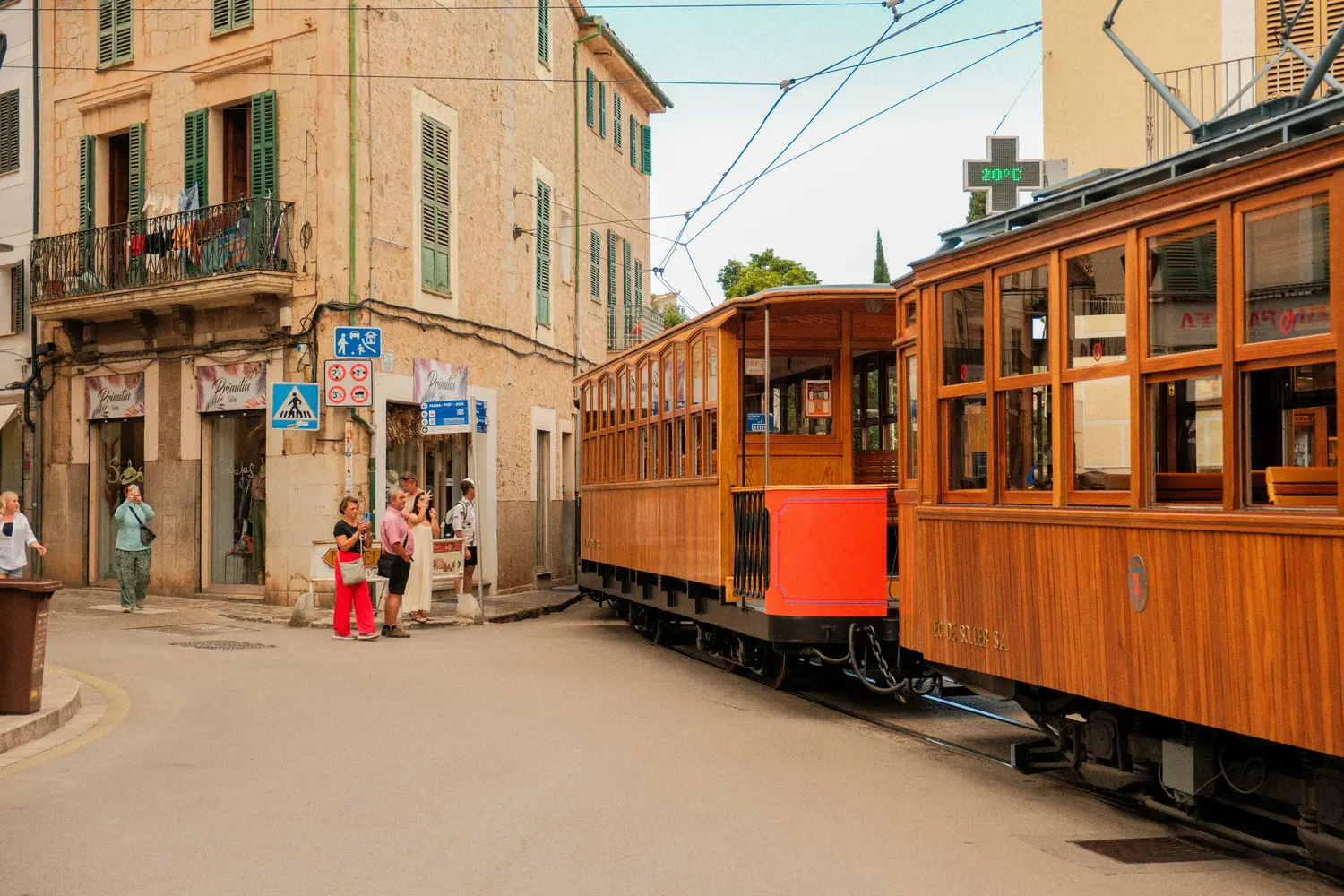
What it is/when to use it: Trams operate in Barcelona (T1-T6 lines), Seville (Line 1), and Zaragoza. Bilbao’s Euskotren light rail covers the wider metro area beyond the core three metro lines.
Typical cost: Barcelona tram approximately USD 2.60 per journey, integrated with the T-Casual card; Seville tram approximately USD 1.40-1.60 per journey.
How to book: Tickets at tram stops or via integrated city transit card machines in each city.
Insider tip: Barcelona’s two tram networks have been reconnected along Diagonal Avenue; check Tram Barcelona for the current route map before planning any tram journey.
How long does it take: Barcelona central tram journeys average 10-20 minutes; Seville’s tram line covers the main tourist corridor in approximately 5-10 minutes.
Taxis and Rideshare in Spain
What it is/when to use it: Taxis and rideshare fill the gaps that public transport in Spain does not cover well, particularly for late-night travel, airport connections after the last trains stop, and door-to-door journeys in unfamiliar areas.
Typical cost: Madrid taxis start at approximately USD 2.60 base rate plus approximately USD 1.20-1.60 per km. Madrid Barajas fixed flat rate: approximately USD 35-36 within the M-30 ring road. Barcelona El Prat to city center: approximately USD 32-49.
How to book: Cabify across most Spanish cities; FREE NOW for licensed taxis in Madrid, Barcelona, and other major cities; Uber in Madrid and Barcelona only.
Insider tip: Madrid’s Barajas flat rate applies between the airport and any destination within the M-30 ring road; confirm this verbally with the driver before the journey to avoid any fare dispute on arrival.
How long does it take: Madrid airport to city center approximately 20-30 minutes; Barcelona airport to center approximately 20-30 minutes depending on traffic.
Biking in Spain
What it is/when to use it: Bike-sharing schemes operate in Madrid (BiciMAD), Barcelona (Bicing), Seville (Sevici), and Valencia (Valenbisi). Cycling suits Seville’s flat streets and Barcelona’s seafront lanes but is less practical in hilly Bilbao, Toledo, and Cuenca.
Typical cost: BiciMAD Madrid approximately USD 2.15 per 30 minutes; Bicing Barcelona tourist day pass approximately USD 16; Sevici Seville approximately USD 1.60 per 30 minutes.
How to book: BiciMAD, Bicing, Sevici, or Valenbisi apps, respectively, for each city.
Insider tip: Seville has over 180km of dedicated cycling lanes, making it the most practical Spanish city for tourist cycling; the flat historic center suits all fitness levels without specialist gear.
How long does it take: Crossing Seville’s historic center by bike takes approximately 15-20 minutes; Barcelona’s seafront from Barceloneta to the Olympic Port takes approximately 10 minutes.
Best Transport Apps for Spain
When planning transportation in Spain, these apps cover every stage from intercity booking to city navigation:
- Google Maps: Real-time metro, bus, and walking routes across all Spanish cities; download offline maps before departure
- Renfe app: Official AVE and regional train booking with seat selection and live updates
- ALSA app: Intercity and regional bus booking for destinations not on the rail network
- Citymapper: Available in Madrid and Barcelona for more granular local transit routing
- Cabify: Rideshare across most Spanish cities; more widely available than Uber outside Madrid and Barcelona
- FREE NOW: Licensed taxi hailing in Madrid, Barcelona, and other major Spanish cities
How to get internet in Spain before landing determines whether all these apps work from the moment you arrive.
The best eSIM for Spain travel removes per-day roaming charges that most international carrier plans add from day one; an eSIM activates before departure and connects on landing without a SIM queue.
How to get around in Spain effectively starts with downloading all relevant apps and offline maps before boarding your flight.
Read more: Your phone’s data connection determines whether transport apps, digital tickets, and navigation tools work throughout Spain. 👉 Will My Phone Work in Spain? Tips Before You Travel
Getting To/From the Airport
Madrid Barajas Airport (MAD)
Approximately 12km from the city center.
- Train: Metro Line 8 to Nuevos Ministerios; approximately USD 5-6 including the airport fare supplement; approximately 20-25 minutes
- Bus: Exprés Aeropuerto line 203 to Atocha station; approximately USD 5.40; approximately 30-40 minutes
- Taxi: Fixed flat rate of approximately USD 35-36 to any point within the M-30 ring road; approximately 20-30 minutes
Barcelona El Prat Airport (BCN)
Approximately 14km from the city center.
- Train: Renfe R2 Nord from Terminal 2 to Passeig de Gràcia; approximately USD 5; approximately 25 minutes (Terminal 1 passengers take the free shuttle bus to Terminal 2 first)
- Bus: Aerobus from both terminals to Plaça de Catalunya; approximately USD 7.30; approximately 35 minutes
- Taxi: Approximately USD 32-49 to city center; approximately 20-30 minutes
Málaga Costa del Sol Airport (AGP)
Approximately 8km from the city center.
- Train: Cercanías C1 to Málaga Centro-Alameda; approximately USD 1.95; approximately 12 minutes
- Bus: Line A to city center; approximately USD 3-4; approximately 20 minutes
- Taxi: Approximately USD 13-22 to city center; approximately 12-15 minutes
Read more: Bali’s airport transfers and inter-region transport work on a very different model from Spain’s rail and metro connections. 👉 Transportation in Bali: How to Get Around in Bali
Which Transportation Option Is Best for You?
Mode |
Best For |
Avg. Cost |
Avg. Time |
Book Via |
AVE/Iryo/Ouigo |
Fast city-to-city travel |
Approx. USD 5-100 |
1.5-2.5 hrs |
renfe.com, iryo.eu, ouigo.com |
ALSA bus |
Budget travel, secondary towns |
Approx. USD 13-25 |
2-5 hrs |
ALSA app |
Domestic flight |
Canary and Balearic Islands |
Approx. USD 20-150 |
1-2.5 hrs |
Vueling, Iberia Express |
Ferry |
Island crossings with a vehicle |
Approx. USD 43-162 |
4.5-40 hrs |
Balearia, Trasmediterranea |
Metro |
Within-city travel |
Approx. USD 1.60-2.60 |
15-25 mins |
Station machine or app |
Taxi/Cabify |
Airport, late night, flexibility |
Approx. USD 13-49 |
Varies |
Cabify, FREE NOW |
Rental car |
Rural areas, road trips |
Approx. USD 25-60/day |
Self-drive |
Rentalcars.com |
The best way to get around Spain for most first-time visitors is high-speed rail between cities and metro within each destination.
Spain itineraries built around the AVE corridor cover the best places to visit in Spain on a first trip; any Spain travel guide covering the country prioritizes this rail spine.
Transportation in Spain for tourists costs less than in most Western European countries, and how to get around in Spain without a car is entirely practical for Madrid, Seville, and Barcelona via train and bus.
How to get around in Spain without a car becomes more challenging in rural Extremadura and smaller Pyrenean towns where ALSA buses run once or twice daily.
Spain travel cost for transportation in Spain stay low by booking AVE tickets 4-6 weeks ahead in summer; Spain travel tips from experienced travelers consistently point to comparing Renfe, Iryo, and Ouigo before purchasing any high-speed route.
Train transportation in Spain via these three operators means real price competition on every major route.
How many days do you need in Spain to use the rail network comfortably depends on where the itinerary goes; seven days covers the main AVE corridor while fourteen opens the north coast and islands.
Spain Transportation Checklist
Before traveling, confirm your transportation in Spain arrangements are in place:
- Main intercity routes researched and booked where needed
- AVE, Iryo, or Ouigo reservations confirmed for all city-to-city legs
- Airport transfer option and cost confirmed for each arrival city
- Renfe, ALSA, Citymapper, and Cabify apps downloaded before departure
- Metro card options researched for each city on the itinerary
- Rental car booked and IDP requirement confirmed if applicable
- Rental car insurance type confirmed and payment method arranged before pickup
- Ferry schedules checked for any Balearic or Canary Islands crossings
- Last ALSA departure times confirmed for smaller town day trips
- Offline maps downloaded for all planned cities and regions
- Mobile data or eSIM confirmed and active before landing
Stay Connected During Your Spain Trip With Jetpac
Renfe tracking, Cabify routing, and metro navigation all require mobile data from the moment you arrive. Hotel Wi-Fi in rural areas and smaller island towns is inconsistent, and transport decisions throughout any multi-region trip depend on live information.
A Jetpac eSIM Spain plan activates before departure and connects on landing, providing 4G and 5G connectivity across Spain’s mainland and islands.
Plans start from USD 2. eSIM plans for Spain from Jetpac of 2 GB or more include unrestricted hotspot sharing and access to apps like WhatsApp, Google Maps, and Uber even after when data runs out.
The Best eSIM for Spain multi-city plan covers every region from Bilbao to the Canary Islands, with eSIM plans for Spain backed by 24/7 WhatsApp support throughout.
FAQs
What is the easiest way to get around Spain?
AVE high-speed trains between major cities and metro within destinations make how to get around in Spain practical and comfortable for most first-time visitors without a rental car.
Is public transportation good in Spain?
Public transport in Spain is reliable and well-connected between major cities and within metro areas; rural regions and smaller islands have fewer services and may benefit from a rental car.
Do I need to rent a car in Spain?
A car is not needed for Madrid, Seville, and Barcelona; it becomes genuinely useful for rural Extremadura, Galicia’s inland areas, and Pyrenean villages with limited bus services.
Is it better to travel around Spain by train or bus?
Trains are faster for major city routes; ALSA buses cost 30-50 percent less and cover towns trains do not reach, making buses the better choice for budget travelers and secondary destinations.
Can I use ride-hailing apps in Spain?
Cabify operates across most Spanish cities and is more widely available than Uber, which only operates in Madrid and Barcelona.
Do I need an eSIM to use maps and transport apps in Spain?
Mobile data is essential for navigation, digital tickets, and live transport updates; a travel eSIM activates before departure and removes per-day roaming charges from day one.
Is public transport safe and reliable in Spain?
Spain’s train and metro network is punctual and generally safe; keep bags close on busy metro lines where pickpocketing is documented at tourist sites.
What is the cheapest way to get around Spain?
Budget operators Ouigo and Iryo offer the lowest intercity rail fares; ALSA buses cover secondary routes at lower cost, and 10-trip metro cards keep within-city travel under approximately USD 13-14 per day.
Disclaimer
The information in this blog was accurate at the time of writing and is based on available transport and travel information. All transport costs, schedules, and travel times reflect data available as of 2026. All prices are approximate USD conversions from EUR and are subject to change. Verify current information with the relevant operator before booking. Jetpac is not responsible for any changes to this information after publication.
Get connected as soon as you land with a Jetpac travel eSIM.



 What to Pack for Spain: A Complete Spain Packing List